
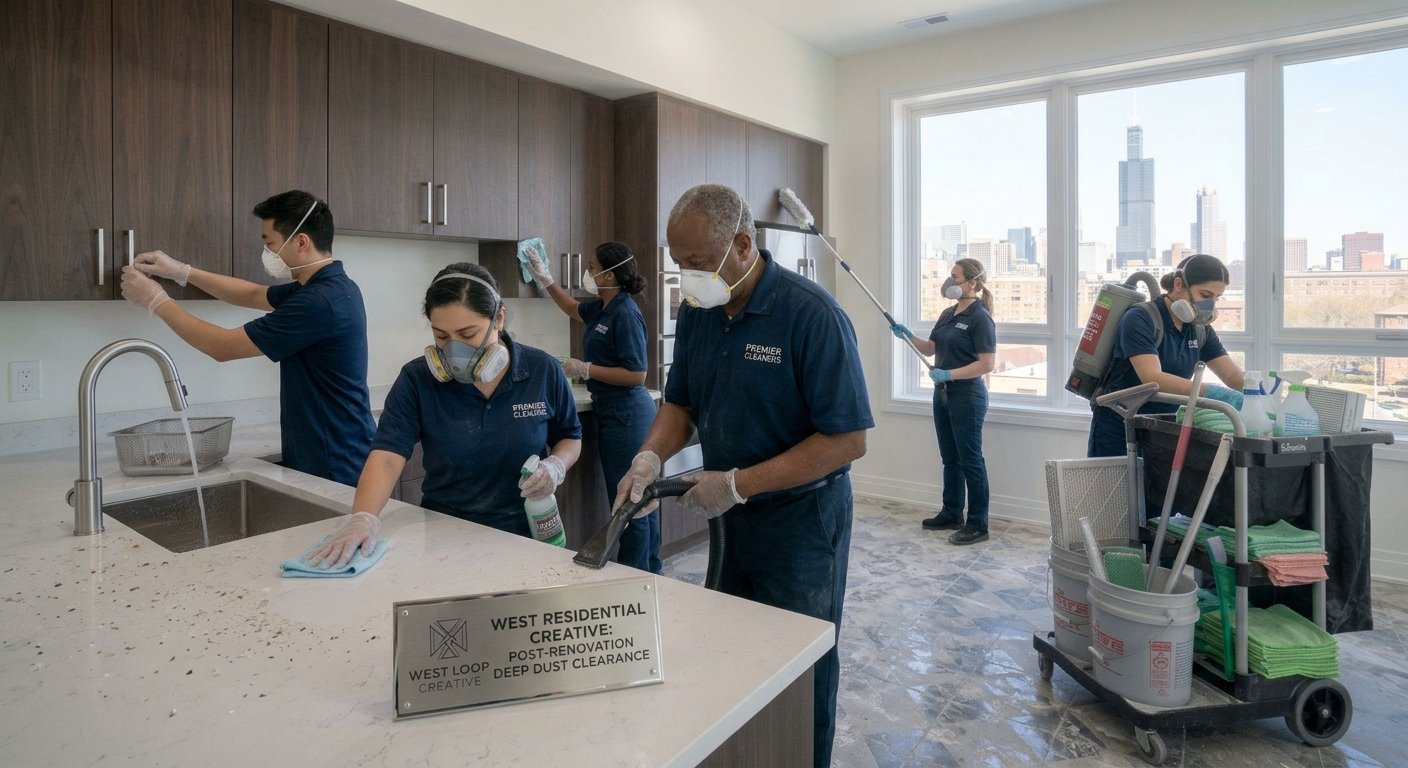
Dust After a Kitchen Remodel: Why It Happens and How to Remove It
Finding fine white dust on your countertops, cabinet doors, floors, and appliances after a kitchen remodel can be frustrating, especially when the renovation looks finished. Drywall sanding, cabinet installation, cutting, drilling, and other construction tasks can leave particles throughout the kitchen and nearby rooms.
Effective kitchen renovation cleaning in Chicago requires more than wiping down visible surfaces. The key is to stop new dust from entering the space, remove particles from upper and hidden surfaces, use appropriate dust-capture equipment, and clean the kitchen in an order that prevents freshly cleaned areas from becoming dusty again.
Why Is There Still Dust After a Kitchen Remodel?
Dust after a kitchen remodel usually comes from construction materials and work performed during installation. Drywall compound, wood cutting, tile work, drilling, sanding, and packaging can all leave residue. Fine particles may travel beyond the immediate work area and settle on surfaces that were not directly involved in the renovation.
Even after contractors finish, dust can remain on cabinet tops, inside drawers, along backsplash edges, on window frames, around appliances, and near floor trim. Air movement and everyday activity can dislodge this residue, making it appear that dust has returned after cleaning.
Important: A newly installed kitchen is not necessarily ready for everyday use as soon as construction ends. Final cleaning should address accessible surfaces throughout the affected area, not just the countertops and floor.
Understanding where the dust originated helps determine which surfaces need attention and whether a standard kitchen clean or a more detailed post-construction cleaning service is appropriate.
Common Sources of Dust After a Kitchen Remodel
Drywall Sanding and Repairs
Sanding joint compound and patching wall damage can release fine powder that settles on cabinets, counters, window sills, and floors. This residue can be difficult to remove with casual wiping alone.
Cabinet Installation
Cutting, drilling, fastening, and adjusting cabinetry can produce sawdust and small particles. Dust may collect on cabinet tops, shelves, drawer interiors, and the spaces between cabinets and walls.
Countertops and Backsplashes
Cutting or fitting stone, tile, and other materials can create dust or residue around seams and edges. Certain deposits, including hardened adhesive or grout haze, may require specialist treatment.
Flooring and Trim Work
Floor installation, cutting, sanding, and baseboard fitting can leave particles along edges, corners, transitions, and under accessible appliances.
Appliance Installation
Moving refrigerators, ranges, and dishwashers can disturb dust trapped behind or beneath them. Installation work may also leave packaging residue and debris.
Dust From Adjacent Rooms
Open doorways, shared hallways, contractor traffic, and airflow can carry construction dust from another room into a kitchen that has already been cleaned.
Where Does Kitchen Renovation Dust Hide?
One of the biggest reasons dust remains after remodeling is that it collects in areas that are easy to overlook during a quick cleanup. A useful inspection covers both visible surfaces and accessible detail areas.
Cabinets, Drawers, and Shelving
Fine dust may settle inside new cabinets and drawers, on shelf surfaces, and along cabinet frames. If interiors are included in the cleaning scope, remove loose dust before storing dishes, cookware, food containers, or other household items.
Countertops and Backsplash Edges
Check countertop seams, backsplash edges, corners, and the areas around sinks and faucets. Use cleaning methods compatible with the material. Natural stone, engineered surfaces, and delicate finishes may have specific product restrictions.
Appliances and Their Surroundings
Dust can collect on refrigerator tops, range surfaces, microwave exteriors, and accessible areas around installed appliances. Interior cleaning should be treated as a separate task when needed and performed according to the appliance manufacturer's guidance.
For appliance-specific maintenance, see these guides to cleaning a glass-top stove, cleaning a microwave, and cleaning a dishwasher.
Baseboards, Window Frames, and Floor Edges
Dust can accumulate on top of baseboards, in window tracks, along cabinet toe kicks, and where flooring meets walls. These details are especially important after drywall repairs or flooring installation.
Vents and Nearby Surfaces
Inspect accessible vent covers for visible residue. Airflow can redistribute dust, but visible dust around a vent does not automatically mean the HVAC ducts are contaminated. If construction debris may have entered the system, seek a qualified assessment.
How to Clean Dust After a Kitchen Remodel
The most effective approach is to remove dust from top to bottom after dust-producing work is finished. This reduces the risk of particles falling onto surfaces that have already been cleaned.
Finish dusty construction work
Remove loose debris
Clean upper surfaces and cabinets
Wipe counters and appliances
Clean floors last
Inspect and touch up
Step 1: Make Sure Construction Is Finished
Wait until drywall sanding, drilling, cutting, and other dust-producing tasks are complete before the final detailed clean. If contractors still need to return, ask how their work will be isolated and whether another cleanup will be necessary afterward.
Step 2: Remove Loose Dust With Suitable Equipment
Use equipment designed to capture fine construction dust rather than scattering it. Depending on the project, a properly maintained HEPA-filtered vacuum or suitable dust extractor may be appropriate. Follow the equipment manufacturer's instructions and avoid using a vacuum that may release fine particles back into the kitchen.
Step 3: Clean Upper Surfaces and Cabinet Interiors
Start with accessible cabinet tops, shelving, upper trim, and other elevated surfaces. Clean cabinet interiors and drawers if they are included in the scope. Use suitable attachments and gentle methods to avoid scratching finishes or damaging newly installed materials.
Step 4: Wipe Counters, Backsplashes, and Fixtures
Once loose dust has been removed, wipe compatible surfaces using clean microfiber cloths and suitable products. Change cloths as they collect residue so you do not spread dust across the countertop or backsplash.
Do not use abrasive pads, acidic products, or unapproved chemicals on stone, glass, metal, or other sensitive finishes. Follow the manufacturer's care instructions for the specific material.
Step 5: Clean Appliances Carefully
Wipe accessible appliance exteriors and the surrounding areas. Follow manufacturer guidance for interiors, control panels, ventilation openings, and electrical components. Do not spray liquid directly into vents or controls, and do not move heavy appliances unless it is safe and appropriate to do so.
Step 6: Vacuum and Clean the Floor
Finish with the floor, including accessible corners, edges, and cabinet toe kicks. Use a method suitable for the flooring material. If the kitchen has hardwood floors, review this guide to deep cleaning hardwood floors in Chicago before selecting products or applying moisture.
Step 7: Inspect the Kitchen Again
Check cabinet surfaces, window tracks, counters, appliance tops, and floor edges for visible residue. If dust reappears, investigate whether it is coming from hidden deposits, nearby construction, or airflow before repeating the entire cleaning process.
Which Kitchen Surfaces Need Special Care?
Post-remodel cleaning is not one-size-fits-all. The correct approach depends on the material and whether the finish is fully installed, cured, or ready for routine cleaning.
Natural Stone Countertops
Use products approved for the particular stone and its finish. Avoid unapproved acidic cleaners and abrasive tools that may dull or damage the surface.
New Cabinet Finishes
Use a soft cloth and the manufacturer's recommended cleaning method. Avoid excessive moisture around unfinished edges, joints, and exposed wood.
Glass and Stainless Steel
Remove loose dust before polishing to reduce scratching. Use appropriate cloths and surface-compatible cleaners, wiping in a direction suited to the finish.
Tile and Grout
Remove loose dust gently and check whether grout or sealant has fully cured before applying water or cleaning products. Persistent grout haze may require a suitable specialty product or installer guidance.
Hardwood and Engineered Flooring
Capture loose particles before damp cleaning. Avoid excess water and abrasive tools, especially on recently installed or unfinished flooring.
Newly Painted Walls
Allow paint to cure according to the manufacturer's instructions before wiping it. Aggressive scrubbing too early may mark or damage the finish.
DIY Cleaning vs. a Professional Post-Remodel Cleaning Service
DIY cleanup can be suitable for a small project that produces limited dust. A professional service may be more practical when the renovation affects several rooms, fine residue has spread throughout the property, or the kitchen contains many new surfaces that require careful treatment.
| Consideration | DIY Cleanup | Professional Cleaning |
|---|---|---|
| Best suited for | Small repairs and limited dust. | Extensive remodeling and dust across multiple areas. |
| Equipment | Depends on the tools and filtration available at home. | May include suitable fine-dust extraction equipment based on the scope. |
| Surface coverage | Requires the homeowner to identify and clean each area. | Can follow an agreed room-by-room scope and checklist. |
| Cost | Primarily supplies and personal time, plus any equipment rental. | Depends on square footage, dust levels, access, and requested tasks. |
| Limitations | May take repeated passes if dust sources remain. | Does not replace hazardous-material remediation, repairs, or specialist restoration. |
If you are weighing the options for a larger cleanup, read the benefits of hiring a professional deep cleaning company in Chicago. The right choice depends on the scale of the project, the equipment available, and the amount of detail the kitchen needs.
What Affects the Cost of Kitchen Renovation Cleaning in Chicago?
The cost of kitchen renovation cleaning in Chicago depends on the amount of work required rather than the kitchen's appearance alone. A small cabinet update may need limited surface cleaning, while a full renovation involving drywall, flooring, cabinets, and appliances can require substantially more labor.
Factors That Influence Pricing
- Kitchen size: Larger kitchens generally have more surfaces, cabinets, and floor area to clean.
- Renovation scope: Full remodels often produce more dust and residue than minor cosmetic updates.
- Cabinet and drawer interiors: Cleaning inside storage areas takes additional time when included.
- Surface materials: Stone, glass, specialty finishes, and delicate flooring may require different methods.
- Appliance access: Cleaning around installed appliances can be more involved than cleaning an empty room.
- Dust spread: Dust that reaches nearby dining rooms, hallways, or living areas increases the scope.
- Specialty residue: Hardened adhesive, paint splatter, and grout haze may require separate treatment.
- Scheduling and repeat visits: Work that continues after cleaning may require another visit.
For a useful estimate, describe the kitchen's approximate size, the type of remodeling completed, whether the contractors have finished, and which surfaces need attention. Ask the provider to clarify cabinet interiors, appliances, windows, debris removal, and specialty residue before approving the quote.
How to Prepare Your Kitchen Before the Cleaning Appointment
A few simple preparations help the cleaning team work efficiently and reduce the chance of new dust contaminating completed areas.
- Confirm that drywall sanding, drilling, cutting, and other dusty work are finished.
- Arrange removal of bulky construction debris and leftover materials.
- Clear personal belongings, food, cookware, and dishes from work surfaces.
- Identify which cabinets, drawers, appliances, and storage areas should be cleaned.
- Share the manufacturer's care instructions for delicate countertops, flooring, or new finishes when available.
- Tell the provider about hardened grout haze, adhesive, paint residue, or other difficult deposits.
- Confirm access to the kitchen and nearby rooms affected by dust.
- Discuss whether adjacent rooms or hallways need to be included.
- Confirm what the quote excludes and whether a second visit may be needed.
Keep food and clean kitchenware away from active construction dust. If you suspect that hazardous materials are present, do not disturb them or proceed with ordinary cleanup until the situation has been appropriately assessed.
How to Keep Your Kitchen Dust-Free After Remodeling
Once the initial cleanup is complete, ordinary maintenance can help keep the kitchen presentable. The goal is to manage normal household dust while preventing additional construction residue from entering the space.
- Wipe counters and frequently used surfaces with clean, suitable cloths.
- Vacuum or clean floors using a method compatible with the flooring.
- Check cabinet tops, window sills, and other dust-catching surfaces periodically.
- Follow manufacturer guidance for appliance and ventilation maintenance.
- Keep construction materials and dusty tools away from finished kitchen areas.
- Address any remaining renovation work before arranging another detailed clean.
For a practical routine covering everyday kitchen surfaces and appliances, see the kitchen cleaning guide. If the remodel involved the entire property, a broader post-construction cleaning approach for Chicago projects may be more appropriate than treating the kitchen as an isolated space.
Common Kitchen Post-Remodel Cleaning Mistakes
Cleaning Before Contractors Finish
Additional sanding, drilling, or installation can spread new dust over cleaned surfaces. Schedule the final pass after dusty work is complete.
Ignoring Cabinet Interiors
Dust may remain on shelves and drawer bottoms even when cabinet fronts look spotless. Include interiors in the scope before storing clean dishes and cookware.
Using Abrasive Tools on New Finishes
Scrapers, rough pads, and unsuitable chemicals can scratch glass, dull stone, or damage new cabinet finishes. Follow material-specific care guidance.
Wiping Without Removing Loose Dust
Rubbing a dusty surface can spread particles or scratch delicate materials. Capture loose dust first, then use a suitable wiping method.
Forgetting Nearby Rooms
Dust may move into hallways and adjacent living areas. Inspect connected spaces if the kitchen was open to the construction zone.
Assuming Cleaning Removes Every Residue
Hardened grout haze, adhesive, and paint overspray may need specialist treatment. Identify these problems before selecting products or tools.
Kitchen Post-Remodel Cleaning Checklist
Use this checklist to review the kitchen before unpacking dishes, restocking cabinets, or returning to normal use.
- Construction and other dust-producing work have finished.
- Accessible cabinet tops, shelves, and cabinet interiors included in the scope have been cleaned.
- Countertops, backsplashes, and sink areas have been cleaned with suitable products.
- Appliance exteriors and accessible surrounding areas have been checked.
- Window sills, tracks, trim, and baseboards have been inspected.
- Floor edges, corners, and accessible areas beneath or beside cabinets have been cleaned.
- Adjacent rooms and entryways have been checked for construction dust.
- Any specialty residue or damaged finishes have been identified for appropriate treatment.
- Visible dust has been rechecked after the initial cleanup.
- Clean dishes, food, and kitchen supplies can be returned without exposing them to ongoing construction work.
Frequently Asked Questions
Why is there still dust after a kitchen remodel?
Dust can remain on cabinet tops, inside drawers, around appliances, and along trim even after visible surfaces are wiped. Drywall sanding, cutting, and installation work can also send fine particles into adjacent rooms. Thorough post-remodel cleaning should address these hidden deposits and the source of any continuing dust.
How do you clean dust after a kitchen remodel?
Start after dust-producing construction work is finished. Remove loose particles with suitable fine-dust extraction equipment, clean upper surfaces and cabinet interiors, wipe compatible countertops and appliances, and finish with floors. Inspect the kitchen afterward for remaining residue.
How long does kitchen renovation dust last?
There is no fixed duration. Dust can continue to appear if hidden deposits remain, airflow redistributes particles, or contractors are still working. Controlling the source and removing settled residue are more effective than relying on time alone.
Should cabinet interiors be cleaned after a remodel?
Yes, if construction dust entered the cabinets and the interiors are included in the cleaning scope. Remove loose residue before placing clean dishes, cookware, food containers, or other household items inside.
Can I use a regular vacuum for post-remodel kitchen cleaning?
Only if the vacuum is suitable for the type and amount of fine construction dust. Poor filtration or inadequate seals may release particles back into the room. Follow the manufacturer's instructions and consider suitable HEPA-filtered equipment or a dust extractor for more substantial residue.
Does post-remodel cleaning include appliance interiors?
Not automatically. Some services include appliance exteriors and accessible surrounding surfaces, while interior cleaning may be an additional task. Confirm the scope before booking and follow the appliance manufacturer's instructions.
How much does kitchen renovation cleaning cost in Chicago?
The cost depends on kitchen size, renovation scope, dust levels, surface materials, cabinet interiors, appliance access, and whether adjacent rooms need cleaning. Request an estimate based on the actual condition and confirm exclusions before approving the work.
When should I book a post-remodel cleaning service?
Book after dusty work such as drywall sanding, drilling, and cabinet installation is complete. If contractors return afterward, discuss whether another cleaning pass will be necessary.
Can professional cleaners remove grout haze and adhesive?
Some providers may offer specialty residue removal, but it is not always part of standard cleaning. The correct treatment depends on the material, the residue, and the condition of the finish. Confirm the service in advance and consult the installer or a qualified specialist when needed.
Is post-construction cleaning different from regular kitchen cleaning?
Yes. Regular kitchen cleaning focuses on everyday dirt, grease, and food residue. Post-construction cleaning addresses renovation-related dust and ordinary surface residue, with additional attention to cabinets, trim, ledges, and other affected areas. Hazardous-material remediation and specialized restoration are separate services.
Need Kitchen Renovation Cleaning in Chicago?
Get your remodeled kitchen ready for everyday use with a cleaning plan tailored to the surfaces affected by construction. Deep Clean Chicago can help you explore an appropriate post-construction cleaning option based on your kitchen's condition and the areas that need attention.
When requesting an estimate, describe the renovation work, approximate kitchen size, amount of dust, cabinet and appliance cleaning needs, and whether nearby rooms were affected.
Explore Post-Construction CleaningHave questions about your cleaning needs? Contact Deep Clean Chicago to discuss your project.