
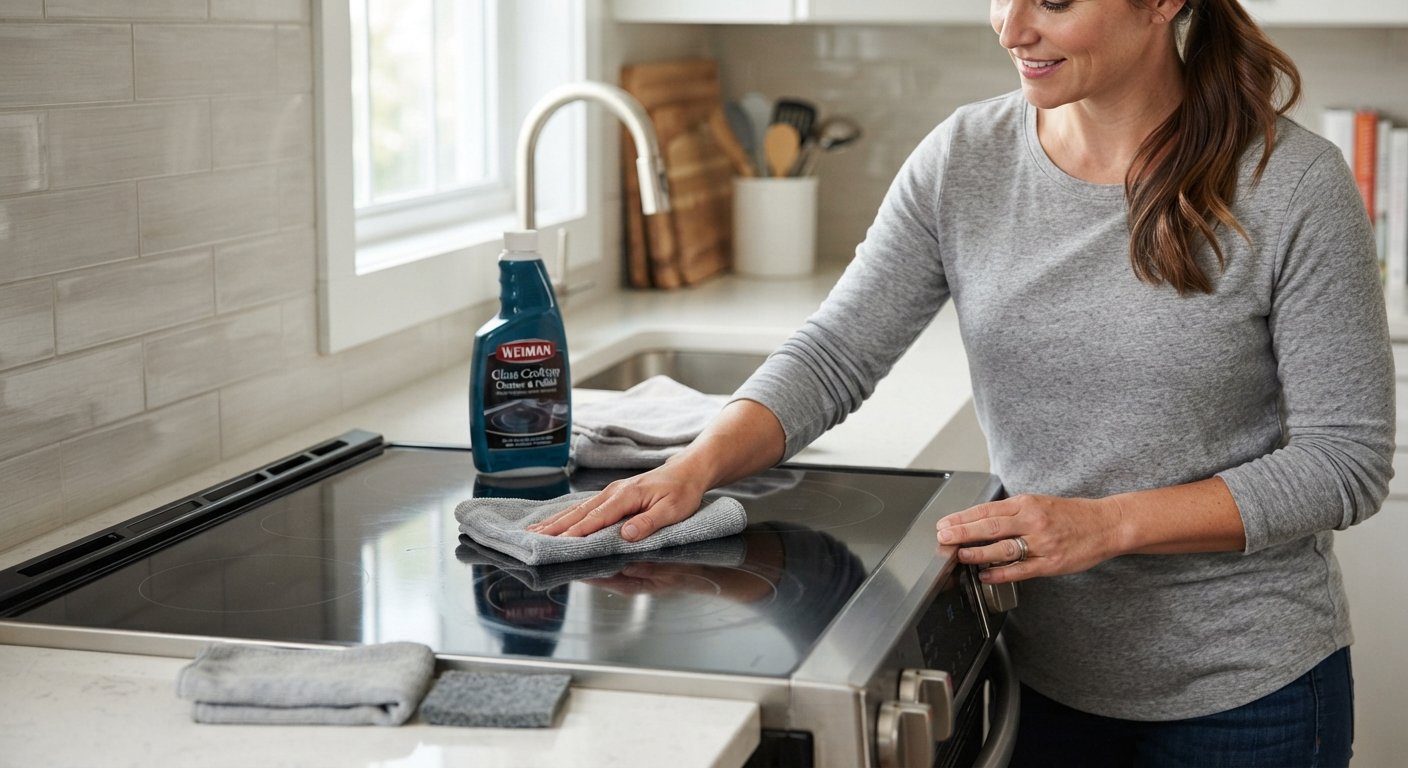
If you live in Chicago and have a glass-top stove, regular cleaning can keep the cooktop looking polished and help prevent food and grease from becoming baked onto the glass-ceramic surface.
Whether you're cleaning a stove in a Chicago apartment, condo, single-family home, or rental, the basic method is the same: let the surface cool, remove loose debris, use a cooktop-safe cleaner, wipe with a soft cloth, and use an appropriate cooktop scraper for stubborn residue.
This guide explains how to clean a glass-top stove, remove burnt food and grease, deal with cloudy marks, and avoid common cleaning mistakes.
What You Need to Clean a Glass Top Stove
You don't need a large collection of cleaning products.
Keep these items on hand:
- Glass cooktop cleaner
- Microfiber cloth
- Soft, non-abrasive cleaning cloth
- Cooktop scraper designed for glass-ceramic surfaces
- Warm water
- Clean, dry microfiber cloth
If you're cleaning a glass stove in a Chicago apartment or rental, it's particularly useful to keep a small cooktop-cleaning kit nearby so minor spills don't turn into difficult baked-on stains.
How to Clean a Glass Top Stove
1. Turn Off the Stove and Let It Cool
Turn off all burners and allow the cooktop to cool before cleaning.
Do not begin scrubbing a hot glass surface unless the manufacturer's instructions specifically tell you to do so.
For Chicago households, this is especially useful during busy cooking periods such as holiday meals, family dinners, or apartment cooking where several dishes may be prepared one after another.
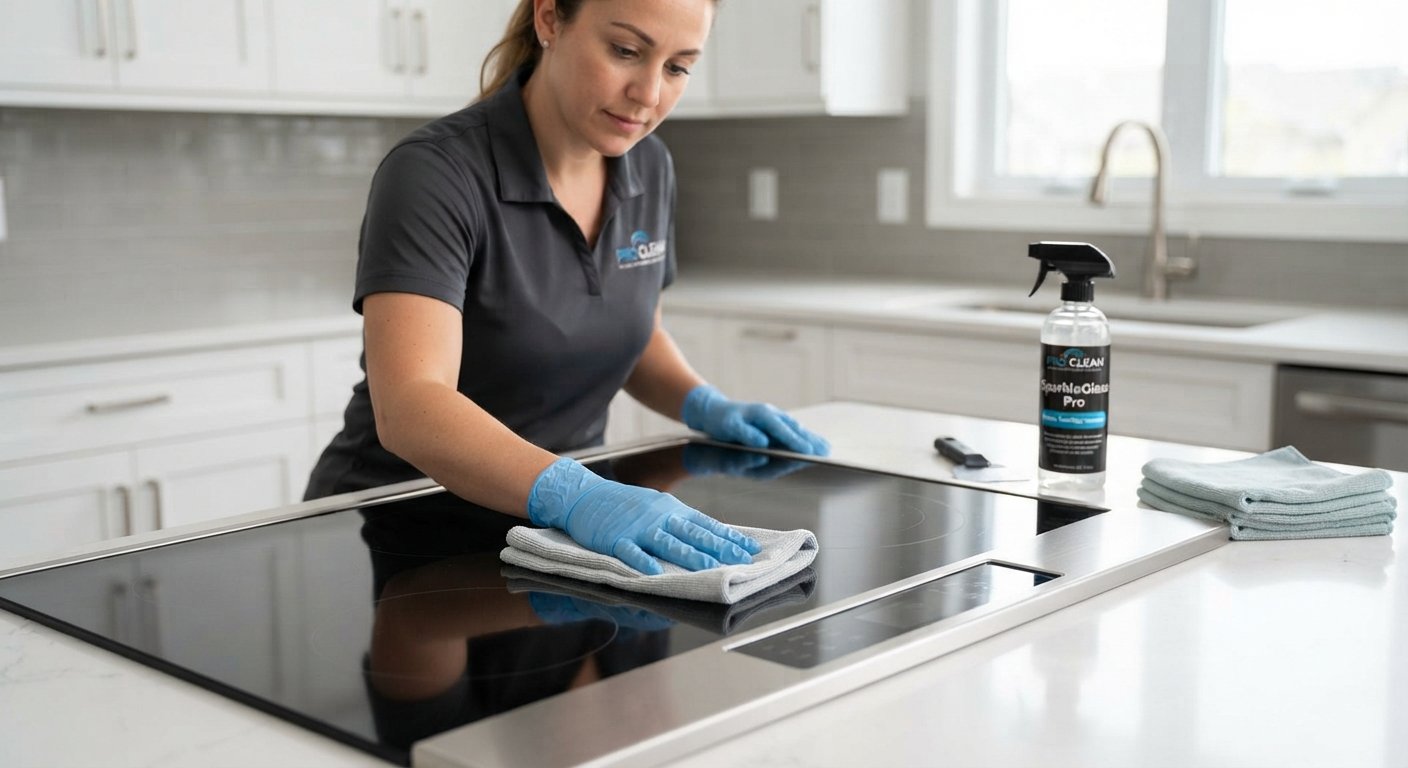
2. Remove Loose Food and Crumbs
Once the surface is cool, use a soft cloth to remove loose crumbs and food particles.
Don't drag hard particles across the cooktop. Small pieces of burnt food or grit can act like abrasive material when rubbed against the glass.
3. Apply a Glass Cooktop Cleaner
Apply a small amount of cleaner specifically designed for glass or glass-ceramic cooktops.
Spread the cleaner over the dirty areas using a soft cloth.
For everyday grease and light food residue, you shouldn't need aggressive scrubbing.
4. Wipe With a Microfiber Cloth
Use a microfiber cloth to work the cleaner across the surface.
Pay particular attention to areas around cooking zones where grease, sauces, starches, and food spills commonly accumulate.
If you're cleaning a glass-top stove in a Chicago apartment, this quick wipe-down can be a practical part of your regular kitchen-cleaning routine.
5. Remove Burnt-On Food With a Cooktop Scraper
If food has dried or burned onto the cooktop, a cloth alone may not be enough.
Use a scraper specifically designed for glass cooktops. Keep the scraper at the recommended angle and gently loosen the residue.
Don't substitute a kitchen knife or another unsuitable sharp object.
Once the residue is lifted, wipe it away with a clean microfiber cloth.
6. Wipe Away the Cleaner
Use a clean, slightly damp microfiber cloth to remove remaining cleaning product.
Continue wiping until there is no visible residue.
7. Dry and Polish the Surface
Finish with a clean, dry microfiber cloth.
A final wipe removes streaks and leaves the glass surface looking cleaner and more polished.
The best way to clean a glass-top stove is not to scrub harder—it's to use the appropriate cleaner and tools for the type of residue.
Why Glass Top Stoves Need Different Cleaning
A glass-top stove isn't cleaned in quite the same way as a traditional metal cooktop.
The smooth glass-ceramic surface can show:
- Grease film
- Burnt food
- Water spots
- Food splashes
- Streaks
- Cookware marks
- Dried cleaning-product residue
The smooth surface also means that scratches and abrasive marks can be highly visible.
That's why the goal isn't simply to scrub harder. The goal is to use the right cleaner and tool for the type of residue you're removing.
How to Clean a Glass Top Stove After Cooking
For everyday Chicago cooking, you can use a simple maintenance routine:
- Turn off the stove.
- Let the surface cool.
- Remove crumbs and loose food.
- Wipe spills with a soft cloth.
- Use cooktop cleaner when grease or residue remains.
- Dry the surface with a clean microfiber cloth.
Cleaning small spills regularly is much easier than waiting until several layers of food residue have accumulated.
How to Remove Burnt Food From a Glass Top Stove
Burnt food requires a slightly different approach.
First, allow the cooktop to cool. Apply a cooktop-safe cleaner according to its instructions, then use a glass-cooktop scraper to loosen stubborn residue.
Work gradually instead of applying excessive pressure.
After removing the burnt food, wipe the area clean and dry it.
What if the burnt food won't come off?
Don't immediately switch to a more abrasive cleaner.
Instead:
- Reapply an appropriate cooktop cleaner.
- Give the product the recommended amount of time to work.
- Use an appropriate cooktop scraper.
- Repeat the process if necessary.
- Avoid steel wool and abrasive pads.
If the surface itself appears damaged rather than simply dirty, check the manufacturer's care instructions.
How to Remove Grease From a Glass Top Stove
Grease is easier to remove before it becomes baked onto the cooktop.
For fresh or light grease:
- Let the cooktop cool.
- Remove loose debris.
- Apply glass cooktop cleaner.
- Wipe with a microfiber cloth.
- Repeat if necessary.
- Finish with a clean damp cloth.
- Dry with a microfiber cloth.
For baked-on grease, use a cooktop scraper designed for the surface when appropriate.
How to Remove White or Cloudy Marks From a Glass Cooktop
If your glass-top stove looks cloudy after cleaning, the problem may be residue left behind by food, water, or cleaning products.
Start with a cleaner designed for glass-ceramic cooktops rather than immediately reaching for an abrasive product.
This is particularly important because trying to remove a difficult-looking mark with an abrasive pad can create scratches that are harder to fix than the original stain.
Does Chicago Water Cause White Marks on a Glass Stove?
Chicago homeowners may notice water spots or mineral-looking residue on kitchen surfaces, but it's better not to assume that every white mark on a cooktop is caused by Chicago's water.
If you notice recurring deposits after cleaning, identify what is actually leaving the residue before choosing a stronger cleaning method.
For questions about Chicago's municipal water, residents can consult information from the City of Chicago's Department of Water Management rather than relying on generalized cleaning claims.
The same principle applies whether you're living in a downtown condo, a North Side apartment, a South Side home, or elsewhere in the Chicago area: diagnose the residue first, then choose the least abrasive cleaning method that will remove it.
How to Clean a Glass Stove in a Chicago Apartment
Glass cooktops are common in modern apartments and condos, where keeping the kitchen clean can make a noticeable difference to the appearance of the space.
If you're renting, avoid experimenting with harsh chemicals or aggressive tools that could permanently mark the cooktop.
A practical apartment-friendly routine is:
For renters, it's also worth checking the appliance manual or asking the property manager which cleaning products are recommended for the specific stove.

How to Clean a Glass Top Stove During Chicago Winters
Chicago's winter weather doesn't require a special glass-stove cleaning formula, but winter cooking can mean more frequent indoor cooking and heavier kitchen use.
Soups, sauces, casseroles, pasta, and other stovetop meals can create spills that become difficult to remove when allowed to dry or burn onto the surface.
The simplest strategy is to clean spills routinely rather than allowing them to accumulate.
If a spill occurs while you're cooking, don't try to wipe a dangerously hot surface. Finish cooking if appropriate, switch off the burner, allow the surface to reach a safe temperature, and then clean it according to the manufacturer's instructions.
What Not to Use on a Glass Top Stove
Avoid methods that can scratch or damage the glass-ceramic surface.
Don't use:
- Steel wool
- Abrasive scouring pads
- Gritty cleaning powders
- Knives
- Improvised razor blades
- Harsh products not intended for the cooktop
- Excessive pressure when scraping
When in doubt, follow the manufacturer's cleaning instructions for your particular stove.
Can You Use Baking Soda on a Glass Top Stove?
Baking soda is frequently recommended as a DIY cleaning solution, but recommendations vary by appliance manufacturer.
Before using it, check your stove's care instructions.
If you're unsure, a cleaner specifically formulated for glass-ceramic cooktops is the safer general choice.
Can You Use Vinegar on a Glass Top Stove?
Vinegar is another common DIY cleaning suggestion.
However, whether it is appropriate depends on the cooktop manufacturer's recommendations and the type of residue you're trying to remove.
For routine maintenance, a purpose-made glass cooktop cleaner is a straightforward option.
How Often Should You Clean a Glass Top Stove?
You don't necessarily need to deep-clean the cooktop every day.
A practical schedule is:
- After cooking: Wipe up spills once the surface is safely cool.
- When grease builds up: Use cooktop cleaner.
- When food burns onto the surface: Use an appropriate cooktop scraper.
- Periodically: Give the entire surface a thorough cleaning and polish.
The more consistently you remove spills, the less often you'll need intensive cleaning.
How to Keep a Glass Top Stove Clean
A few simple habits can prevent many difficult stains:
- Clean spills before they become baked-on residue.
- Keep cookware bottoms clean and dry.
- Don't drag pots and pans across the glass.
- Use cookware recommended by the stove manufacturer.
- Don't use abrasive cleaning tools.
- Keep a microfiber cloth and cooktop cleaner available.
- Follow the appliance manufacturer's maintenance instructions.
Glass Top Stove Cleaning Checklist
| Problem | What to use |
|---|---|
| Crumbs and loose food | Soft microfiber cloth |
| Light grease | Cooktop cleaner + microfiber cloth |
| Dried food | Cooktop cleaner + soft cloth |
| Burnt-on food | Cooktop cleaner + appropriate cooktop scraper |
| Water/mineral-looking marks | Cooktop-safe cleaner + soft cloth |
| Streaks | Damp microfiber cloth + dry microfiber cloth |
| Scratches | Prevention; avoid abrasive tools |
Frequently Asked Questions
What is the best way to clean a glass top stove?
Let the surface cool, remove loose debris, apply a glass-cooktop cleaner, and wipe with a soft microfiber cloth. Use an appropriate cooktop scraper for stubborn burnt-on food.
How do you clean a glass top stove without scratching it?
Use non-abrasive products and soft cloths. Avoid steel wool, abrasive pads, gritty cleaners, and unsuitable sharp objects.
How do you get burnt food off a glass cooktop?
Use a cleaner designed for the cooktop and a scraper specifically intended for glass-ceramic surfaces. Work gently rather than aggressively scrubbing.
Can you use baking soda on a glass stove?
Check the appliance manufacturer's instructions first. If there is no manufacturer recommendation for baking soda, a purpose-made glass cooktop cleaner is the more straightforward option.
Can you use vinegar on a glass cooktop?
Check the manufacturer's cleaning instructions before using vinegar. A cooktop-specific cleaner is generally the simpler option for routine cleaning.
Why does my glass cooktop look cloudy after cleaning?
Cloudiness can result from food residue, water deposits, or cleaning-product residue. Thoroughly remove the cleaner with a damp microfiber cloth and follow with a dry cloth.
How do Chicago residents keep glass-top stoves clean?
The cleaning method is the same as elsewhere: remove spills once the surface is safely cool, use a cooktop-safe cleaner, and avoid abrasive tools. The useful Chicago-specific consideration is adapting the routine to your home and cooking habits rather than relying on unverified claims about local water or climate.
Need apartment or condo cleaning in Chicago?
Keeping the kitchen clean is easier when regular cleaning is part of the routine.
Explore Apartment & Condo CleaningFinal Takeaway
The best way to clean a glass-top stove is not to scrub harder—it's to use the appropriate cleaner and tools for the type of residue.
For Chicago homes and apartments, a simple routine works well: clean spills after the cooktop cools, use a glass-cooktop cleaner for grease and residue, use an appropriate scraper for burnt food, and avoid anything abrasive that can scratch the surface.
If you live in Chicago and repeatedly notice a particular type of residue—such as white marks, cloudy patches, burnt food, or grease buildup—identify the problem first and choose the cleaning method accordingly.