
Cleaning a microwave doesn't have to mean scrubbing dried-on food for a long time. A simple combination of steam, gentle cleaning, and a soft cloth can help loosen food residue, grease, and splatters before you wipe the interior clean.
This guide explains how to clean the microwave cavity, turntable, door, frame, control panel, and exterior, along with ways to handle heavy buildup and lingering odors. If you're cleaning an apartment in Chicago, it also covers situations where microwave cleaning becomes part of a larger kitchen or move-out cleaning job.
The basic approach is simple: remove loose debris → loosen buildup with steam → wipe with mild soap and water → clean removable parts → clean the door and exterior → dry.
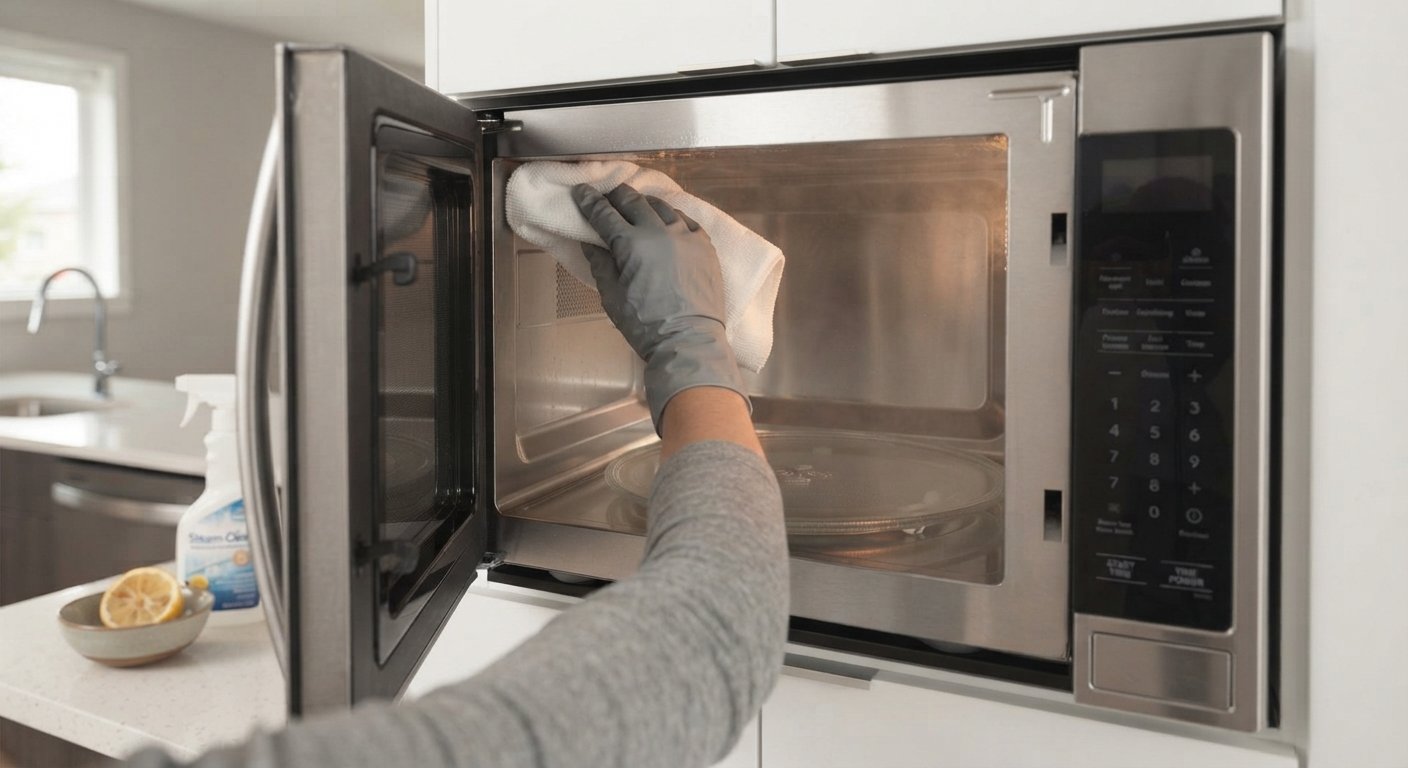
What You'll Need to Clean a Microwave
Gather the basic supplies before you begin:
- Microwave-safe container
- Water
- Soft cloth or sponge
- Mild dish soap
- Microfiber cloth
- Optional lemon juice or vinegar
Check your microwave manufacturer's cleaning instructions before using any cleaning method, particularly if your appliance has special interior coatings, stainless-steel surfaces, or other model-specific care requirements.
Step-by-Step: How to Clean the Inside of a Microwave
The inside of the microwave is usually where food splatters, dried sauces, grease, and odors build up. Start gently and use steam to loosen residue instead of immediately trying to scrub it away.
1. Remove crumbs and food debris
Start by removing loose crumbs, pieces of food, and other debris from the microwave cavity. This makes the remaining residue easier to clean.
2. Loosen dried-on food with steam
Place water in a microwave-safe container and heat it according to your microwave manufacturer's instructions. The resulting steam can soften dried-on food and make the residue easier to wipe away.
Once the heating cycle is complete, use care when removing the container because both the container and water may be hot.
3. Wipe the microwave interior
Use a soft cloth or sponge to wipe the softened residue from the microwave interior.
Work across the side walls, back wall, ceiling, floor, corners, and other accessible surfaces. If residue remains, repeat the process rather than immediately using aggressive scrubbing.
4. Clean the turntable
Remove the turntable if your model is designed for removal. Clean it according to the manufacturer's instructions, using an appropriate mild cleaning method, then rinse and dry it before putting it back.
5. Wipe the microwave door and frame
Clean the inside and outside of the microwave door and pay attention to the frame and the area where the door meets the microwave.
Food particles and grease can collect around these areas even when the main cavity looks clean.
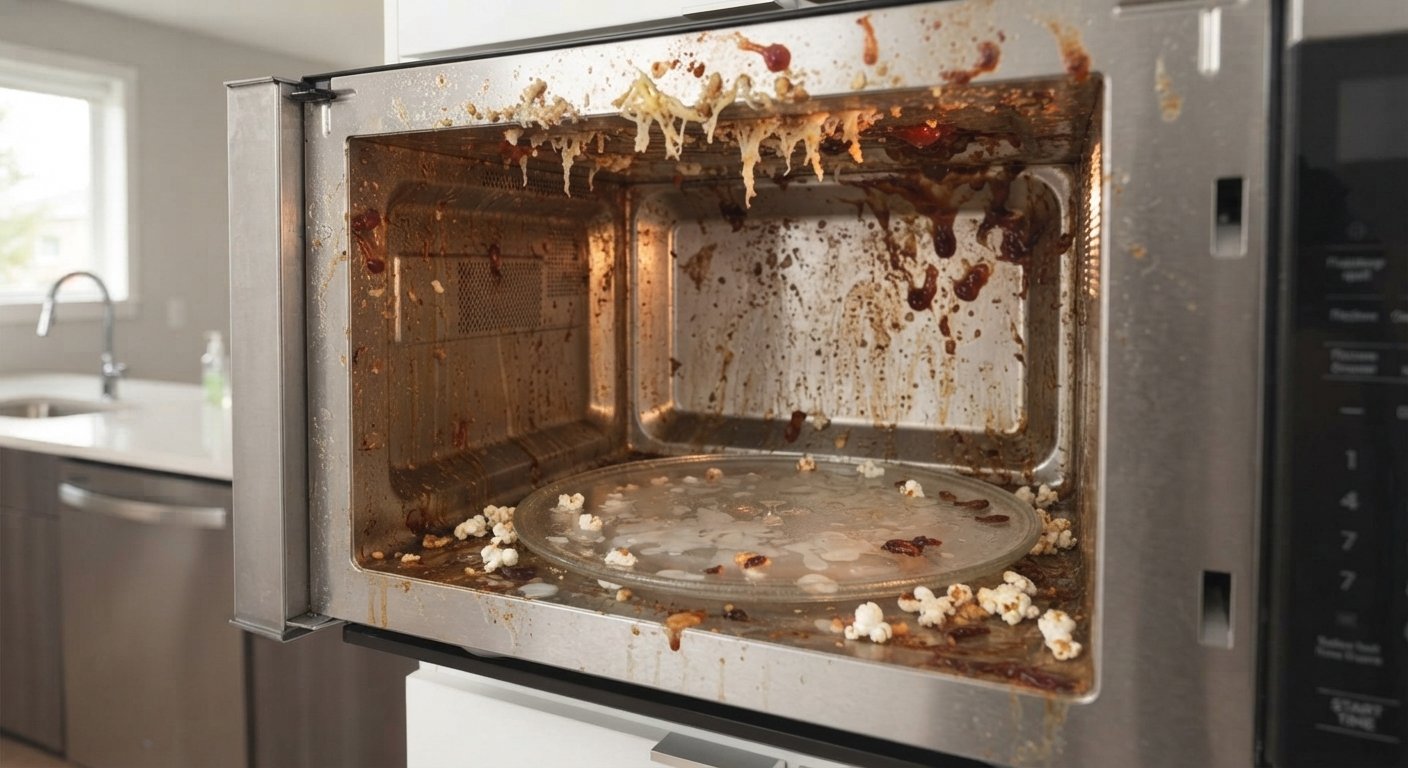
How to Clean a Microwave With Heavy Buildup
Heavy buildup can include dried food, grease, splattered sauces, popcorn residue, or food stuck to the ceiling and corners of the microwave.
The useful distinction is between softening residue and scrubbing residue. Start by using steam to loosen the buildup, then wipe the surface with a soft cloth or sponge.
Light splatter
Wipe the surface with a soft cloth or sponge and an appropriate mild cleaning solution.
Dried food
Use steam to soften the residue before wiping it away.
Persistent residue
Repeat the steam-and-wipe process instead of immediately increasing the abrasiveness of your cleaning method.
Surface concerns
If residue does not come away easily, avoid aggressive scrubbing that could damage the microwave surface.
Abrasive cleaners, steel wool, soap-filled scouring pads, and gritty cleaning materials can damage microwave surfaces. Always check your model's care instructions before using a particular cleaning product.
How to Remove Bad Smells From a Microwave
Lingering microwave odors can come from food residue that remains inside the cavity. Cleaning the residue should therefore be the first step in addressing the smell.
Clean the residue first
Check the microwave ceiling, floor, side walls, corners, turntable, and areas around the door for food particles or splatters. Removing the residue can address the source of the odor rather than simply masking it.
Using lemon or vinegar
Some microwave manufacturers provide instructions for using lemon juice or vinegar with water as part of an odor-removal method. Because cleaning recommendations vary by model, follow your microwave manufacturer's instructions before using either option.
Odor removal works best as part of cleaning the microwave itself. If food residue remains inside the cavity, the smell may continue to return.
How to Clean Different Parts of a Microwave
A microwave is more than its main interior cavity. Cleaning the individual areas can help you avoid leaving behind food, grease, fingerprints, or residue.
| Microwave area | What to address |
|---|---|
| Microwave interior | Food residue and splatters |
| Ceiling | Grease and dried food |
| Floor | Spills and crumbs |
| Turntable | Removable food residue |
| Door | Fingerprints and food splashes |
| Door frame | Food buildup around the contact area |
| Control panel | Gentle wiping without excessive moisture |
| Stainless-steel exterior | Nonabrasive cleaning appropriate for the finish |
| Microwave inlet cover | Keeping the area clean without damaging it |
Pay attention to your manufacturer's instructions for the control panel, stainless-steel surfaces, inlet cover, and other components because cleaning requirements can vary between microwave models.
What Not to Use When Cleaning a Microwave
A clean microwave is useful, but the cleaning method matters. Avoid turning a stubborn stain into a damaged surface by using unnecessarily abrasive materials.
- Steel wool
- Abrasive cleaners
- Soap-filled scouring pads
- Gritty cleaning cloths
- Harsh scrubbing
- Cleaning products used contrary to the manufacturer's instructions
Be particularly careful around the control panel and other sensitive components. Don't assume that a product suitable for another kitchen surface is automatically appropriate for the microwave.
When residue is difficult to remove, soften it first rather than automatically choosing a stronger abrasive cleaner.
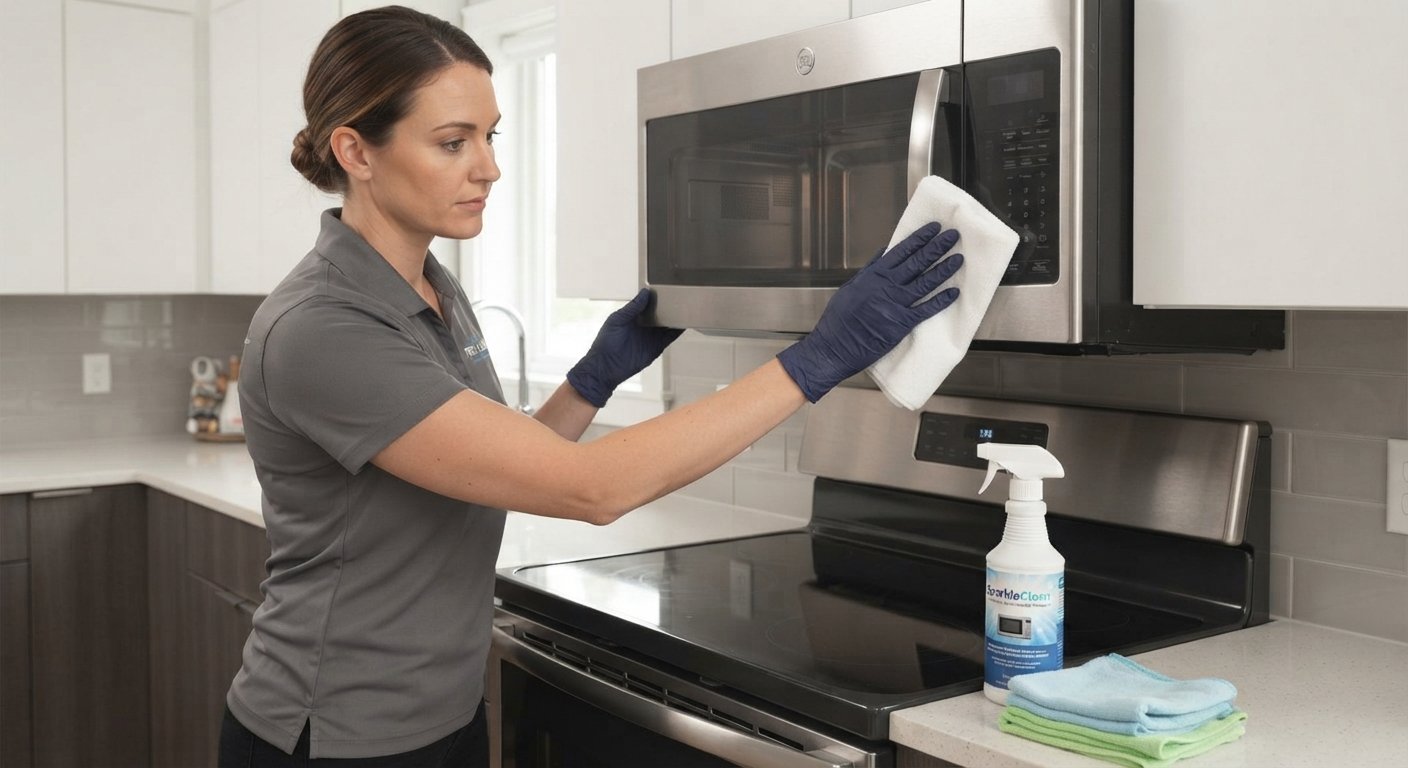
How to Clean an Over-the-Range Microwave
An over-the-range microwave can require attention to both the appliance and the areas around it because it sits above the cooking surface.
Clean the interior cavity, door, frame, control panel, and exterior according to the manufacturer's instructions. Pay attention to grease on accessible exterior surfaces, particularly when the microwave is located above a frequently used cooktop.
Because an over-the-range microwave may be harder to reach, make sure you can safely access the surfaces you are cleaning rather than stretching or using an unstable position.
What Makes Microwave Cleaning Different in a Chicago Apartment?
Chicago microwaves do not require a completely different cleaning method simply because they are in Chicago. The more useful consideration is the type of apartment and the way the microwave is used.
Small apartment kitchens
Limited counter space can make an over-the-range microwave more difficult to access and clean.
Cooking odors
Frequent cooking can leave food odors behind. Cleaning the residue that causes the odor is an important part of keeping the microwave fresh.
Grease from frequent cooking
Greasy residue may require repeated gentle wiping rather than aggressive scrubbing.
Move-out cleaning
A microwave may become one of the kitchen appliances you check when preparing an apartment for handover.
If you're cleaning more than just the microwave, apartment and condo cleaning can be relevant when the appliance is part of a larger apartment cleaning job.
How to Clean a Microwave Before Moving Out of a Chicago Apartment
When you're preparing an apartment for move-out, the microwave should be treated as part of the kitchen rather than as an isolated appliance.
A practical sequence is:
- Empty the microwave.
- Remove loose food debris.
- Steam-soften stuck-on residue.
- Clean the interior.
- Clean the turntable.
- Wipe the door and frame.
- Clean the exterior.
- Check for remaining food, grease, or odors.
- Photograph the final condition if documenting the apartment.
If you're moving out of a Chicago apartment, your lease and property-manager instructions should remain the starting point for determining what cleaning is expected.
For a broader apartment move-out, you can explore move-in / move-out cleaning.
How Often Should You Clean Your Microwave?
Cleaning frequency depends on how often the microwave is used and how much food residue accumulates.
- Visible spills: Clean them promptly rather than allowing them to dry and build up.
- Food splatters: Clean them before they accumulate into heavier residue.
- Strong odors: Clean the interior and identify the food residue causing the smell.
- Heavy buildup: Use a deeper cleaning approach that softens the residue before wiping.
- Before moving out: Include the microwave in the final kitchen cleaning.
Common Microwave Cleaning Problems
How do I clean dried food from a microwave?
Use steam to soften dried food before wiping it with a soft cloth or sponge. Repeat the process if necessary instead of immediately using abrasive materials.
How do I clean grease from a microwave?
Start with a gentle cleaning method appropriate for the microwave's surface. Steam can help soften residue inside the cavity, while the exterior should be cleaned according to the manufacturer's instructions.
How do I get burnt popcorn smell out of a microwave?
Clean the food residue first, including residue on the cavity, turntable, door, and other accessible areas. If an odor remains, follow your manufacturer's instructions for odor removal.
How do I clean the microwave ceiling?
Steam can help soften food and grease that have collected on the ceiling. Wipe the softened residue gently with an appropriate soft cloth or sponge.
How do I clean a stainless-steel microwave?
Use a nonabrasive cleaning method appropriate for stainless steel and follow the manufacturer's instructions for the appliance's specific finish.
What if the food residue won't come off?
Repeat the steam-and-wipe process rather than immediately increasing the abrasiveness of your cleaning method. If the surface appears damaged, avoid aggressive scrubbing.
What if the microwave still smells after cleaning?
Check for remaining food residue in the cavity, around the turntable, near the door, and in other accessible areas. Follow your manufacturer's odor-removal instructions if the smell continues.
Frequently Asked Questions
How do you clean a microwave quickly?
Remove loose debris, use steam to soften dried-on residue, then wipe the interior with an appropriate soft cloth or sponge. Finish by cleaning the turntable, door, frame, and exterior as needed.
What is the easiest way to clean a microwave?
The easiest approach is to loosen food residue with steam before wiping it away. This can reduce the need for aggressive scrubbing.
Can you use vinegar to clean a microwave?
Some microwave manufacturers provide vinegar-and-water instructions for cleaning or odor removal. Check your specific microwave's manufacturer's instructions before using vinegar.
Can you use lemon to clean a microwave?
Some manufacturers provide lemon-and-water methods for microwave odor removal. Follow your specific model's instructions before using lemon juice.
How do you remove burnt food from a microwave?
Use steam to soften the burnt food residue, then wipe it gently with an appropriate soft cloth or sponge. Repeat the process if needed and avoid abrasive materials that could damage the surface.
How do you remove bad smells from a microwave?
Start by removing the food residue responsible for the odor. If the smell remains, follow your microwave manufacturer's instructions for odor removal.
How do you clean a stainless-steel microwave?
Use a nonabrasive method appropriate for the stainless-steel finish and follow the manufacturer's cleaning instructions for your microwave.
How do you clean an over-the-range microwave?
Clean the interior, door, frame, control panel, and accessible exterior surfaces according to the manufacturer's instructions. Take care when accessing surfaces above the cooking area.
What should you not use to clean a microwave?
Avoid abrasive cleaners, steel wool, soap-filled scouring pads, gritty cleaning materials, and aggressive scrubbing unless your manufacturer's instructions specifically say otherwise.
Should you clean a microwave before moving out?
If you're preparing an apartment for move-out, include the microwave in your kitchen cleaning checklist and review your lease or property-manager instructions for the applicable cleaning requirements.
Need Move-Out Cleaning in Chicago?
If you're preparing your Chicago apartment for move-out and the microwave is only one part of the final cleaning, explore move-in / move-out cleaning.
Explore Move-Out Cleaning