
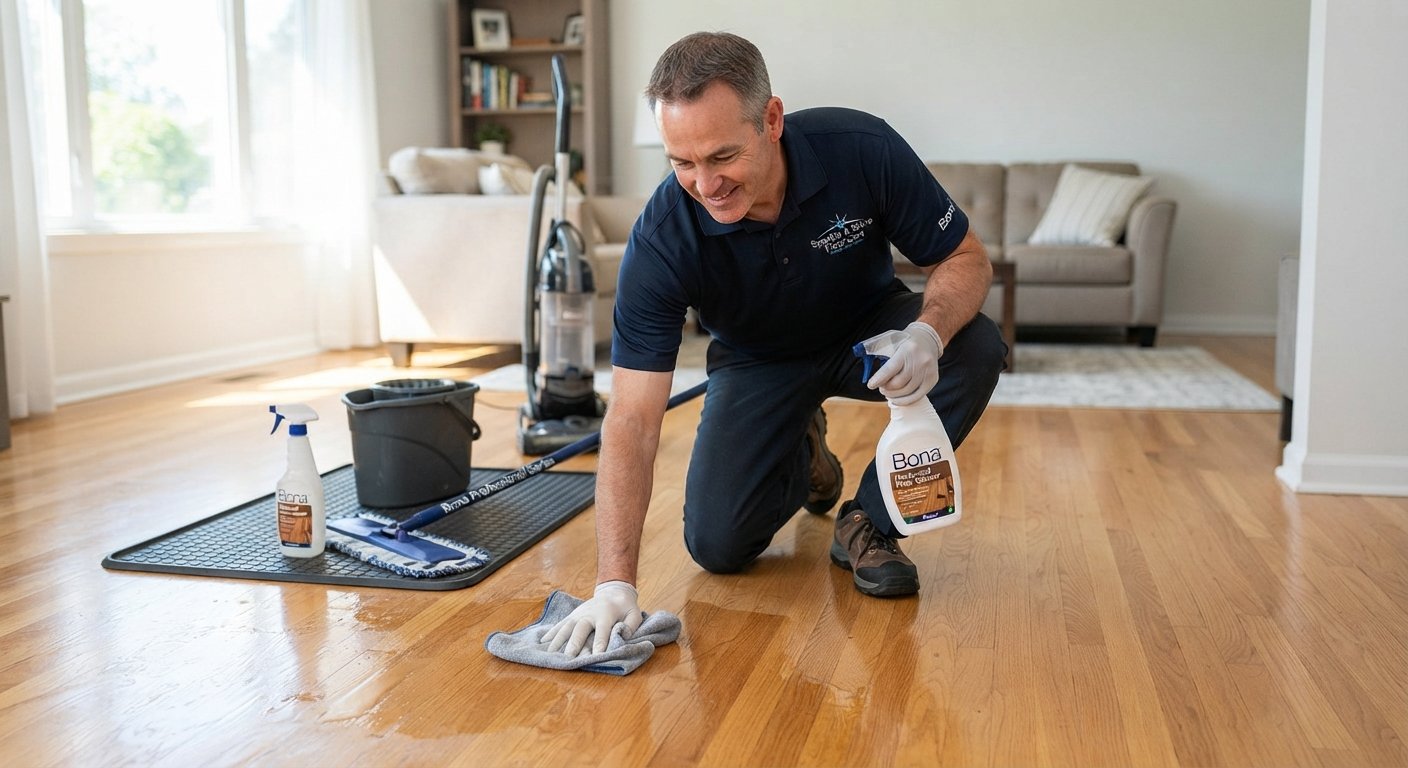
Best Way to Clean Hardwood Floors: A Safe Step-by-Step Guide
Hardwood floors are durable, but they are not completely waterproof or maintenance-free. The safest way to clean them is to remove dry dirt first, use a cleaner appropriate for the floor's finish, control the amount of moisture, and wipe up spills quickly.
For most finished hardwood floors, the basic process is:
This matters even more in Chicago, where winter can bring snow, slush, road salt, and grit into the house. Those materials can scratch a floor's finish or introduce moisture that the wood does not tolerate well.
The National Wood Flooring Association (NWFA) recommends sweeping, dust mopping, or vacuuming on the bare-floor setting, cleaning spills immediately, avoiding wet and steam mops, and using a cleaner appropriate for the floor's finish.
What Is the Best Way to Clean Hardwood Floors?
The best hardwood-floor cleaning method depends partly on the flooring construction and finish, but a safe general approach is:
- Remove abrasive debris.
- Spot-clean spills and sticky areas.
- Apply a compatible hardwood-floor cleaner.
- Damp mop using minimal liquid.
- Remove excess moisture and allow the floor to dry.
1. Remove dirt before adding moisture
Start with a dry cleaning method.
Use a microfiber dust mop, soft broom, or vacuum with the bare-floor setting. Do not drag loose sand, grit, or salt around with a wet mop.
This step is particularly important because small particles can act like abrasives when they're pushed across the finish. NWFA recommends regular sweeping or dust mopping and bare-floor vacuuming to remove dirt before it can contribute to scratching and finish wear.
For homes with pets, children, or heavy foot traffic, dry cleaning may need to happen much more frequently than wet cleaning.
2. Treat spills and sticky spots
Don't wait for your scheduled floor-cleaning day to deal with a spill.
For water, coffee, food, pet accidents, mud, or other small spills, blot or wipe the area with a dry or slightly damp soft cloth. The important part is to prevent moisture from sitting on the floor.
NWFA specifically recommends immediately cleaning spills with a dry or slightly damp cloth.
3. Use a cleaner made for hardwood floors
When the floor needs more than dry dust removal, choose a product designed for wood flooring and, when possible, one recommended for your particular finish.
Don't assume that a cleaner designed for tile, stone, or vinyl is automatically safe for hardwood.
Your flooring manufacturer's care instructions should take priority, particularly if you have an unusual finish, an older floor, or a floor that has been waxed or treated with specialty products.
Consumer Reports recommends a pH-neutral hardwood-floor cleaner and advises checking the flooring manufacturer's care instructions before applying a cleaner.
4. Damp mop—not wet mop
This is one of the most important distinctions in hardwood-floor care.
A damp mop puts a controlled, small amount of moisture onto the floor.
A wet mop can leave enough water behind to seep into seams or remain on the surface.
Use a microfiber mop or another system that allows you to control how much liquid reaches the floor. Follow the cleaner's instructions rather than assuming that more solution produces a cleaner floor.
NWFA's current cleaning guidance recommends mopping with minimal liquid and emphasizes avoiding excessive moisture.
5. Let the floor dry
After cleaning, the floor should not remain visibly wet.
If you've used too much liquid, remove the excess rather than allowing it to evaporate slowly from the wood.
Hardwood is a natural material that responds to moisture. Excess moisture can contribute to swelling and other flooring problems, while excessively dry conditions can contribute to shrinking, gaps, and splitting.
How Often Should You Clean Hardwood Floors?
There isn't one perfect schedule for every home.
Cleaning frequency depends on:
- Foot traffic
- Pets
- Children
- Outdoor dirt
- Weather
- Shoes worn indoors
- Location of entrances
- Kitchen activity
- The flooring's finish and condition
A practical routine is:
| Cleaning task | Typical approach |
|---|---|
| Dust mop/sweep | Daily or as needed |
| Vacuum with bare-floor setting | Weekly or as needed |
| Spill cleanup | Immediately |
| Damp cleaning | Periodically, based on traffic and manufacturer's instructions |
| Recoating | When the finish shows appropriate signs of wear |
| Refinishing/repair | When the floor has deeper damage |
NWFA notes that maintenance schedules vary according to use, wear, tear, and lifestyle.
For a busy Chicago household during winter, you may need to dry-clean and spot-clean the floor much more frequently because snow, salt, and grit can be tracked inside.
How to Clean Hardwood Floors in Chicago
Chicago homes face a particular combination of hardwood-floor problems during winter:
snow + slush + road salt + grit + wet shoes + indoor heating.
That means hardwood care isn't just about cleaning the floor after it gets dirty. Prevention matters.
Remove road salt as soon as possible
Road salt is especially important because it can arrive inside mixed with water and grit.
If you see salt or salty slush on the floor:
- Remove the solid debris without grinding it into the finish.
- Blot up moisture.
- Use a slightly damp cloth or appropriate hardwood-floor cleaner according to the flooring manufacturer's instructions.
- Wipe away remaining residue.
- Dry the area promptly.
NWFA specifically warns that salt can scratch the floor's surface and recommends taking extra precautions when winter salt is tracked inside.
Use mats at entrances
A good entrance system can prevent a significant amount of winter mess from ever reaching the hardwood.
Consider using:
- An exterior mat for snow and debris
- An interior absorbent mat
- A designated place for wet shoes and boots
- A shoe-removal area
- Rugs in high-traffic zones
NWFA recommends breathable rugs at doorways and in high-traffic areas to reduce tracked-in debris.
Clean slush and water immediately
A small puddle from a pair of boots may look harmless, but hardwood should not be treated like a waterproof surface.
If someone walks through the house with wet boots, dry the area as soon as you notice it.
Don't leave the puddle until the evening cleaning routine.
Pay attention to Chicago's winter humidity
Winter creates another hardwood-floor challenge: indoor air can become very dry when heating systems are running.
Wood loses moisture in dry conditions and gains moisture in humid conditions. Significant environmental changes can contribute to gaps, splitting, cupping, or other changes in floor performance.
NWFA recommends maintaining approximately 30–50% relative humidity and 60–80°F year-round to minimize these changes.
Consumer Reports also notes that excessive dryness during winter can cause boards to shrink and recommends humidification in colder, drier seasons.
What Not to Use on Hardwood Floors
Some of the most common hardwood-cleaning mistakes involve using a product or method that seems convenient but isn't appropriate for wood.
| Avoid | Why |
|---|---|
| Steam mops | Heat and moisture can damage wood or the finish |
| Soaking-wet mops | Excess water can enter seams and damage wood |
| Bleach-based cleaners | May damage or strip finishes |
| Ammonia-based cleaners | Can damage protective finishes |
| Vinegar-heavy solutions | Acidic products may damage certain finishes |
| Unapproved waxes or polishes | Can create residue or interfere with future maintenance |
| Abrasive scrubbers | Can scratch the finish |
| Tile/vinyl cleaners | May not be formulated for hardwood |
| Excessive cleaning solution | Can leave residue and streaks |
NWFA advises against wet and steam mops, vinyl/tile cleaning products, and certain shine, polish, wax, and restoration products.
Consumer Reports similarly recommends avoiding bleach, ammonia, wax, and acidic substances such as vinegar and warns against steam cleaning wood floors.
Can You Use Vinegar and Water on Hardwood Floors?
Vinegar and water is one of the most common DIY hardwood-floor cleaning recommendations.
That doesn't mean it's automatically appropriate for every hardwood floor.
Vinegar is acidic, and Consumer Reports notes that acidic substances such as distilled white vinegar may damage or etch some hardwood finishes. NWFA's more recent guidance likewise advises against vinegar-and-water cleaning.
The safer approach is to use a hardwood-floor cleaner that is specifically compatible with your flooring and finish.
Natural does not automatically mean finish-safe.
If a flooring manufacturer specifically recommends a particular cleaning solution for your floor, follow that guidance. Otherwise, don't assume that a popular DIY recipe is appropriate simply because it has been used traditionally.
Can You Mop Hardwood Floors With Water?
This depends on what you mean by "mop with water."
Hardwood floors generally should not be cleaned with a soaking-wet mop or left wet after cleaning.
A controlled, slightly damp cleaning method may be appropriate for some finished hardwood floors, but the floor and finish manufacturer's instructions should determine the exact method.
Use as little moisture as necessary and never leave standing water behind.
NWFA recommends cleaning spills with a dry or slightly damp cloth and avoiding wet mops.
Can You Use a Steam Mop on Hardwood Floors?
For most hardwood floors, the safest answer is no.
Steam mops combine heat and moisture. That combination can create problems for wood flooring, including moisture entering joints and potentially damaging the finish or wood.
Consumer Reports advises against using steam mops on wood flooring because heat and moisture can contribute to warping.
Even if a particular steam-mop manufacturer says its device can be used on sealed hardwood, check your flooring manufacturer's instructions before using it.
How to Clean Hardwood Floors Without Streaks
Streaks usually have a cause.
Common causes
- Too much cleaning solution
- Too much water
- A dirty mop pad
- Cleaning over loose dirt instead of removing it first
- Residue from previous cleaning products
- An incompatible cleaner
- Allowing solution to dry on the floor
Fix
If the floor continues to look cloudy or streaky after proper cleaning, the issue may not be ordinary dirt. Old product residue, finish wear, or another flooring condition may require a different solution.
How to Clean Different Types of Hardwood Floors
Not every wood floor should be treated identically.
Solid hardwood
Solid hardwood is milled from a single piece of wood. Its cleaning requirements still depend heavily on the finish and the manufacturer's care instructions.
Avoid assuming that because the flooring is solid wood it can tolerate large amounts of water.
Engineered hardwood
Engineered wood has a different construction from solid hardwood, but it still requires careful moisture management.
Follow the manufacturer's cleaning instructions, particularly regarding liquids, cleaners, and maintenance products.
Factory-finished hardwood
Factory-finished flooring typically has a protective finish applied during manufacturing.
The finish determines what cleaning products and maintenance procedures are appropriate, so consult the flooring manufacturer before using unfamiliar products.
Older, unsealed, or wax-finished floors
Older floors can require a substantially different maintenance approach.
If you're unsure whether your floor is sealed, waxed, or finished with an older coating, avoid experimenting with household cleaners. Identify the finish or consult a flooring professional first.
Don't clean every hardwood floor as though it has the same finish.
Cleaning vs. Refinishing: How Do You Know What Your Floor Needs?
Cleaning and refinishing solve different problems.
Your floor probably needs routine cleaning when you see:
- Dust
- Dirt
- Pet hair
- Food debris
- Mud
- Salt residue
- Ordinary traffic grime
These are surface-contamination problems.
Your floor may need maintenance or recoating when:
- The finish looks worn or dull
- The protective coating has deteriorated
- Routine cleaning no longer restores the expected appearance
NWFA notes that wood floors that have become dull can sometimes be renewed by recoating.
Professional repair or refinishing may be appropriate when you see:
- Deep scratches
- Bare or exposed wood
- Significant stains
- Major water damage
- Persistent cupping
- Severely damaged boards
- Gaps that are unusually large or don't close with normal seasonal changes
NWFA distinguishes routine maintenance from deeper repairs and refinishing, with professionals able to address larger scratches, dents, damaged boards, and more substantial flooring problems.
Cleaning cannot repair damaged wood.
How to Keep Hardwood Floors Clean Longer
The easiest hardwood floor to clean is the one that doesn't accumulate excessive dirt and moisture in the first place.
Take shoes off at the door
Shoes can carry grit, salt, moisture, and other abrasive debris onto hardwood.
Use entrance mats
Mats can reduce the amount of dirt and moisture entering the house.
Put felt pads under furniture
Furniture legs can scratch or dent hardwood when furniture moves.
Don't drag furniture
Lift furniture when possible rather than sliding it across the floor.
Keep pet nails maintained
Pets can contribute to surface scratches, particularly in high-traffic areas.
Clean spills immediately
Don't allow water, food, pet accidents, or other liquids to sit on the floor.
Dust regularly
Regular dry cleaning reduces the amount of abrasive material available to scratch the finish.
Control humidity
Keeping indoor humidity within an appropriate range helps reduce seasonal movement of the wood. NWFA recommends approximately 30–50% relative humidity year-round.
Hardwood Floor Cleaning Checklist for Chicago Homes
Daily or as needed
- Sweep or dust mop high-traffic areas.
- Remove visible salt, sand, and grit.
- Wipe up spills immediately.
- Check entrances for tracked-in moisture.
Weekly or as needed
- Vacuum using the bare-floor setting.
- Clean under furniture where dust accumulates.
- Check entrance mats.
- Look for scratches or areas of unusual wear.
Periodically
- Damp clean with a compatible hardwood-floor cleaner.
- Change or clean the microfiber mop pad as needed.
- Check for product residue or streaking.
- Inspect high-traffic areas.
During Chicago winter
- Keep wet boots near the entrance.
- Use appropriate mats.
- Remove salt and slush promptly.
- Don't allow puddles to sit.
- Monitor indoor humidity.
Frequently Asked Questions
What is the best thing to use to clean hardwood floors?
Use a cleaner specifically formulated for hardwood floors and compatible with your floor's finish. For routine cleaning, remove dry dirt first and use minimal moisture. Follow the flooring manufacturer's instructions.
Can you mop hardwood floors with water?
Avoid soaking-wet mops and standing water. A controlled damp-cleaning method may be appropriate for some finished floors, but the manufacturer's instructions should determine the method.
Can you use a steam mop on hardwood floors?
It is generally best to avoid steam mops on hardwood. Heat and moisture can potentially damage the wood or finish.
Is vinegar safe for hardwood floors?
Don't assume it is. Vinegar is acidic, and acidic substances may damage some hardwood finishes. A manufacturer-approved hardwood-floor cleaner is a safer general choice.
How often should hardwood floors be cleaned?
Dust and debris should be removed regularly, while damp cleaning should be performed periodically based on traffic, household conditions, and the flooring manufacturer's recommendations.
Can I use a Swiffer on hardwood floors?
A dry microfiber-style dusting system can be useful for removing loose dirt, while a wet cleaning product should only be used if it is specifically compatible with your floor and finish. Always follow the flooring manufacturer's care instructions.
How do you remove salt from hardwood floors?
Remove loose salt and grit without grinding it into the finish, then promptly clean the affected area with a slightly damp cloth or compatible hardwood-floor cleaner. Dry the area afterward. NWFA specifically recommends extra care when salt is tracked indoors during winter.
How do you clean hardwood floors without streaks?
Remove dry dirt first, use the correct cleaner, avoid excessive solution, use a clean microfiber pad, and work in manageable sections. Excess cleaner and residue are common causes of streaking.
How do you clean engineered hardwood floors?
Use the cleaning method specified by the flooring manufacturer. Engineered wood has a different construction from solid hardwood, so avoid assuming that every cleaning product or maintenance technique is interchangeable.
What should you do if water gets on hardwood floors?
Wipe it up immediately. Use a dry or slightly damp cloth for the remaining moisture and make sure the area dries promptly. If significant water has penetrated the floor or damage develops, consult a flooring professional.
How do you know if hardwood needs refinishing?
If routine cleaning no longer addresses the problem and you see deep scratches, exposed wood, significant staining, severe wear, or persistent structural changes, the floor may need repair, recoating, or refinishing rather than additional cleaning.
How do you protect hardwood floors during Chicago winters?
Use entrance mats, remove wet shoes and boots, clean salt and slush promptly, sweep away grit regularly, and maintain appropriate indoor humidity. NWFA recommends approximately 30–50% relative humidity year-round.
The Bottom Line
The best way to clean hardwood floors isn't to use more water, stronger chemicals, or more aggressive scrubbing.
It is to remove abrasive dirt before it can scratch the finish, use a cleaner appropriate for the flooring, control moisture, and clean spills immediately.
For Chicago homes, add one more rule: treat winter salt, snow, slush, and grit as problems to address immediately—not something to leave until the next cleaning day.
That approach turns hardwood-floor cleaning from an occasional deep-cleaning project into a consistent floor-care system that helps protect the finish and the wood underneath.
Hardwood Floor Cleaning in Chicago
That approach turns hardwood-floor cleaning from an occasional deep-cleaning project into a consistent floor-care system that helps protect the finish and the wood underneath.
Deep Clean Chicago