A Guide to Post-Construction Cleanup for Westloop Office
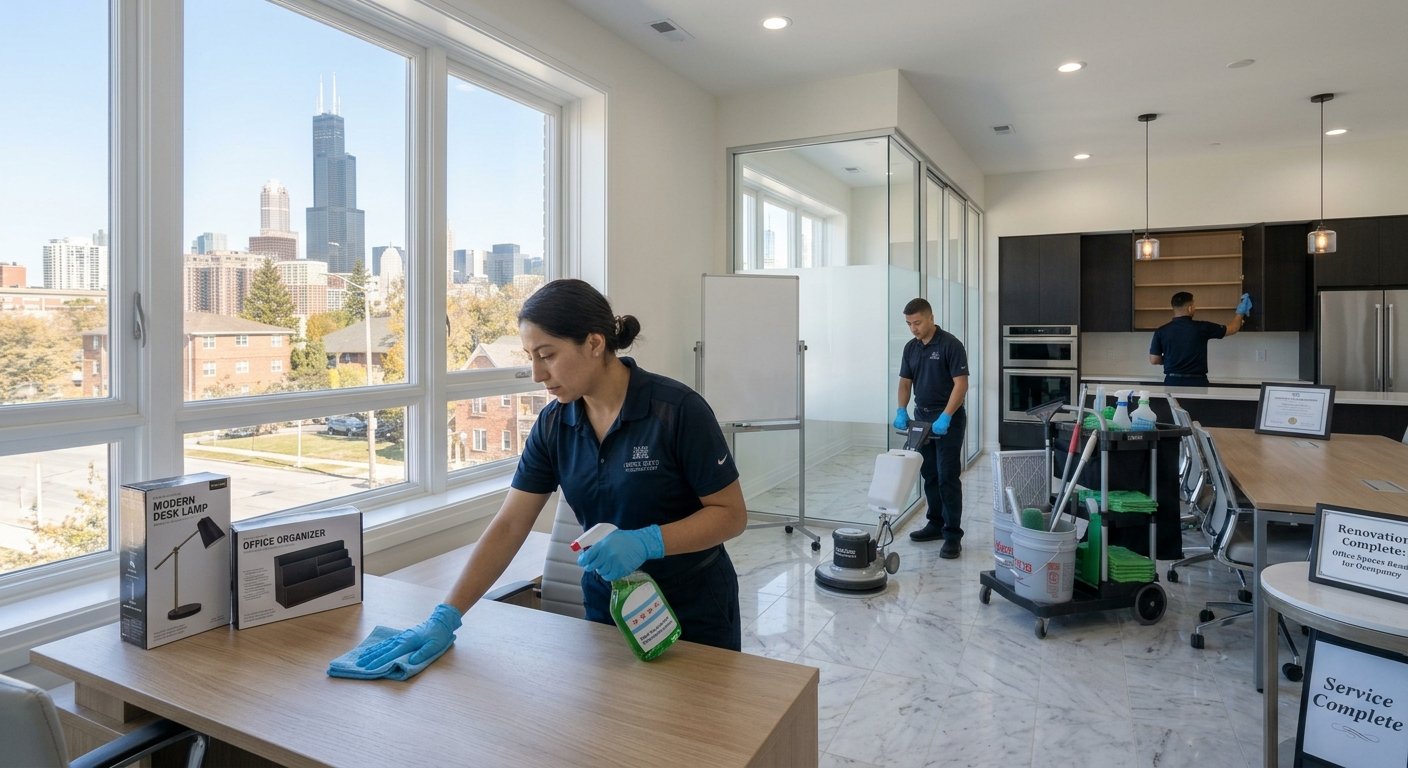
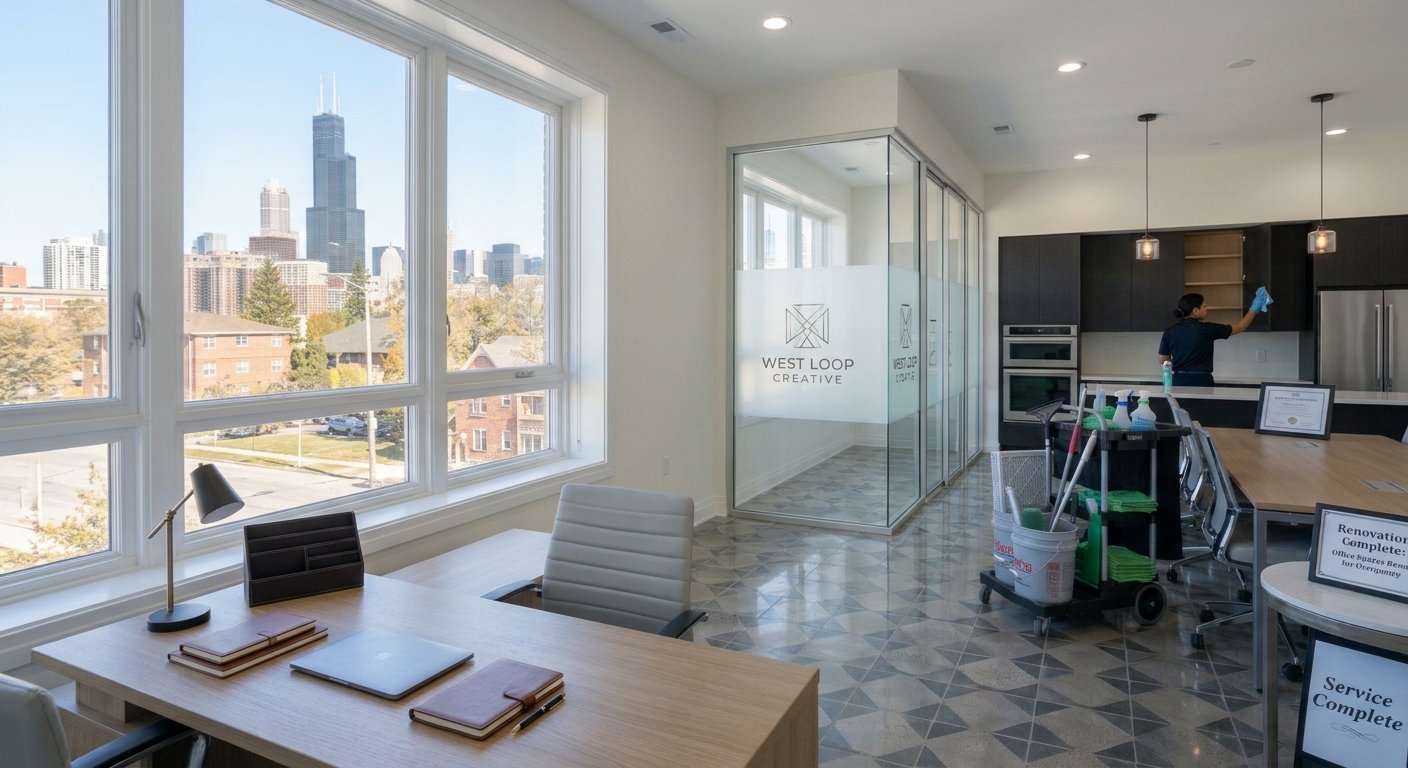
A renovated office may look finished while fine drywall dust, sawdust, adhesive residue, and construction debris remain on desks, floors, glass partitions, vents, and other surfaces. Before employees return or clients visit, the workspace needs a careful cleanup that addresses both visible debris and the fine dust left behind by construction.
West Loop post-construction cleaning prepares commercial spaces for occupancy after remodeling, tenant improvements, office build-outs, and other renovation work. The right cleaning scope depends on the work completed, the materials in the space, the condition of the building, and whether contractors are completely finished.
This guide explains what office renovation cleanup involves, how rough cleaning differs from final cleaning, what to check before reopening a workspace, and how to plan commercial build-out cleanup in Chicago without overlooking important details.
What Is West Loop Post-Construction Cleaning?
Post-construction cleaning is the process of removing construction-related dust, debris, and appropriate surface residue after building or renovation work. In an office, it focuses on preparing the space for its intended use while protecting newly installed finishes, fixtures, furniture, and equipment.
Unlike routine janitorial service, construction cleanup addresses the residue left by trades such as drywall installers, painters, flooring contractors, electricians, and cabinet installers. The scope can range from removing accumulated dust in an empty office to detailed cleaning throughout a completed commercial build-out.
Office Renovations
Cleaning floors, desks, ledges, glass, doors, and accessible surfaces affected by remodeling. The scope should account for dust that has spread beyond the immediate work zone.
Commercial Build-Outs
Preparing newly finished tenant spaces after partitions, flooring, lighting, cabinetry, and other interior elements have been installed.
Tenant Improvements
Removing ordinary construction dust and residue after a landlord or tenant updates a workspace, subject to the agreed cleaning scope.
Office Refreshes
Cleaning affected areas after repainting, flooring replacement, fixture installation, or smaller projects that leave dust and debris behind.
For a broader overview of the service, visit Deep Clean Chicago's post-construction cleaning page.
Why Office Renovation Cleanup Requires a Different Approach
Commercial workspaces contain more than floors and empty rooms. They may include shared desks, conference tables, computer equipment, glass walls, acoustic panels, reception counters, kitchenette appliances, and access-controlled rooms. Each surface has different cleaning requirements.
In West Loop offices, a project may involve a single suite, a shared commercial floor, or a larger tenant build-out. The building's access procedures, loading arrangements, elevator availability, work hours, and occupancy schedule can affect how cleanup is planned. These details should be confirmed with building management rather than assumed.
Fine Dust on Work Surfaces
Drywall and sanding dust can settle on desk surfaces, shelving, window sills, and trim. Remove loose particles carefully before wiping to reduce the risk of scratching finishes.
Glass and Partition Walls
Glass can show fine dust, fingerprints, and construction smudges under office lighting. Clean with suitable products while protecting nearby frames, seals, and finishes.
Flooring and Baseboards
Hard flooring, carpet, tile, and resilient flooring require different methods. Fine dust should be collected before any wet cleaning or finish-specific treatment.
Electronics and Fixtures
Computers, monitors, printers, outlets, lighting, and sensitive equipment need appropriate handling. Do not spray liquid directly onto electronics or electrical components.
Key planning point: A visually clean office is not necessarily ready for occupancy. Confirm that construction work is complete, surfaces have been cleaned appropriately, and any required safety, ventilation, or building inspections have been addressed separately.
What Does Commercial Build-Out Cleanup Include?
Commercial build-out cleanup should be defined by the actual condition of the property and the work completed. A useful quote identifies the rooms, surfaces, and tasks covered instead of relying on a general promise to clean the entire office.
Commonly Included Cleaning Tasks
- Collecting ordinary, accessible construction debris and bagging it for approved disposal, where included in the scope.
- Vacuuming accessible floors and surfaces with suitable equipment for fine dust.
- Removing dust from reachable ledges, baseboards, trim, doors, and door frames.
- Wiping compatible desks, counters, shelves, and other agreed work surfaces.
- Cleaning interior glass partitions and accessible glass doors using appropriate methods.
- Cleaning accessible cabinet exteriors and agreed interior surfaces.
- Cleaning kitchenettes and break-room surfaces included in the agreement.
- Cleaning accessible restrooms, fixtures, and touchpoints affected by construction.
- Removing ordinary dust from accessible window sills and similar horizontal surfaces.
- Performing a final visual inspection of the agreed areas.
What May Be Excluded or Require Separate Arrangements?
Not every post-construction cleaning appointment includes every type of removal or specialist treatment. Clarify the following before work begins:
- Hauling large quantities of construction waste, heavy materials, or discarded furniture.
- Removal of hardened paint, grout, caulk, adhesive, or other difficult construction residue.
- Cleaning inside HVAC equipment, ductwork, or inaccessible ventilation components.
- Exterior window cleaning at height or work requiring specialized access equipment.
- Moving heavy furniture, dismantling fixtures, or disconnecting appliances and electronics.
- Hazardous-material assessment, asbestos abatement, lead remediation, or other regulated cleanup.
- Specialized floor restoration, polishing, stripping, or refinishing.
- Cleaning surfaces that remain under construction or are not safe to access.
When a project involves potentially hazardous dust or unknown materials, stop ordinary cleaning and consult appropriately qualified professionals. Standard janitorial equipment and methods are not a substitute for specialized remediation.
Rough Clean vs. Final Clean for West Loop Offices
Rough cleaning and final cleaning are different stages of construction cleanup. Rough cleaning removes the bulk of accumulated debris and dust so the site can progress toward completion. Final cleaning is more detailed and focuses on visible surfaces and areas that must be ready for handover or occupancy.
| Cleaning Stage | Main Purpose | Typical Tasks | Best Timing |
|---|---|---|---|
| Rough clean | Remove bulk debris and heavier dust from the work area. | Collecting ordinary debris, initial dust removal, and basic floor cleanup. | After major construction activities or during a suitable stage of the project. |
| Final clean | Prepare finished surfaces for inspection, handover, or use. | Detailed dusting, wiping surfaces, cleaning glass, and finish-appropriate floor care. | After dusty trades are complete and the space is ready for detailed cleaning. |
| Touch-up clean | Address dust or marks that appear after final cleaning. | Spot wiping, removing fresh fingerprints, and cleaning affected surfaces. | After minor follow-up work, inspections, deliveries, or contractor visits. |
Confirm dusty work has ended.
Remove ordinary debris and bulk dust.
Clean agreed surfaces in detail.
Inspect and identify touch-ups.
For a closer comparison of these stages, read rough clean vs. final clean. The correct sequence depends on the contractor's schedule and the condition of the site; some projects need more than one cleaning visit.
How to Remove Construction Dust Without Damaging Office Finishes
Fine construction dust can scratch some surfaces if it is rubbed around with a dry cloth. The safest general approach is to collect loose particles first, then use a cleaning method suitable for the material. Always follow manufacturer instructions for new flooring, glass coatings, furniture finishes, and other recently installed products.
Recommended Dust-Removal Method
- Check the space. Identify areas where construction is complete, surfaces that need special handling, and equipment that should not be moved or touched.
- Remove loose dust. Use suitable dust-capturing equipment and appropriate attachments rather than blowing particles into the air.
- Work from high to low. Clean accessible upper ledges and other elevated surfaces before lower furniture and floors.
- Wipe compatible surfaces. Use clean microfiber cloths and suitable products, changing cloths when they become loaded with dust.
- Clean the floors. Use a method appropriate for the floor material and the type of dust present.
- Inspect under normal lighting. Check corners, glass, baseboards, desk edges, and other surfaces where dust is easy to miss.
Dust can return if particles remain on upper surfaces, in adjacent rooms, or in areas disturbed by later work. If the problem persists, identify the source instead of repeatedly wiping the same desk or ledge.
These related guides provide additional context for common renovation-cleaning challenges:
- How to clean construction dust on cabinets after a renovation for cabinetry and shelving.
- How to remove dust after a kitchen remodel for dust across a renovated room.
- Why drywall dust keeps coming back for recurring fine-dust problems.
How to Plan Office Cleaning Around Building Access and Work Hours
Scheduling is a practical part of commercial build-out cleanup. Cleaning may need to fit between contractor completion, furniture installation, IT setup, building inspections, and the planned return of employees.
Before confirming a date, coordinate the cleaning plan with the property manager, general contractor, tenant representative, or facilities team as appropriate.
- Confirm the date when dusty construction and finishing work will be completed.
- Verify building access hours, sign-in requirements, and any contractor check-in procedures.
- Arrange loading access, parking, elevator reservations, or freight elevator use if required by the building.
- Identify rooms or areas that must remain inaccessible during cleaning.
- Clarify whether desks, chairs, and other furniture will be installed before or after cleaning.
- Identify computers, monitors, server equipment, and sensitive devices that require special handling.
- Confirm who will provide keys, access cards, alarms, and instructions for securing the office.
- Agree on the areas to be cleaned, the expected completion time, and the person responsible for the final walkthrough.
- Discuss whether a touch-up visit may be needed after deliveries or remaining contractor work.
For multi-tenant buildings, also confirm whether shared corridors, elevators, restrooms, or other common areas are part of the cleaning scope. Responsibility for those areas may rest with building management rather than the office tenant.
What Affects the Cost of West Loop Office Cleaning After Renovation?
Post-construction cleaning prices vary according to the work required. A small office with light dust and accessible surfaces generally presents a different workload from a large build-out with extensive drywall dust, multiple restrooms, interior glass, and detailed floor care.
Office Size and Layout
The square footage matters, but room count, partitions, furniture, and the number of separate work areas also affect cleaning time.
Dust and Debris Levels
Light surface dust usually requires less work than widespread fine dust, accumulated debris, or residue from several construction trades.
Surface Types
Glass partitions, specialty flooring, delicate finishes, and newly installed cabinetry may require different products, tools, and handling procedures.
Cleaning Stages
A rough clean, detailed final clean, and later touch-up visit are different tasks. The quote should make clear which stages are included.
Access and Scheduling
Restricted access hours, elevator arrangements, security procedures, and tight completion windows can affect how the work is organized.
Additional Services
Interior glass, detailed cabinetry, kitchenette cleaning, floor treatments, or extensive debris handling may be priced separately.
To compare quotes fairly, provide each cleaning company with the same project details and ask for a written list of included and excluded tasks. Avoid choosing based on the headline price alone when the proposed scopes are different.
Common Mistakes to Avoid During Commercial Build-Out Cleanup
- Cleaning before dusty work is finished. Later sanding, drilling, or cutting can contaminate surfaces that were already cleaned.
- Using the wrong vacuum or tools. Equipment that does not adequately capture fine dust may redistribute particles into the workspace.
- Wiping dusty surfaces too aggressively. Abrasive particles can scratch glass, furniture finishes, and other vulnerable materials.
- Ignoring high surfaces. Dust on ledges, trim, and cabinet tops can fall onto desks and floors after the initial cleaning.
- Assuming every residue is ordinary dust. Hardened adhesive, paint, and other construction materials may require specialized treatment.
- Forgetting shared areas. Dust may remain in entrances, corridors, or other spaces used to access the renovated office.
- Leaving scope unclear. Unspecified cabinet interiors, glass partitions, floor treatments, and waste removal can lead to disagreements at handover.
- Skipping the walkthrough. A final inspection helps identify missed areas before furniture, equipment, and employees return.
Final Walkthrough Checklist Before Reopening a West Loop Office
Use this checklist with the facilities manager or project representative to check whether the agreed cleaning work is complete. It is a housekeeping checklist, not a substitute for required building inspections or safety approvals.
- Accessible desks, counters, shelves, and other agreed surfaces are free of visible construction dust.
- Glass partitions and doors have been checked for dust, fingerprints, and ordinary cleaning marks.
- Accessible baseboards, door frames, window sills, and ledges have been cleaned.
- Floors have received the agreed cleaning treatment for their material.
- Kitchenette and restroom surfaces included in the scope have been cleaned.
- Accessible cabinet exteriors and other specified storage surfaces have been checked.
- Ordinary debris included in the agreement has been removed from the work area.
- Electronics and sensitive equipment have been handled according to the agreed instructions.
- Shared areas included in the scope have been inspected.
- Remaining marks or residue have been documented for appropriate follow-up.
- Any remaining construction, safety, ventilation, or occupancy requirements have been referred to the responsible contractor or building representative.
- The project representative has reviewed the completed cleaning scope and identified any agreed touch-ups.
When Should You Book Professional Post-Construction Cleaning?
Professional cleaning is worth considering when renovation dust has spread throughout a commercial suite, the project involves multiple surface types, or the business needs a coordinated cleanup before a scheduled handover. It can also be useful when the facilities team lacks the time or equipment to clean the affected areas thoroughly.
Before booking, share the approximate office size, renovation activities, current condition, access restrictions, deadline, and specific surfaces that need attention. Ask whether the proposed service covers rough cleaning, final cleaning, touch-ups, or only a defined subset of those tasks.
For renovation projects in other types of Chicago properties, the site's cleaning requirements may differ. For example, two-flat renovation cleanup in Chicago involves residential layouts and household surfaces rather than the access, equipment, and handover needs of a commercial office.
Frequently Asked Questions
What is included in West Loop post-construction cleaning?
Depending on the agreement, it can include construction dust removal, cleaning accessible floors and ledges, wiping compatible work surfaces, cleaning interior glass, and addressing agreed kitchenette or restroom areas. Confirm the exact scope because debris hauling, specialty floor treatments, and hazardous-material remediation may be excluded.
When should an office be cleaned after renovation?
Schedule detailed final cleaning after dust-producing construction work is complete and the space can be safely accessed. If contractors return afterward, additional touch-up cleaning may be needed before employees occupy the space.
What is the difference between rough cleaning and final cleaning?
Rough cleaning focuses on bulk debris and initial dust removal. Final cleaning is more detailed and addresses agreed finished surfaces, floors, glass, and other areas before handover or occupancy. Some projects also need a separate touch-up visit.
How long does commercial build-out cleanup take?
Timing depends on office size, layout, dust levels, surface types, access, and the scope of work. A reliable estimate requires details about the property and the condition left by the contractors.
Does post-construction office cleaning include furniture?
It depends on the provider and written scope. Ask whether desks, chairs, shelves, conference tables, and other furniture will be cleaned, and clarify how electronics and delicate finishes will be protected.
Can construction dust return after the office has been cleaned?
Yes. Dust can settle again from high surfaces, adjacent rooms, remaining construction work, or particles disturbed by foot traffic and airflow. Address the source and clean from high to low rather than repeatedly wiping the same surfaces.
Does office post-construction cleaning include HVAC ducts?
Not necessarily. Ductwork and internal HVAC components often require separate assessment and specialized service. Confirm the scope with the cleaning provider and building management.
What should I tell a cleaning company before requesting a quote?
Provide the office size, renovation type, visible dust level, flooring and surface types, furniture status, access requirements, deadline, and areas to be cleaned. Ask for written inclusions, exclusions, and any separate charges for touch-ups or specialty tasks.
Is post-construction cleaning the same as regular office janitorial service?
No. Post-construction cleaning addresses renovation-related dust, debris, and residue. Regular janitorial service typically focuses on recurring maintenance tasks such as routine floor care, restroom cleaning, waste collection, and general upkeep.
Can a cleaning team remove paint, adhesive, or hazardous construction residue?
Ordinary cleaning may not be appropriate for hardened residue or potentially hazardous materials. Confirm the provider's capabilities before booking, and use qualified specialists when assessment or regulated remediation is required.
Planning a West Loop Office Renovation Cleanup?
Prepare your workspace for its next stage with a cleaning plan based on the actual renovation work, the condition of the office, and your handover schedule. Deep Clean Chicago's post-construction cleaning service is a starting point for discussing dust removal and finished-surface cleaning after a commercial project.
When requesting a quote, explain whether you need a rough clean, detailed final clean, or post-construction touch-up, and identify any special surface or building-access requirements.
Contact Deep Clean ChicagoYou can also review the post-construction cleaning service details before discussing your project.