
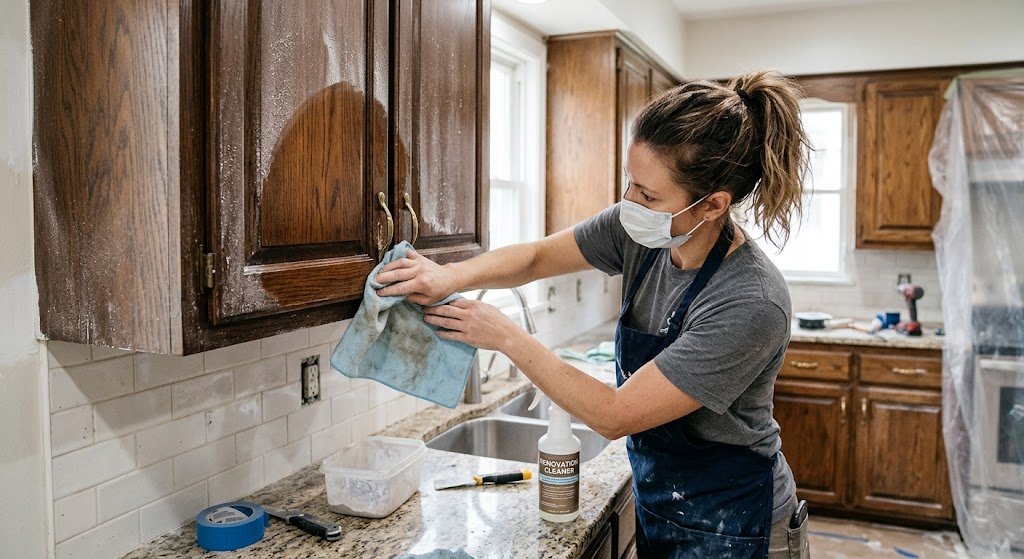
Construction dust on cabinets can be frustrating because it settles on doors, collects along edges, and hides inside drawers and shelves. Even after wiping everything down, a fine layer may return when dust from countertops, ceilings, floors, or nearby work areas becomes airborne again.
The safest way to clean dust from new cabinets is to remove loose particles first with a suitable vacuum and soft brush, then wipe compatible surfaces with a clean microfiber cloth and a small amount of manufacturer-approved cleaner. Avoid soaking cabinet materials, using abrasive pads, or applying harsh chemicals before checking the finish.
Whether you have remodeled a kitchen, installed new bathroom cabinetry, or completed a larger renovation, this guide explains how to remove construction dust from cabinets, prevent scratches and moisture damage, clean interior shelves, and decide when professional post-construction cabinet cleaning makes sense.
Why Does Construction Dust Keep Settling on Cabinets?
Construction dust is a mixture of fine particles produced by activities such as drywall sanding, cutting wood, drilling, demolition, and handling building materials. Some particles settle quickly, while smaller airborne particles can remain suspended and gradually land on cabinet surfaces.
Cabinets are especially prone to collecting dust because their flat tops, door edges, recessed panels, handles, and interior shelves create multiple places for particles to accumulate.
Dust From Drywall and Sanding
Fine drywall and joint-compound dust can spread beyond the room where sanding took place. It may settle on cabinet tops, hinges, drawer runners, and nearby counters.
Dust From Cutting and Drilling
Wood, tile, and other building materials generate particles that can land on cabinet fronts or enter open storage areas during installation.
Air Movement and HVAC Systems
Foot traffic, fans, open doors, and operating ventilation systems can move settled dust back into the air. Follow the contractor's guidance before using the HVAC system during dusty work.
Cleaning in the Wrong Order
Cleaning cabinets before dusty ceilings, walls, counters, or upper surfaces can mean repeating the work when those areas release more particles.
Important: Dust returning after cleaning does not automatically mean the cabinets were cleaned incorrectly. It may indicate that dust remains elsewhere in the room or that construction activity is still disturbing particles.
How to Clean Dust From New Cabinets Step by Step
New cabinetry deserves careful handling. Before cleaning, identify whether the doors and panels are painted, stained wood, laminate, thermofoil, veneer, or another material. The appropriate cleaner and moisture level can differ significantly by finish.
Check the finish
Remove loose dust
Wipe gently
Dry and inspect
Step 1: Check the Cabinet Manufacturer's Care Instructions
Look for the recommended cleaning method for the specific cabinet finish. If the cabinets were recently installed, confirm whether the finish, paint, sealant, or adhesive needs additional curing time.
Test any permitted cleaning solution on a small, inconspicuous area first. Stop if the surface becomes dull, sticky, discolored, or otherwise changes.
Step 2: Remove Loose Dust Without Scratching the Surface
Use a vacuum with a clean soft-brush attachment to collect loose particles from cabinet tops, ledges, exposed edges, shelves, and accessible corners. Keep the nozzle and attachment clean so trapped grit does not scratch the finish.
For delicate or freshly finished surfaces, avoid vigorous brushing or rubbing. Do not use compressed air to blow dust around the room, because it can spread particles onto clean surfaces and into the air.
Step 3: Wipe With a Clean Microfiber Cloth
After removing loose dust, use a clean microfiber cloth that is dry or only slightly damp, depending on the cabinet manufacturer's instructions. Work gently from the upper surfaces downward, folding or replacing the cloth as it collects dust.
Use a separate clean cloth for heavier residue and avoid transferring gritty particles between cabinet doors. If plain water is permitted but does not remove light smudges, use only a compatible, manufacturer-approved cleaner.
Step 4: Clean Door Edges, Handles, and Recessed Details
Dust often remains around handles, hinges, decorative grooves, and the edges where doors meet cabinet frames. Use a soft cloth or suitable soft brush to reach these areas without forcing moisture into joints or hardware.
Do not flood seams, hinge openings, unfinished edges, or exposed particleboard. Excess moisture can cause swelling, peeling, or damage to some cabinet materials.
Step 5: Clean the Interior Shelves and Drawers
Remove loose items when practical. Vacuum accessible corners and drawer tracks with a suitable attachment, then wipe compatible surfaces using the same gentle approach as the cabinet exterior.
Allow surfaces to dry fully before replacing dishes, cookware, food containers, or stored belongings. If the cabinets are intended for food storage, make sure the chosen cleaner is suitable for the surface and follow its label directions.
Step 6: Inspect the Cabinets After the Room Is Cleaned
Check the tops of cabinets, shelf corners, door fronts, and areas around nearby appliances. If dust quickly reappears, pause repeated wiping and identify the source. Dust on nearby walls, light fixtures, counters, or floors may need to be removed before the cabinets can stay clean.
How to Clean Construction Dust From Different Cabinet Finishes
Not every cabinet surface responds to the same cleaning products. When in doubt, follow the manufacturer's instructions rather than applying a general-purpose cleaner to the entire installation.
Painted Cabinets
Start with a soft microfiber cloth and the approved cleaning method. Avoid abrasive pads, aggressive scrubbing, and excess water that could affect the paint or finish.
Solid Wood and Wood Veneer
Remove dust gently and keep moisture controlled. Do not leave water sitting on joints, edges, or unfinished areas. Use wood-specific products only when recommended for the finish.
Laminate Cabinets
Use a soft cloth and a compatible mild cleaner if permitted. Avoid abrasive powders and excessive moisture around seams, edges, and joints.
Thermofoil Cabinets
Use gentle, finish-compatible cleaning methods. Avoid harsh chemicals, high heat, and excessive rubbing that could affect the surface film or adhesive.
Glass-Front Cabinets
Remove loose dust before wiping the glass. Keep cleaning solution away from wood edges, seals, and cabinet joints, and use a suitable glass-cleaning method.
Newly Painted or Recently Installed Cabinets
Check curing and care requirements before using moisture or cleaning chemicals. A finish that feels dry may still need additional time before routine cleaning is appropriate.
What Not to Do When Cleaning Dust Off New Cabinets
Construction dust can contain abrasive particles. The wrong cleaning technique may scratch the finish or force moisture into vulnerable edges, creating damage that is more difficult to fix than the original dust problem.
- Do not dry-wipe heavy dust aggressively. Grit can drag across the surface and leave fine scratches.
- Do not soak doors or shelves. Excess water can affect wood, veneer, laminate seams, and exposed edges.
- Do not use abrasive sponges or scouring powders. These can dull or scratch decorative finishes.
- Do not mix cleaning chemicals. Use only products appropriate for the surface and follow label instructions.
- Do not use strong solvents without approval. Solvents may damage paint, coatings, adhesives, or plastic components.
- Do not use an unfiltered vacuum that releases fine dust back into the room. Choose equipment designed to capture the dust being collected.
- Do not clean cabinets while nearby sanding or cutting continues. More particles may settle before the job is finished.
- Do not assume every stain is dust. Paint, adhesive, caulk, and hardened construction residue may need a different treatment.
Protect the finish first: If you cannot identify a residue or confirm that a product is safe for the cabinet material, do not scrape or scrub it. Ask the installer or manufacturer for guidance before attempting removal.
How to Prevent Construction Dust From Returning to Cabinets
Preventing dust from returning requires more than cleaning the cabinets themselves. The surrounding room needs to be cleaned in an order that reduces the transfer of particles back onto finished surfaces.
- Complete sanding, cutting, drilling, and other dust-producing work before detailed cabinet cleaning whenever possible.
- Use appropriate dust-control measures during construction, including suitable extraction and containment.
- Remove loose dust from ceilings, upper ledges, walls, and other high surfaces before cleaning lower surfaces.
- Vacuum with equipment appropriate for fine construction dust rather than redistributing particles with dry sweeping.
- Clean cabinet tops and exposed ledges before wiping the doors and lower surfaces.
- Clean nearby counters, appliance exteriors, backsplashes, and floors as part of the same overall cleaning plan.
- Check whether ventilation equipment or return-air grilles have collected dust and arrange appropriate cleaning if needed.
- Keep clean cabinets closed during remaining dusty work when practical, without compromising required ventilation or site safety.
- Use fresh cloths or clean microfiber surfaces as they become loaded with dust.
- Recheck the cabinets after the surrounding area has been cleaned and the dust has had time to settle.
For a kitchen renovation, cleaning should generally progress from higher surfaces to lower surfaces, followed by a final inspection. If more trades return after cleaning, plan for a possible touch-up rather than expecting one visit to eliminate all future dust.
Which Areas Are Commonly Missed During Post-Construction Cabinet Cleaning?
Cabinet fronts may look clean while fine dust remains in less visible locations. A thorough inspection should include accessible details without dismantling cabinetry or disturbing installed components.
Cabinet Tops
Dust can settle on horizontal surfaces above upper cabinets, especially when there is a gap between the cabinets and ceiling.
Door Edges and Grooves
Recessed panels, decorative profiles, and door edges can hold particles that are missed by a quick wipe across the center of the door.
Drawer Interiors
Dust may collect in corners, along drawer sides, and around accessible runners during installation and nearby cutting work.
Hinges and Handles
Hardware can collect dust around attachment points and crevices. Clean gently without allowing excess liquid to enter moving parts.
Spaces Around Appliances
Fine dust may collect around refrigerator panels, ranges, dishwashers, and cabinet-adjacent trim. Clean only areas that are safely accessible.
Nearby Backsplashes and Trim
Dust on adjacent walls, tile, window sills, and trim can migrate back onto cabinets if those areas are left untreated.
For related kitchen surface-cleaning advice, see this kitchen cleaning guide. For a broader approach to detailed cleaning, the benefits of hiring a professional deep cleaning company in Chicago can help you evaluate when specialist assistance may be useful.
DIY Cabinet Dusting vs. Professional Post-Construction Cleaning
Cleaning the cabinets yourself can be practical when the renovation is complete, dust is light, and the surfaces are easy to access. Professional cleaning may be more appropriate when fine dust has spread throughout several rooms or when the project includes extensive cabinetry and detailed finishes.
| Situation | DIY Cleaning May Be Suitable | Professional Cleaning May Help |
|---|---|---|
| Light dust on a few cabinet doors | Yes, if the finish is known and compatible cleaning supplies are available. | Usually unnecessary unless there are other cleaning needs. |
| Dust across a full remodeled kitchen | Possible, but requires systematic cleaning of the whole room. | Useful when several surfaces and areas need coordinated attention. |
| Dust inside many drawers and cabinets | Practical for a small number of accessible units. | May save time when the cabinetry is extensive and the scope is clearly defined. |
| Unknown residue on a new finish | Avoid scraping or experimenting with chemicals. | Ask for an assessment, but confirm that the provider is qualified to handle the specific residue. |
| Dust returning after repeated cleaning | Identify and remove the source before repeating the same task. | May help coordinate cleaning across surfaces, floors, and other affected areas. |
Professional cleaning is not a substitute for correcting an ongoing construction dust source. If sanding or cutting continues, the contractor should first address dust containment and work sequencing. Suspected hazardous dust requires appropriate assessment and qualified remediation rather than ordinary housekeeping.
What to Expect From a Post-Construction Cabinet Cleaning Service
A cabinet-focused cleaning appointment should begin with an assessment of the cabinet material, dust level, access, and any visible residue. The agreed scope should identify which surfaces will be cleaned and whether cabinet interiors, tops, drawer tracks, and nearby kitchen surfaces are included.
Depending on the provider and project, post-construction cleaning may involve:
- Removing loose dust from accessible cabinet surfaces.
- Wiping compatible cabinet fronts, edges, and handles.
- Cleaning interior shelves and drawers when included and accessible.
- Cleaning surrounding counters, backsplashes, trim, and other agreed surfaces.
- Vacuuming or cleaning floors affected by construction dust.
- Inspecting the completed areas and identifying residue that needs specialist attention.
Before booking, ask whether the quote covers the inside and outside of cabinets, how new finishes will be protected, what equipment is used to capture fine dust, and whether a follow-up visit is available if trades return afterward.
For broader renovation cleanup, review post-construction cleaning services or the information available for post-construction cleaning for Chicago contractors.
Post-Construction Cabinet Cleaning Checklist
Use this checklist after installation or renovation to confirm that cabinets are ready for use.
- Confirm the cabinet material and manufacturer's cleaning instructions.
- Check whether new paint, coatings, or adhesives need additional curing time.
- Remove loose dust with a clean, suitable vacuum attachment.
- Wipe cabinet tops, door fronts, edges, and accessible details gently.
- Clean handles and hardware without flooding hinges or joints.
- Vacuum and wipe accessible interior shelves and drawers when appropriate.
- Check adjacent counters, backsplashes, trim, and floors for remaining dust.
- Inspect for paint, adhesive, or other residue that needs specialist treatment.
- Allow cleaned surfaces to dry before returning stored items.
- Recheck the room after remaining construction activity has ended.
Frequently Asked Questions
How do you clean dust from new cabinets?
Check the manufacturer's care instructions, remove loose dust with a clean soft-brush vacuum attachment, and gently wipe compatible surfaces with a clean microfiber cloth. Use only approved cleaning products and avoid excessive moisture, especially around seams and unfinished edges.
Why does construction dust keep coming back on cabinets?
Dust may remain on nearby ceilings, walls, floors, counters, or ventilation components and become airborne again. Ongoing sanding, drilling, foot traffic, and airflow can also redistribute particles. Clean the room systematically after dusty work is complete.
Can I use water to clean construction dust off cabinets?
Only use moisture that is compatible with the cabinet manufacturer's instructions. A slightly damp microfiber cloth may be suitable for some finishes, but excessive water can damage wood, veneer, laminate seams, and exposed edges. Test an inconspicuous area first when permitted.
Should I vacuum or wipe cabinet dust first?
Remove loose dust first with a suitable vacuum and soft brush, then wipe the surface gently. This reduces the chance of dragging abrasive particles across the cabinet finish.
How do I clean drywall dust from kitchen cabinets?
Use suitable dust-capturing equipment to remove loose particles, then clean the cabinet surfaces according to the manufacturer's instructions. Avoid aggressive dry wiping, which can scratch finishes or redistribute fine dust throughout the kitchen.
How do I clean inside cabinets after construction?
Remove stored items, vacuum accessible corners and drawer tracks with a clean attachment, and gently wipe compatible shelves and drawer interiors. Let everything dry before replacing items, and avoid introducing moisture into unfinished edges or joints.
Can construction dust damage new cabinets?
Dust itself may not immediately damage every finish, but abrasive particles can scratch surfaces when rubbed, and unsuitable cleaning products or excess moisture can cause additional damage. Gentle dust removal and finish-appropriate cleaning help protect the cabinetry.
Does post-construction cleaning include cabinet interiors?
Not always. Cabinet interiors, drawer tracks, cabinet tops, and detailed hardware may be included or priced separately. Confirm the written scope before booking.
When should I hire a professional for construction dust on cabinets?
Consider professional help when dust covers the entire kitchen or property, when extensive cabinet interiors need cleaning, or when you need coordinated cleaning across multiple surfaces. Unknown residue and suspected hazardous materials should be assessed appropriately rather than scrubbed or treated with unverified products.
How can I keep cabinets clean after a kitchen remodel?
Finish dust-producing work first, remove dust from higher surfaces before lower ones, use appropriate vacuuming and wiping methods, and clean surrounding counters and floors. If trades return after the final clean, schedule a suitable touch-up once their work is complete.
Need Post-Construction Cleaning in Chicago?
Construction dust can spread well beyond cabinet doors and shelves. If your kitchen renovation has left fine dust on cabinetry, countertops, floors, and other finished surfaces, a coordinated post-construction cleaning service may help prepare the space for everyday use.
Deep Clean Chicago offers post-construction cleaning options for renovation-related cleanup. Share your property's condition, cabinet-cleaning needs, and the areas affected by construction when requesting information so the scope can be clarified before the appointment.
Explore Post-Construction CleaningFor questions about your project, visit the Deep Clean Chicago contact page.