Construction cleaning usually happens in stages, not in a single visit. A rough clean removes the bulk of construction debris, a final clean prepares the completed space for inspection or occupancy, and a post-construction touch-up addresses dust and marks that appear after the detailed cleaning or during the final walkthrough.
For property owners, contractors, and property managers in Chicago, understanding rough clean vs. final clean makes it easier to schedule the right service, coordinate trades, set realistic expectations, and avoid paying for detailed cleaning before dusty work is finished.
The exact scope varies by project and provider. The most important step is to confirm what each cleaning phase includes, which areas are accessible, and whether construction debris removal, interior cabinet cleaning, windows, or specialty residue treatment are included.
What Is the Difference Between a Rough Clean and a Final Clean?
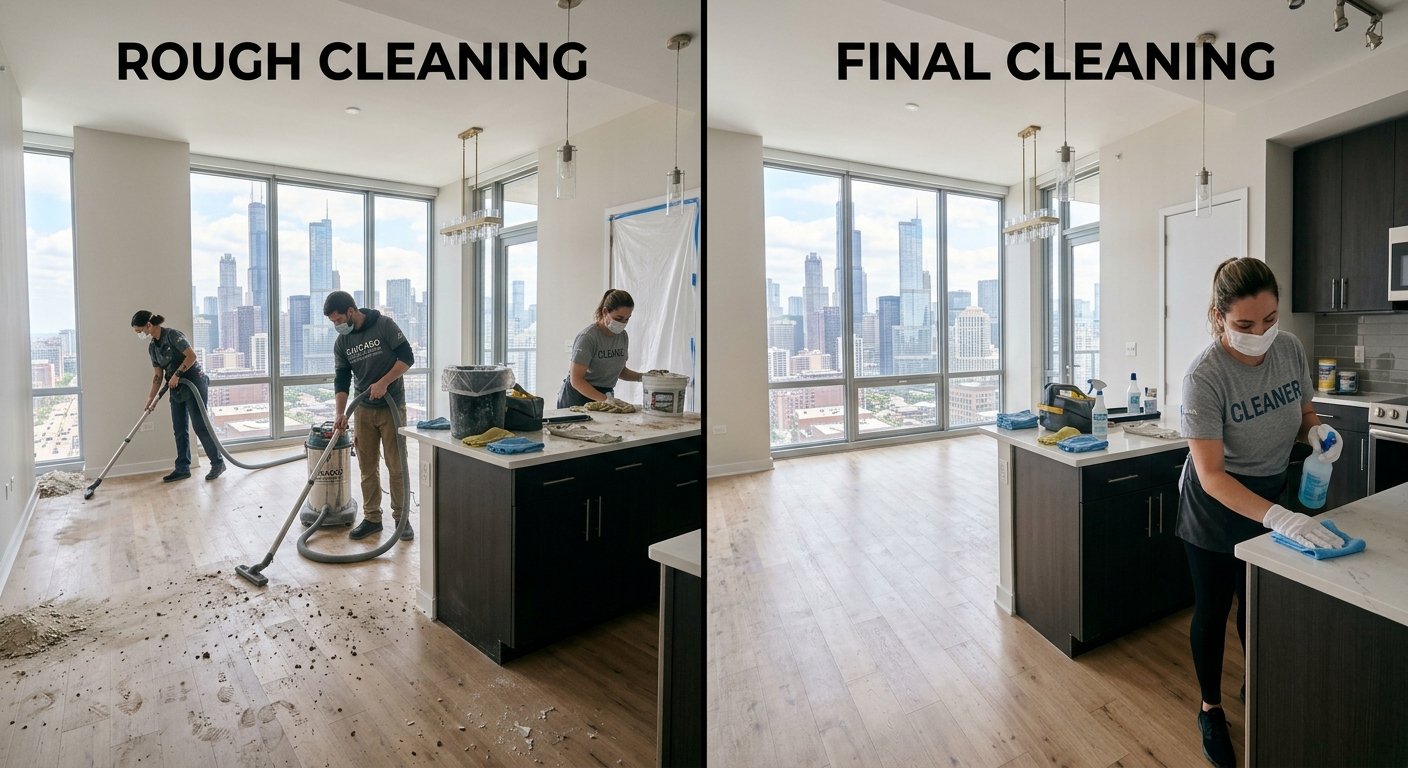
A rough clean is an early cleanup that removes accumulated construction debris and larger amounts of dust after major building or renovation work. A final clean is a more detailed cleaning performed when installation and dust-producing work are substantially complete. It focuses on visible and accessible surfaces that need to be ready for a walkthrough, handover, or occupancy.
| Consideration | Rough Clean | Final Clean |
|---|---|---|
| Primary goal | Remove bulk debris and prepare the site for remaining work. | Remove remaining dust and clean finished, accessible surfaces. |
| Typical timing | During construction or after major work is complete. | Near project completion, after dusty trades have finished. |
| Typical tasks | Collecting loose debris, removing packaging, and initial sweeping or vacuuming as agreed. | Detailed surface wiping, finish-safe cleaning, fixture cleaning, and floor care as agreed. |
| Surface detail | Focuses on larger debris and basic site cleanliness. | Focuses on visible residue, ledges, trim, fixtures, and other detailed areas. |
| Expected result | A cleaner, more workable site for subsequent trades. | A more presentable space for inspection, handover, or use. |
| Common limitation | Fine dust may remain, and later work can create more debris. | New work or returning trades can create the need for another touch-up. |
The key distinction: Rough cleaning manages the bulk of construction mess. Final cleaning focuses on detailed presentation after the work that generates dust and debris is substantially complete.
What Are the Three Phases of Construction Cleaning?
The three commonly used phases of construction cleaning are rough cleaning, final cleaning, and touch-up cleaning. These labels are widely used to organize work, but they are not universal standards. Some projects combine phases, use different terminology, or require additional specialty cleaning.
Rough clean
Remove bulk debris
Final clean
Detail finished surfaces
Touch-up clean
Correct remaining marks and dust
Phase 1: Rough Construction Cleaning
Rough cleaning typically takes place after major construction activities or during a planned break between trades. Its purpose is to remove larger accumulations of debris and improve access for the remaining work.
Depending on the project agreement, rough cleaning may include:
- Collecting loose construction debris and discarded packaging.
- Removing accessible scraps and leftover materials designated for disposal.
- Initial sweeping or vacuuming of floors.
- Removing loose dust from accessible work areas.
- Clearing pathways and preparing rooms for subsequent installation or finishing.
- Identifying areas where remaining construction activity will create additional cleanup.
Rough cleaning does not necessarily include hauling heavy waste, removing hazardous materials, scraping hardened paint, cleaning every cabinet interior, or polishing every finished surface. Confirm those tasks separately.
Phase 2: Final Construction Cleaning
Final cleaning is the detailed phase that takes place when the project is close to completion and dusty work is finished. It removes remaining construction dust and ordinary residue from accessible surfaces without damaging new finishes.
A final clean may include:
- Dusting accessible ledges, trim, doors, and other finished surfaces.
- Cleaning counters, sinks, faucets, and installed fixtures.
- Wiping cabinet fronts and cleaning cabinet interiors when included.
- Cleaning accessible appliance exteriors and other installed surfaces.
- Cleaning interior glass and window tracks where specified and safely accessible.
- Vacuuming and cleaning floors using methods suitable for the material.
- Removing ordinary fingerprints, smudges, and light surface residue.
Some residue needs more than routine cleaning. Hardened grout haze, paint overspray, construction adhesive, and protective film may require specialist products, installer guidance, or a separate service. Final cleaning should not be assumed to include every type of restoration or material correction.
Phase 3: Post-Construction Touch-Up Cleaning
Touch-up cleaning is a shorter follow-up visit that addresses minor dust, fingerprints, or marks discovered after the final clean. It is particularly useful when contractors have completed small corrections, tradespeople have returned to the property, or a final walkthrough identifies a few remaining areas.
Typical touch-up tasks can include:
- Wiping fingerprints from doors, handles, and other accessible surfaces.
- Removing light dust that settled after the detailed clean.
- Spot-cleaning visible marks on appropriate surfaces.
- Vacuuming small areas affected by finishing work.
- Rechecking selected rooms before handover or occupancy.
Touch-up cleaning is not necessarily a full repeat of the final clean. If new construction work has spread dust throughout the property, the cleaner may recommend a larger return visit based on the condition and agreed scope.
When Should Each Construction Cleaning Phase Be Scheduled?
Timing matters because cleaning too early can lead to repeated work. The schedule should follow the construction sequence and account for the trades that still need to access the property.
Schedule a Rough Clean When
- Major demolition or installation has created substantial debris.
- Trades need clearer access to work areas.
- The project has reached a planned cleanup milestone.
- Loose materials need to be removed before finishing continues.
Schedule a Final Clean When
- Dust-producing construction tasks are finished.
- Installed surfaces are ready for cleaning.
- New finishes can be cleaned according to manufacturer guidance.
- The property is approaching inspection, handover, or occupancy.
Schedule a Touch-Up When
- Minor repairs or corrections occur after the final clean.
- A walkthrough identifies isolated marks or dust.
- Trades have briefly re-entered the cleaned property.
- The space needs a final presentation check before handover.
For Chicago renovation projects, coordinate the cleaning dates with the general contractor, building manager, or property owner. In occupied buildings, also confirm access arrangements, elevator reservations where applicable, loading procedures, and any building-specific work-hour requirements rather than assuming they are the same at every property.
What Is Included and Excluded From Construction Cleaning?
Service names alone do not guarantee a particular scope. Two providers may use the term “final clean” while offering different levels of detail. A written task list is the clearest way to understand what the quote covers.
| Task | Often Included When Specified | Confirm Separately |
|---|---|---|
| Loose debris | Collection of accessible debris and packaging. | Heavy waste hauling, dumpsters, or disposal fees. |
| Dust removal | Accessible surface dusting and suitable vacuuming. | HVAC duct cleaning or contamination inside sealed systems. |
| Cabinets and drawers | Wiping fronts and, if specified, accessible interiors. | Removal of stored belongings or extensive adhesive residue. |
| Windows | Interior glass and accessible tracks, when included. | Exterior high-rise glass, paint removal, or work at height. |
| Floors | Vacuuming and finish-appropriate cleaning. | Floor refinishing, polishing, or removal of hardened construction residue. |
| Specialty residue | Light, removable residue where suitable. | Hardened grout, cured adhesive, paint overspray, or delicate-surface restoration. |
| Hazardous materials | Not ordinary cleaning work. | Asbestos, lead hazards, mold remediation, or other specialist remediation. |
When the project involves substantial construction residue, review the scope of post-construction cleaning services and ask the provider to clarify any tasks that are not part of the standard package.
Rough Clean vs. Final Clean vs. Touch-Up Clean: Which Do You Need?
The right phase depends on the property's current condition, how much construction remains, and what needs to happen next.
Choose a Rough Clean
Choose this phase when the site still has loose debris, packaging, and general construction mess, and additional trades need to continue working. The priority is basic cleanup and access, not a polished final presentation.
Choose a Final Clean
Choose this phase when the renovation is substantially complete and the property needs detailed surface cleaning before inspection, handover, or move-in. This is generally the main phase for preparing finished rooms for use.
Choose a Touch-Up Clean
Choose this phase when a completed final clean needs minor corrections, such as fingerprints, localized dust, or marks left after a small repair. If the whole property has become dusty again, ask whether a more extensive clean is needed.
Decision tip: If you can still see piles of debris and unfinished work, start by discussing rough cleaning. If the construction is finished but the property remains dusty, ask about a final clean. If only a few isolated areas need attention after a walkthrough, touch-up cleaning may be sufficient.
What Affects Construction Cleaning Costs in Chicago?
Construction cleaning prices depend on the work required, the condition of the property, and the agreed service scope. A rough clean and a detailed final clean should not automatically be treated as equivalent jobs.
- Property size: Larger homes, apartments, commercial spaces, and multi-unit buildings usually require more time.
- Construction stage: Bulk debris removal and detailed finish cleaning involve different tasks.
- Dust and debris levels: Heavy accumulation can require additional equipment, labor, or repeated passes.
- Surface types: New flooring, natural stone, glass, and delicate finishes may require careful, material-specific methods.
- Room count and layout: Kitchens, bathrooms, built-in cabinetry, and numerous fixtures can increase detail work.
- Window and cabinet scope: Interior glass, tracks, drawers, and cabinet interiors may be priced separately.
- Access and logistics: Parking, building access, loading rules, and travel between floors can affect scheduling and labor.
- Specialty removal: Hardened grout, adhesive, paint, or other difficult residues may need separate assessment.
- Repeat visits: Returning trades and late-stage repairs can create additional cleaning needs.
For an accurate estimate, share the approximate square footage, property type, construction stage, expected debris level, and desired cleaning phase. Ask whether the quote includes supplies, debris disposal, windows, cabinet interiors, and a follow-up touch-up visit.
How to Prepare for a Construction Cleaning Appointment
Preparation helps prevent delays and reduces the chance of freshly cleaned surfaces becoming contaminated by unfinished construction work.
- Confirm which construction tasks and installations are complete.
- Identify any remaining work that may generate dust or debris.
- Arrange for large construction waste and designated materials to be removed according to the project plan.
- Confirm whether the appointment is for a rough clean, final clean, or touch-up clean.
- Provide a room-by-room task list and identify areas that are off-limits.
- Share care instructions for new flooring, countertops, fixtures, and specialty finishes.
- Confirm the scope for windows, cabinets, appliances, floors, and other detailed areas.
- Arrange access, keys, parking, loading, and any building-specific requirements.
- Discuss how hazardous materials or suspected contamination will be handled before cleaning begins.
- Agree on the walkthrough process and how any remaining items will be documented.
Common Mistakes When Scheduling Construction Cleaning
Booking the Final Clean Too Early
Dust-producing work after the appointment can undo much of the cleaning. Coordinate the final clean with the contractor's actual schedule, not just an estimated completion date.
Assuming Every Service Includes the Same Tasks
One quote may include cabinet interiors and windows while another may not. Compare written scopes instead of relying only on service labels.
Expecting Touch-Up Cleaning to Replace a Full Clean
A small follow-up visit is intended for limited corrections. Widespread new dust or substantial residue may require a larger scope of work.
Ignoring New Surface Requirements
Some finishes need specific cleaning products or curing time. Using an unsuitable product can damage a newly renovated surface.
Leaving Construction Waste for the Cleaning Team Without Confirmation
Routine cleaning may not include heavy debris hauling or disposal. Confirm who is responsible for waste removal before the appointment.
Skipping the Final Walkthrough
A walkthrough helps identify missed areas and clarify whether remaining issues are cleaning tasks, unfinished construction, or specialty restoration needs.
Final Construction Cleaning Checklist for Property Owners and Contractors
Use this checklist to coordinate the final stages of a renovation and determine whether the property is ready for inspection or handover.
- Major construction work and dust-producing trades are complete.
- Loose debris and designated construction waste have been addressed.
- Accessible surfaces, ledges, trim, and fixtures have been checked for dust.
- Cabinets, drawers, windows, and appliances have been handled according to the agreed scope.
- Floors have been cleaned using methods suitable for their material.
- Specialty residue has been identified and assigned to an appropriate provider when necessary.
- The property has been checked for marks left by late-stage trades.
- Any remaining construction tasks that could affect cleanliness are documented.
- A walkthrough has been completed with the responsible project representative.
- Any required touch-up work has been scheduled before handover or occupancy.
For projects that need a broader cleanup after renovation, review post-construction cleaning information for Chicago contractors. Agree on the work scope before the cleaning visit so the result can be assessed against clear expectations.
Frequently Asked Questions
What is the difference between a rough clean and a final clean?
A rough clean removes bulk construction debris and provides basic cleanup while work may still be ongoing. A final clean takes place near completion and focuses on detailed cleaning of accessible finished surfaces, fixtures, and floors. The exact tasks depend on the service agreement.
What are the three phases of construction cleaning?
The three commonly used phases are rough cleaning, final cleaning, and touch-up cleaning. Rough cleaning removes larger debris, final cleaning addresses detailed surface residue, and touch-up cleaning corrects minor dust or marks after the main clean. Terminology and scheduling vary by project.
When should rough cleaning take place?
Rough cleaning typically occurs after major construction or demolition work has created debris, or at a planned stage when the site needs clearing for the next trades. It can occur before the project is fully finished.
When should a final construction clean be scheduled?
Schedule the final clean when dust-producing construction work is finished and the surfaces are ready for cleaning. If contractors return afterward, discuss whether touch-up cleaning or another detailed visit will be needed.
What is post-construction touch-up cleaning?
Touch-up cleaning is a limited follow-up service that addresses small amounts of dust, fingerprints, and localized marks after the final clean. It is not necessarily a full-property cleaning and may not be suitable if extensive new debris has accumulated.
Does final construction cleaning include windows and cabinets?
It can, but these tasks are not guaranteed to be included in every package. Confirm whether interior windows, tracks, cabinet fronts, cabinet interiors, and other detailed surfaces are part of the written scope.
Is construction cleaning different from regular house cleaning?
Yes. Regular house cleaning focuses on everyday dirt and routine maintenance. Construction cleaning addresses renovation-related dust, debris, and residue, often across surfaces that have not been cleaned since installation. Hazardous-material remediation and specialty restoration require separate arrangements.
How much does post-construction cleaning cost in Chicago?
Pricing depends on the property size, construction stage, debris and dust levels, surfaces, accessibility, and tasks included. Request a quote based on the actual site condition and confirm whether debris removal, windows, cabinet interiors, and touch-up visits are included.
Can I schedule all three cleaning phases with one company?
Some cleaning providers may be able to schedule multiple phases. Ask whether they offer rough, final, and touch-up cleaning, how each phase is priced, and how the schedule can be coordinated with contractors.
Does a final clean remove hardened paint, grout, or construction adhesive?
Not necessarily. Hardened residue can require specialty treatment and may damage finished surfaces if removed incorrectly. Confirm whether the provider offers this work and consult the installer or a qualified specialist when the material or finish is sensitive.
Need Post-Construction Cleaning in Chicago?
Whether your project needs a detailed final clean or a post-construction touch-up, the first step is identifying the current condition of the property and the work that remains. Deep Clean Chicago can help you explore cleaning options based on your project, affected areas, and requested scope.
Before requesting an estimate, note the property's size, the construction stage, the amount of dust or debris, and any specific needs involving floors, windows, fixtures, or cabinetry.
Explore Post-Construction CleaningFor questions about your project or service requirements, contact Deep Clean Chicago.