
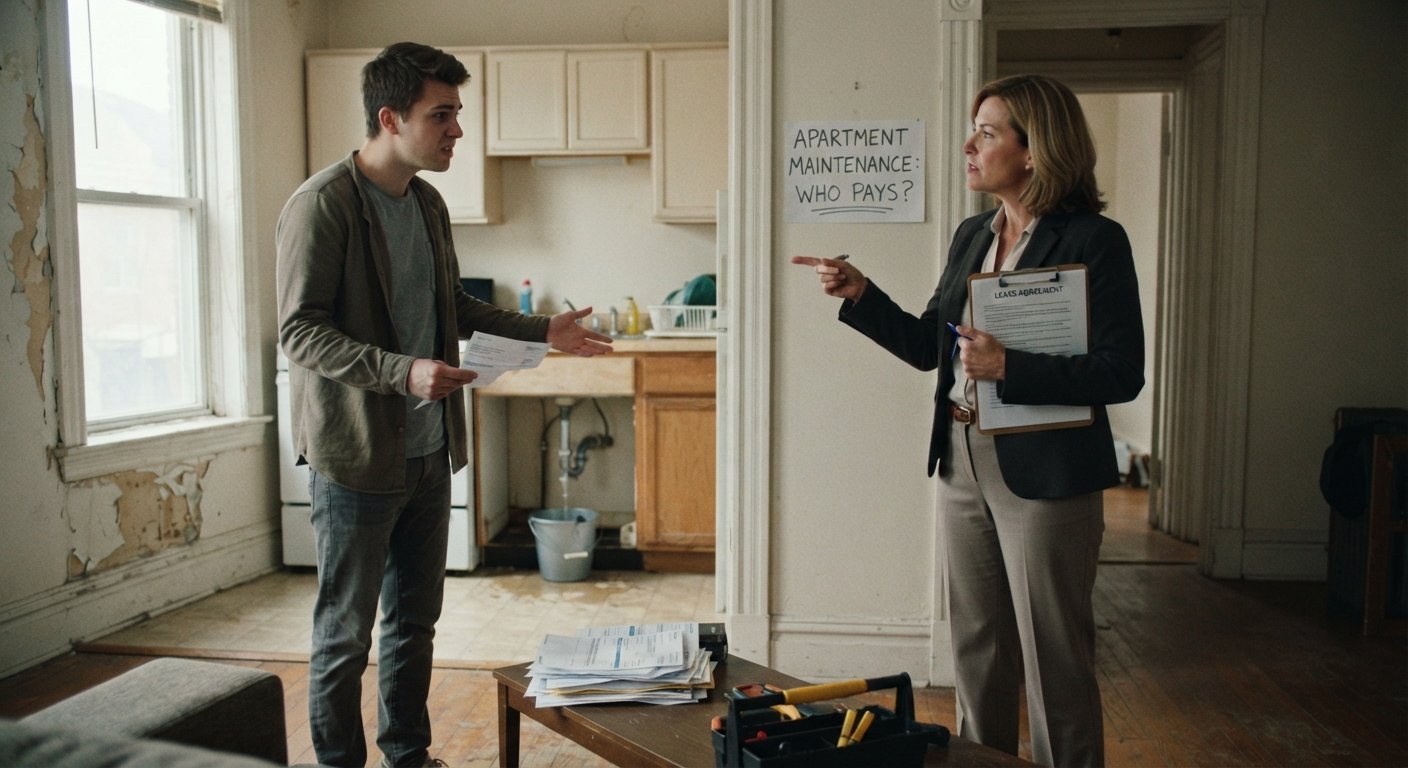
Few apartment conversations create more confusion than maintenance.
A faucet starts leaking. The refrigerator stops working. A pipe begins making a strange noise. There's a stain on the ceiling. The tenant calls the landlord, and suddenly the question becomes:
“Who's supposed to pay for this?”
The answer isn't always as simple as tenants or landlords might think.
Responsibility can depend on the lease, the property, the cause of the problem, applicable building rules, and local requirements. In Chicago, renters and property owners should understand their specific responsibilities rather than relying on assumptions. Learning how to save money on apartment maintenance can also help property owners plan for routine upkeep and avoid overlooking preventable issues.
Here's how to think about the most common apartment maintenance arguments without turning every repair into a landlord-versus-tenant battle.
1. Tenant vs Landlord: Who Should Pay for Repairs?
There isn't one answer that applies to every apartment.
Start with the lease and any applicable building or association rules. The responsibility may also depend on whether the problem comes from ordinary wear and tear, a failure of a building system, or damage caused by a resident.
Start With the Lease
Review the terms that explain maintenance responsibilities, repairs, appliances, and tenant obligations.
Look at the Cause
Consider whether the issue resulted from normal use, equipment failure, neglect, or damage.
Consider the Building
Apartment buildings and condominium properties can have additional rules affecting maintenance responsibilities.
Document the Problem
Photos, messages, dates, and repair records can help everyone understand what happened.
When there is uncertainty, the best first step is usually to identify the problem, document it, and check the applicable agreement and requirements before assuming who is responsible. For additional guidance on the practical side of keeping a rental home in good condition, explore these apartment cleaning and home maintenance articles.
2. Should Tenants Be Responsible for Maintenance?
Tenants generally shouldn't assume that every maintenance issue is automatically their responsibility.
At the same time, renting an apartment doesn't mean a resident has no responsibility for the condition of the home.
Tenants may have obligations relating to keeping the apartment reasonably cared for, reporting problems, following building rules, and avoiding damage caused by misuse or neglect.
The important distinction is between taking reasonable care of the apartment and being responsible for every repair that occurs inside it.
Those are not necessarily the same thing.
Being responsible for reporting a problem doesn't necessarily mean being responsible for paying for the repair.
Regular cleaning can support responsible apartment care, but it doesn't replace necessary repairs. For residents who need help maintaining a clean living environment, professional apartment and condo cleaning services can complement routine household upkeep.
3. 7 Things Tenants Blame on Landlords That Aren't Always the Landlord's Fault
Not every apartment problem is automatically a landlord problem.
Some issues can involve normal household use, tenant behavior, or circumstances that need to be investigated before responsibility is assigned.
- Damage caused by misuse of an appliance
- Damage caused by unauthorized alterations
- Clogs caused by inappropriate items being put down a drain
- Damage caused by failing to report a known problem
- Problems caused by improper use of building systems
- Damage beyond ordinary wear and tear
- Issues that appear to be maintenance problems but have another cause
That doesn't mean a tenant should automatically accept responsibility for a repair.
It means the cause matters.
Keeping an apartment clean and documenting its condition can help residents notice visible changes. For renters preparing to leave a property, understanding common move-out cleaning mistakes Chicago renters make can also help them avoid preventable cleaning oversights during the move-out process.
4. 7 Things Landlords Blame on Tenants That Aren't Always the Tenant's Fault
The opposite problem can happen too.
A landlord may assume that because something happened inside an apartment, the tenant must have caused it.
That assumption isn't always accurate.
- Normal wear and tear
- Age-related deterioration
- Plumbing failures
- HVAC equipment problems
- Building-related water intrusion
- Electrical or mechanical failures
- Problems that existed before the tenant moved in
Again, the actual cause matters.
A responsible approach is to investigate the problem instead of immediately assigning blame.
Good documentation can help here too. Move-in photos, maintenance requests, repair records, and written communication can provide useful context.
For renters preparing a property for its next occupant, a dedicated move-in and move-out cleaning service can help address cleanliness before handover. Cleaning and repairs are separate responsibilities, so any damage or maintenance concern should still be documented and assessed independently.
5. The Apartment Maintenance Argument Every Tenant and Landlord Eventually Has
It usually starts with a simple message:
“Something is broken.”
Then comes the second question:
“Who caused it?”
And finally:
“Who is paying for it?”
This is where a maintenance issue can quickly become a relationship problem.
The better approach is to separate the questions.
First: What actually happened?
Identify the problem and document what you can see.
Second: What caused it?
Don't assume the cause before the issue has been properly assessed.
Third: Who is responsible?
Check the lease, building rules, and applicable requirements.
Fourth: What needs to happen next?
Once responsibility is clearer, focus on getting the problem addressed rather than continuing the argument.
The goal of a maintenance conversation should be solving the problem, not winning the argument.
6. “It's Just a Small Repair…” — The Landlord Conversation Everyone Knows
Small repairs are exactly where communication can break down.
A tenant may think, “It's only a small leak.”
A landlord may think, “It's only a small repair.”
But small problems can sometimes become larger if they are ignored.
That is why tenants should report maintenance concerns promptly, even when the issue appears minor.
It also gives property owners an opportunity to investigate the problem before it becomes more complicated.
Reporting something early doesn't necessarily mean demanding an immediate expensive repair. It means creating a record and giving the responsible party an opportunity to respond.
For property owners, keeping an apartment presentable is another aspect of routine care. Learn more about how deep cleaning can improve property appearance and value in Chicago, particularly when preparing a property for new occupants.
7. Who Pays for This?
The answer starts with a simple principle:
Don't guess. Check.
Check the lease.
Check the building or association rules when applicable.
Check the condition of the apartment.
Check what caused the problem.
Check applicable local requirements when necessary.
And document the issue before assumptions turn into accusations.
For Chicago renters and property owners, maintenance responsibilities can depend on the specific situation and applicable requirements. When a dispute involves significant money, safety, habitability, or legal rights, getting appropriate professional or legal guidance may be more useful than relying on general internet advice.
The Best Tenant-Landlord Relationship Is Built on Clear Communication
Maintenance doesn't have to become a fight.
Tenants can help by reporting problems promptly, caring for the apartment responsibly, documenting issues, and understanding their lease.
Landlords and property managers can help by communicating clearly, investigating reported problems, keeping appropriate records, and making responsibilities understandable.
Neither side benefits when a small maintenance issue turns into a major dispute.
The best outcome is usually simple:
Identify the problem. Understand the responsibility. Fix the issue. Move on.
When an apartment is being prepared for a new tenant, cleaning can also help create a more comfortable living environment. Explore move-in and move-out cleaning in Downtown Chicago for a location-specific service option.
Need Apartment Cleaning in Chicago?
Maintenance and cleanliness go hand in hand when you're trying to keep an apartment comfortable and cared for. Explore apartment and condo cleaning services from Deep Clean Chicago.
Explore Apartment Cleaning