
Moving out of a Chicago apartment can feel overwhelming. Between packing boxes, scheduling movers, transferring utilities, and meeting your lease deadline, cleaning often becomes the last item on your checklist.
Unfortunately, that’s exactly why many renters make costly mistake.
The biggest move-out cleaning mistake isn’t forgetting to vacuum the living room or wipe down the kitchen counters. It’s believing that an apartment is “clean enough” when it isn’t inspection-ready.
Many rental units appear spotless at first glance but still fail a landlord’s final walkthrough because hidden areas—like the inside of the oven, refrigerator shelves, baseboards, bathroom grout, and cabinet interiors—haven’t been cleaned thoroughly.
For Chicago renters, these overlooked details can lead to cleaning deductions from a security deposit, additional move-out fees, or delays in closing out a lease. While every lease agreement is different and deductions depend on the property’s condition and applicable laws, incomplete cleaning is one of the most common reasons landlords need to hire professional cleaners before welcoming the next tenant.
The good news?
Most of these deductions are preventable with proper planning, a detailed cleaning checklist, and an understanding of what landlords actually inspect.
In this guide, you’ll learn:
- The biggest move-out cleaning mistakes renters make
- What Chicago landlords typically inspect
- Hidden areas most tenants forget to clean
- DIY vs. professional move-out cleaning
- A complete move-out cleaning checklist
- Practical tips to improve your chances of receiving your full security deposit
Key Takeaways
If you’re short on time, here are the most important points to know before moving out.
- The biggest move-out cleaning mistake is assuming a home is ready for inspection because it looks tidy.
- Landlords often inspect hidden areas such as ovens, refrigerators, cabinets, baseboards, bathroom grout, and window tracks.
- Deep cleaning is different from routine cleaning and is often expected before a new tenant moves in.
- Taking photos after cleaning helps document the property’s condition during move-out.
- Professional move-out cleaning can save time and reduce the risk of missing important inspection areas.
What Is the Biggest Move-Out Cleaning Mistake?
The biggest move-out cleaning mistake is assuming visible cleanliness is enough. During a final inspection, landlords often check hidden areas such as kitchen appliances, cabinet interiors, bathroom grout, baseboards, window tracks, and light fixtures. Missing these areas can lead to cleaning deductions and reduce the amount of your security deposit that's returned.
This is where many renters unintentionally lose money.
After spending hours cleaning floors and countertops, they overlook the details that property managers inspect every day. A unit may appear clean to the tenant but still require professional cleaning before it’s ready for the next occupant.
The lesson is simple: clean for the inspection—not just for appearances.
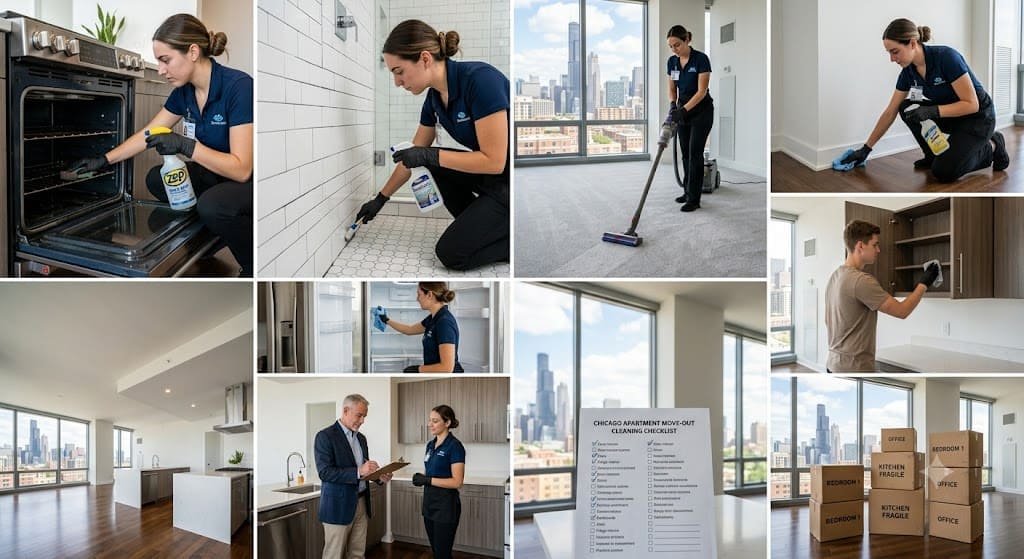
Why This Mistake Can Cost Renters Hundreds—or Even More
There’s no universal “move-out cleaning fee.” The amount a tenant may be charged depends on factors such as the lease agreement, the condition of the property, and the actual cleaning required.
However, cleaning costs can add up quickly when multiple issues are found, especially if professional services are needed to restore the apartment to a move-in-ready condition.
Common expenses may include:
Cleaning Issue | Why It Matters |
|---|---|
Greasy oven | Requires heavy-duty degreasing and extra labor |
Dirty refrigerator | Food residue and odors must be removed before a new tenant moves in |
Bathroom soap scum | Deep scrubbing may be needed to remove buildup |
Pet hair and odors | Can require specialized cleaning and deodorizing |
Carpet stains | Spot treatment or professional carpet cleaning may be necessary |
Heavy dust buildup | Slows apartment turnover and affects overall presentation |
Sticky cabinets and drawers | Leaves a poor impression and requires additional cleaning time |
While one missed item might not seem like a big deal, several overlooked areas together can increase cleaning time and costs.
Why Chicago Landlords Expect More Than Surface Cleaning
Chicago’s rental market moves quickly. Property owners and managers often have only a short window between one tenant moving out and another moving in.
To prepare the unit, they typically need to:
- Inspect the apartment for cleanliness and damage.
- Complete any maintenance or repairs.
- Deep clean the property if necessary.
- Ensure the home is ready for the next tenant.
Because of these tight turnaround times, landlords generally expect the apartment to be left in a clean, presentable condition as outlined in the lease.
This doesn’t mean the property must look brand new, but it should be free of excessive dirt, grease, food residue, trash, and avoidable cleaning issues.
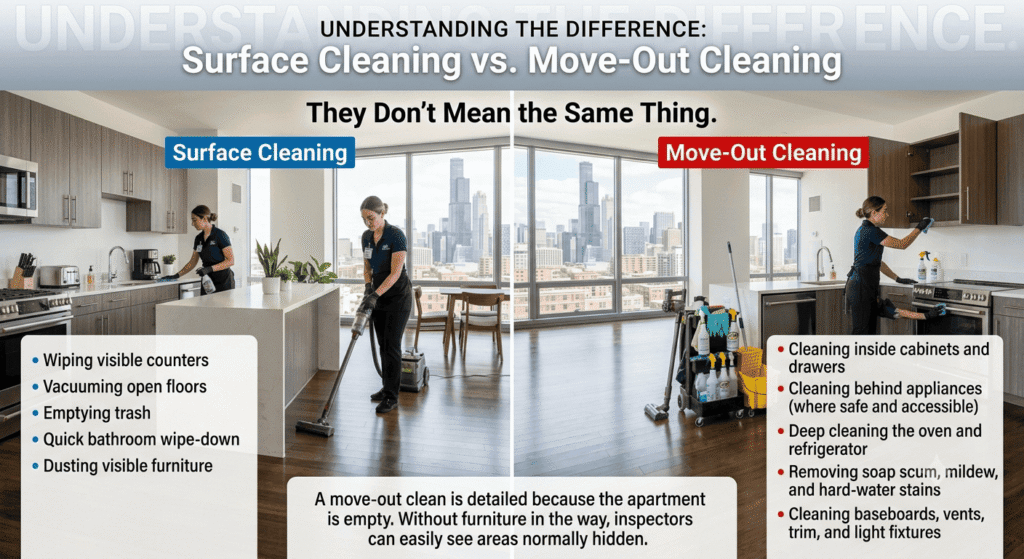
Surface Cleaning vs. Move-Out Cleaning
One of the biggest misconceptions renters have is believing these two terms mean the same thing.
They don’t.
Surface Cleaning | Move-Out Cleaning |
|---|---|
Wiping visible counters | Cleaning inside cabinets and drawers |
Vacuuming open floors | Cleaning behind appliances (where safe and accessible) |
Emptying trash | Deep cleaning the oven and refrigerator |
Quick bathroom wipe-down | Removing soap scum, mildew, and hard-water stains |
Dusting visible furniture | Cleaning baseboards, vents, trim, and light fixtures |
A move-out clean is more detailed because the apartment is empty. Without furniture in the way, inspectors can easily see areas that are normally hidden.
What Do Landlords Check During a Move-Out Inspection?
During a move-out inspection, landlords typically examine kitchens, bathrooms, appliances, floors, walls, windows, closets, and other areas to determine whether the property has been left clean and in the condition required by the lease. They also look for damage beyond normal wear and tear and any cleaning issues that could delay the next tenant's move-in.
Although every property manager follows their own process, most inspections focus on the same high-impact areas.
Kitchen
The kitchen is often the first room inspected because it tends to require the most cleaning.
- Inspectors commonly check:
- Oven interior
- Stovetop and burners
- Range hood
- Microwave
- Refrigerator shelves and drawers
- Freezer
- Sink
- Countertops
- Cabinets (inside and outside)
- Floors
Bathroom
Bathrooms reveal how thoroughly an apartment has been cleaned.
- Common inspection points include:
- Toilet
- Bathtub
- Shower
- Grout
- Caulking
- Mirrors
- Vanity
- Sink
- Exhaust fan
- Floors
Living Areas
- Inspectors often look for:
- Dust on baseboards
- Window tracks
- Windowsills
- Doors
- Door frames
- Light switches
- Ceiling fans
- Air vents
- Flooring
Bedrooms
- Typical inspection items include:
- Closet shelves
- Floors or carpets
- Baseboards
- Windows
- Walls
- Doors
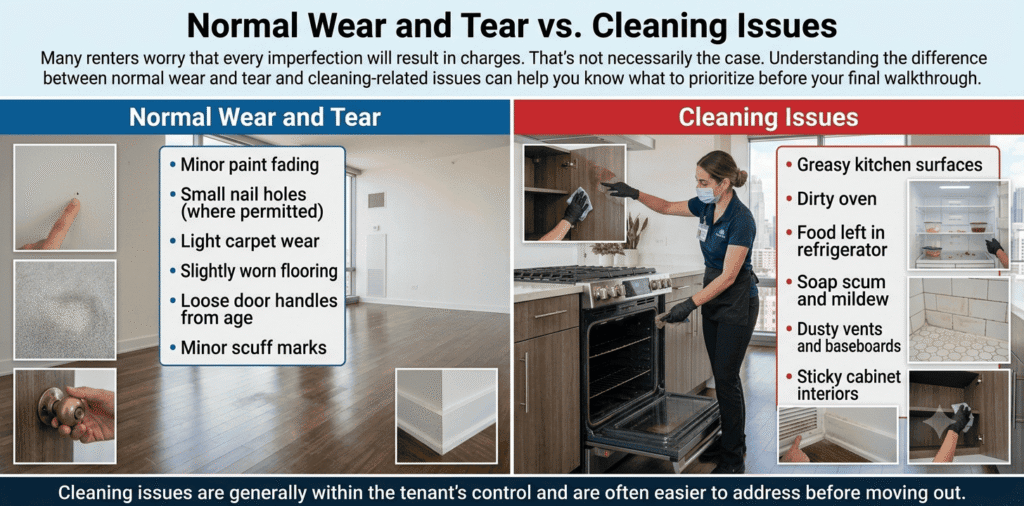
Normal Wear and Tear vs. Cleaning Issues
Many renters worry that every imperfection will result in charges.
That’s not necessarily the case.
Understanding the difference between normal wear and tear and cleaning-related issues can help you know what to prioritize before your final walkthrough.
Normal Wear and Tear | Cleaning Issues |
|---|---|
Minor paint fading | Greasy kitchen surfaces |
Small nail holes (where permitted) | Dirty oven |
Light carpet wear | Food left in refrigerator |
Quick bathroom wipe-down | Removing soap scum, mildew, and hard-water stains |
Slightly worn flooring | Soap scum and mildew |
Loose door handles from age | Dusty vents and baseboards |
Minor scuff marks | Sticky cabinet interiors |
Cleaning issues are generally within the tenant’s control and are often easier to address before moving out.
The 12 Hidden Places Renters Forget to Clean Before Moving Out
Most renters clean what they can see.
Landlords and property managers, however, inspect what many tenants don’t see.
In our experience, these hidden areas are responsible for many of the cleaning issues discovered during final walkthroughs. Spending an extra hour on these details can make a significant difference in how move-in ready your apartment appears.
Let’s look at the areas most commonly overlooked.

Inside the Oven
The oven is one of the first places inspectors open during a move-out inspection. Even if the stovetop shines, baked-on grease, burnt food, and carbon buildup inside can create the impression the kitchen wasn't cleaned thoroughly. Clean the racks, interior walls, door, glass window, bottom tray, control knobs, and storage drawer (if applicable).

Refrigerator and Freezer
Many renters empty the refrigerator but forget to clean it. Don't forget door shelves, vegetable drawers, glass shelves, rubber door seals, the ice tray area, freezer shelves, exterior handles, and the floor underneath (if safely accessible).

Kitchen Cabinets and Drawers
Cabinets often hide months — or years — of crumbs, grease, and dust. Clean interior shelves, cabinet doors, drawer tracks, handles and knobs, and the top of upper cabinets where accessible.

Range Hood and Exhaust Filter
The range hood quietly collects grease every time you cook. Clean the exterior surface, light cover, grease filter, and buttons or controls.

Baseboards and Trim
Easy to overlook because they're below eye level. Over time they collect dust, pet hair, and scuff marks that become more noticeable once furniture is removed — walk each room with a microfiber cloth and wipe baseboards, door trim, window trim, and stair trim.

Window Tracks and Windowsills
Among the dirtiest places in many apartments — dust, dead insects, pollen, pet hair, and dirt from open windows collect here. A vacuum attachment followed by a damp cloth usually works well.

Bathroom Grout and Caulking
Bathrooms are inspected closely because moisture can lead to mildew and soap scum. Pay extra attention to shower corners, tile grout, around the faucet, tub edges, toilet base, and caulking lines.

Ceiling Fans and Light Fixtures
Easy to miss since they're above eye level — once the fan is switched on, accumulated dust becomes obvious. Clean fan blades (top and bottom), light covers, bulbs (wipe gently when cool), pendant lights, and bathroom fixtures.

Air Vents and Return Grilles
Dusty vents suggest the apartment hasn't been thoroughly cleaned. Vacuum vent covers and wipe away surface dust; replace or clean filters if they're tenant-maintained under your lease.

Closet Shelves
Empty closets aren't automatically clean. Inspect shelves, corners, baseboards, floors, and closet rods — these small spaces accumulate dust without being noticed.

Behind and Under Appliances
Once appliances are moved (only if safe and permitted), many renters are surprised by what they find: dust, food crumbs, grease, pet hair, and packaging materials. Much easier to clean before you hand over the keys.

Doors, Handles, and Light Switches
High-touch surfaces collect fingerprints, grease, and grime. Quickly wipe interior doors, the inside of the exterior door, door handles, closet doors, cabinet handles, light switches, and the thermostat cover.
The 7 Most Expensive Move-Out Cleaning Mistakes
Some mistakes require far more time and effort to correct than others. Here are the issues that commonly lead to additional cleaning work.
MISTAKE 01
Thinking "Looks Clean" Means "Inspection Ready"
This is the biggest mistake renters make. A quick vacuum and wiped countertops may look good, but inspectors often evaluate areas hidden from everyday view. Clean beyond what you normally see.
MISTAKE 02
Leaving Appliances Dirty
Kitchen appliances are among the most heavily inspected features of a rental — the oven, refrigerator, microwave, dishwasher, and range hood. One neglected appliance can affect the overall impression of the kitchen.
MISTAKE 03
Ignoring Grease Buildup
Grease is one of the hardest substances to remove once it has accumulated — pay attention to the backsplash, cabinet fronts, stove controls, range hood, and walls near the cooktop. Regular wiping throughout your tenancy makes move-out cleaning much easier.
MISTAKE 04
Waiting Until the Last Day
Moving day is hectic, and rushing through cleaning often means missing details that are easier to spot in an empty apartment. Better approach: pack first, move furniture out, deep clean the empty unit, then complete a final walkthrough.
MISTAKE 05
Forgetting Odors
A room can look spotless but still smell unpleasant — pet accidents, cigarette smoke, strong cooking smells, garbage residue, and refrigerator spills are common sources. Open windows if weather permits and ensure trash has been removed.
MISTAKE 06
Not Cleaning High-Touch Areas
Light switches, door handles, cabinet pulls, faucet handles, appliance handles, and thermostats are touched every day but often forgotten. A quick disinfecting wipe can make a noticeable difference.
MISTAKE 07
Skipping the Final Walkthrough
After cleaning, walk through as if seeing it for the first time. Would this kitchen feel ready for a new tenant? Are there streaks on mirrors? Is the oven truly clean? This final check often catches issues that are easy to fix before handing over the keys.
Why Kitchens and Bathrooms Receive the Most Attention
If you're limited on time, prioritize these two rooms — they typically require the most effort to restore to a move-in-ready condition and are where grease, moisture, food residue, and soap scum accumulate.
Kitchen Checklist
- Oven
- Refrigerator
- Microwave
- Sink
- Cabinets
- Countertops
- Stovetop
- Range hood
- Floors
Bathroom Checklist
- Toilet
- Shower
- Bathtub
- Grout
- Mirrors
- Vanity
- Sink
- Fixtures
- Floors
Quick Self-Inspection Checklist Before Returning the Keys
Before you lock the door for the last time, ask yourself:
- Is the oven free of grease and burnt residue?
- Is the refrigerator empty, clean, and odor-free?
- Are all cabinets and drawers wiped inside and out?
- Have baseboards and trim been dusted?
- Are bathrooms free of soap scum and mildew?
- Are windowsills and tracks clean?
- Have all personal belongings and trash been removed?
- Are floors vacuumed or mopped?
- Have high-touch surfaces been disinfected?
- Have you checked every room one final time?
DIY vs. Professional Move-Out Cleaning
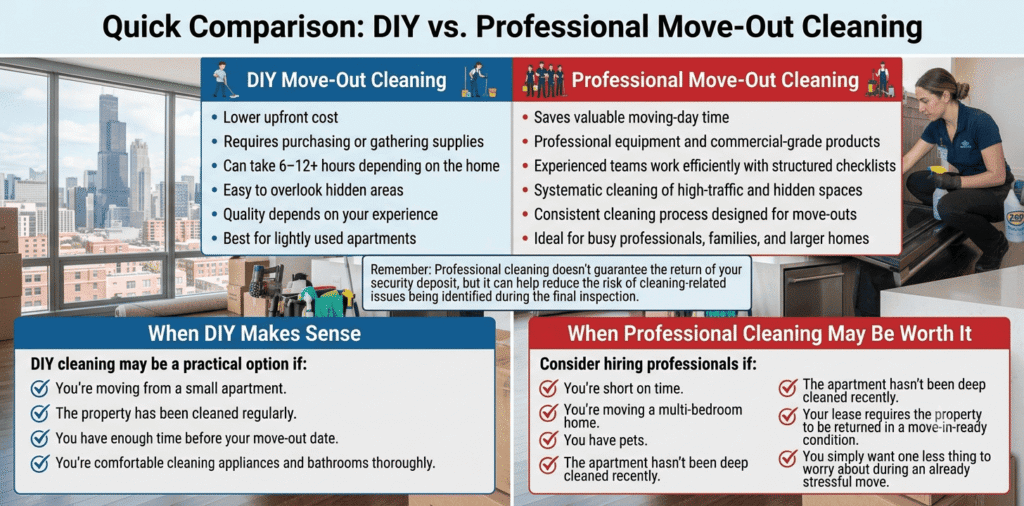
One of the biggest decisions renters face is whether to clean the apartment themselves or hire a professional move-out cleaning service. The answer depends on three factors: how much time you have, the condition of the property, and your confidence in completing a thorough deep clean.
If you’re moving from a studio apartment that’s already well-maintained, a DIY clean may be enough. If you’re leaving a larger apartment, have pets, or haven’t deep cleaned in a while, professional cleaning can save significant time and reduce the chance of missing important areas.
DIY Move-Out Cleaning | Professional Move-Out Cleaning |
|---|---|
Lower upfront cost | Saves valuable moving-day time |
Requires purchasing or gathering supplies | Professional equipment and commercial-grade products |
Can take 6–12+ hours depending on the home | Experienced teams work efficiently with structured checklists |
Easy to overlook hidden areas | Systematic cleaning of high-traffic and hidden spaces |
Quality depends on your experience | Consistent cleaning process designed for move-outs |
Best for lightly used apartments | Ideal for busy professionals, families, and larger homes |
When DIY Makes Sense
- Moving from a small apartment
- Property has been cleaned regularly
- You have enough time before move-out
- Comfortable deep-cleaning appliances and bathrooms
When Pros May Be Worth It
- Short on time
- Moving a multi-bedroom home
- You have pets
- Apartment hasn't been deep cleaned recently
- Lease requires move-in-ready condition
Remember: Professional cleaning doesn’t guarantee the return of your security deposit, but it can help reduce the risk of cleaning-related issues being identified during the final inspection.
How Much Does Move-Out Cleaning Cost in Chicago?
The answer depends on several factors, including apartment or home size, number of bedrooms and bathrooms, overall condition of the property, whether deep cleaning is required, and add-on services such as inside appliances, interior windows, or carpet cleaning.
Rather than focusing only on price, compare providers based on what’s included, whether they specialize in move-out cleaning, customer reviews, experience with apartment turnovers, and transparent pricing with no hidden fees. Choosing the lowest quote isn’t always the best value if important cleaning tasks are excluded.
Complete Room-by-Room Move-Out Cleaning Checklist
Use this checklist as your final guide before returning the keys.
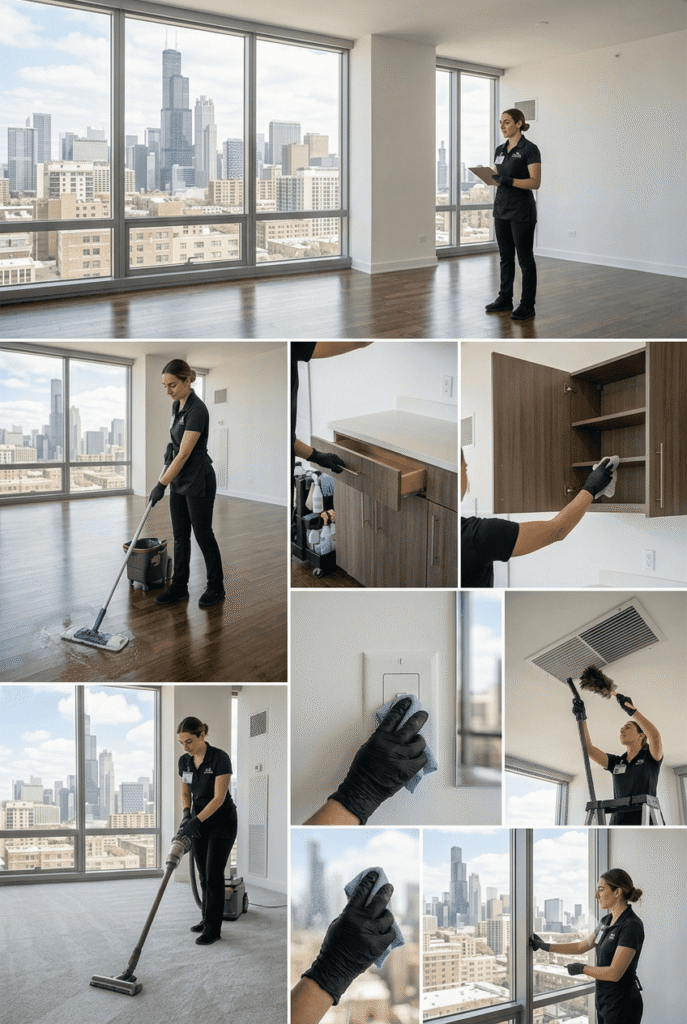
Kitchen — Appliances
- The kitchen usually requires the most attention.
- Clean inside the oven
- Wipe oven racks
- Degrease the stovetop
- Clean burners
- Wipe the microwave inside and out
- Empty and clean the refrigerator
- Clean freezer shelves
- Wipe the dishwasher
- Clean the range hood and filter
Kitchen — Cabinets & Surfaces
- Empty all cabinets
- Wipe interior shelves
- Clean cabinet doors
- Remove crumbs from drawers
- Wipe handles and knobs
- Disinfect countertops
- Clean backsplash
- Polish the sink & faucet
- Mop the floor
Bathroom
- Bathrooms should look fresh, sanitary, and free of buildup.
- Scrub the toilet, inside and behind
- Sanitize the sink, polish faucets
- Clean mirrors
- Remove soap scum, clean grout
- Scrub tile walls, wipe shower doors
- Clean the drain area, remove mildew
- Wipe cabinets, clean light fixtures
- Dust exhaust fan covers, mop floor
- Flooring
Bedrooms
- Typical inspection items include:
- Vacuum carpets
- Sweep or mop hard floors
- Dust windowsills, wipe baseboards
- Clean closet shelves
- Dust ceiling fans
- Remove nails or hooks if required
- Confirm nothing has been left behind
Living room
- Don't overlook common living spaces.
- Vacuum or mop floors
- Dust baseboards, wipe windowsills
- Clean light switches, dust vents
- Wipe doors
- Clean interior windows if required
- Remove cobwebs from corners
Laundry Area (if included)
- If your apartment includes laundry facilities:
- Wipe the washer
- Clean the dryer, remove lint
- Sweep behind appliances if safely accessible
- Check for forgotten items
Whole Apartment — Final Pass
Before leaving, make sure you've completed these final tasks.
Whole Apartment — Final Pass
Before leaving, make sure you've completed these final tasks.
- Remove all personal belongings.
- Empty every cabinet and drawer.
- Take out all trash.
- Replace burned-out bulbs if required.
- Vacuum every room.
- Mop hard floors.
- Wipe doors and trim.
- Clean light switches.
- Dust vents.
- Lock windows.
- Turn off lights.
How to Document Your Apartment Before Returning the Keys
Cleaning is only part of protecting yourself. Proper documentation can help demonstrate the condition of the property at move-out.
Take photos of every room
Wide-angle and close-up shots of the living room, bedrooms, bathrooms, kitchen, closets, floors, walls, windows, appliances, and entry door, in good lighting.
Record a walkthrough video
A slow pan of each room, including open appliances, inside cabinets, floors, bathrooms, windows, and closets.
Keep cleaning receipts
Invoices, receipts, and booking confirmations if you hired professional cleaners.
Save all communication
emails, texts, inspection scheduling, and move-out confirmations.
10 Expert Tips to Help Maximize Your Security Deposit
While no one can guarantee the return of a security deposit, these best practices can help reduce avoidable cleaning-related issues.
1. Read Your Lease Before Cleaning
Different landlords have different move-out requirements.
2. Start Cleaning Early
Avoid leaving everything for moving day.
3. Clean the Apartment After Furniture Is Removed
An empty apartment makes hidden dirt much easier to spot.
4. Focus on Kitchens and Bathrooms First
These rooms usually receive the closest attention during inspections.
5. Don't Forget Hidden Areas
Think beyond visible surfaces.
6. Remove Every Personal Item
Double-check cabinets, closets, storage areas, and the refrigerator.
7. Eliminate Odors
Take out the trash, empty food containers, and air out the apartment if possible.
8. Complete a Final Self-Inspection
Walk through the apartment as if you were seeing it for the first time.
9. Take Photos Before Returning the Keys
Document the property's condition after cleaning is complete.
10. Schedule Enough Time
Rushing through the cleaning process increases the likelihood of missing important details.
Move-Out Cleaning Timeline: A Stress-Free Plan
One of the biggest reasons renters miss important cleaning tasks is that they leave everything until moving day. Breaking the work into smaller steps can make the process much more manageable.
7 Days Before Moving
Review your lease agreement, schedule your move-out inspection if required, gather cleaning supplies or book a professional service, donate or dispose of unwanted belongings, and begin packing non-essential items
Goal: Reduce clutter so cleaning is easier later.
3 Days Before Moving
Empty kitchen cabinets, defrost and clean the refrigerator if necessary, wash windows and windowsills, dust shelves, baseboards, and ceiling fans, and deep clean bathrooms.
Goal: Complete the tasks that take the most time before moving day.
Moving Day
After the furniture has been removed: vacuum all floors, mop hard surfaces, wipe doors and trim, clean inside closets, remove all trash, and perform a final walkthrough.
Goal: Leave the apartment clean, empty, and ready for inspection.
Before Returning the Keys
Take photos and videos of every room, check cabinets and drawers one last time, confirm utilities have been transferred or disconnected if applicable, and return all keys, fobs, and parking passes according to your lease.
Does Move-Out Cleaning Change by Property Type?
Not every move-out cleaning project is the same. The type of property often determines how much work is involved.
Property Type | Common Cleaning Priorities |
|---|---|
Studio Apartment | Kitchen, bathroom, floors, appliances |
One-Bedroom Apartment | Closets, cabinets, windows, appliances |
Condo | Balconies, storage areas, premium finishes, appliances |
Single-Family House | Garage, basement, multiple bathrooms, stairways, exterior entryways |
Chicago-Specific Move-Out Cleaning Tips
Chicago presents a few unique cleaning challenges that renters in other cities may not experience.
Winter salt stains
Snow and road salt can leave white residue on hardwood floors, tile, entryways, and baseboards. Cleaning these before moving out helps the overall appearance of the property.
Radiators and heating vents
Many older Chicago apartments have radiators or exposed heating systems that collect dust over time. Wipe radiators, vent covers, and heating registers.
Historic apartments
Vintage buildings often feature original wood trim, decorative molding, tall windows, and built-in cabinets that collect dust and deserve extra attention.
High-rise apartments
Check whether your building requires elevator reservations, move-out time slots, loading dock access, or cleaning requirements for common areas.
Common Myths About Move-Out Cleaning
There are many misconceptions about what landlords expect.
Let's separate fact from fiction.
Myth | Reality |
|---|---|
"Vacuuming is enough." | Deep cleaning is often needed in kitchens, bathrooms, and appliances. |
"If it looks clean, it's ready." | Inspectors frequently check hidden areas such as cabinets and ovens. |
"Landlords never open appliances." | Ovens, refrigerators, and cabinets are commonly inspected. |
"Cleaning doesn't affect my deposit." | Cleaning-related issues can lead to deductions depending on the lease and applicable law. |
"I'll clean after the inspection." | Most inspections occur after the tenant has moved out, making advance cleaning important. |
Standard Cleaning vs. Deep Cleaning vs. Move-Out Cleaning
Many people use these terms interchangeably, but they have different purposes.
Standard Cleaning | Deep Cleaning | Move-Out Cleaning |
|---|---|---|
Dusting | Cleaning grout | Empty-home cleaning |
Vacuuming | Removing grease | Cleaning inside appliances |
Wiping counters | Baseboards | Cabinet interiors |
Basic bathroom cleaning | Behind furniture | Closets and storage areas |
Tidying | Hard-water stain removal | Inspection-focused cleaning |
Move-out cleaning combines elements of both standard and deep cleaning while focusing on preparing an empty property for its next occupant.
Questions? We've Got Answers
A move-out cleaning service typically includes deep cleaning of kitchens, bathrooms, bedrooms, living areas, appliances, cabinets, baseboards, floors, windowsills, and other commonly overlooked surfaces. The exact scope depends on the service provider.
An apartment should generally be left empty, clean, and in the condition required by the lease. This usually means removing all personal belongings, cleaning appliances, sanitizing bathrooms, wiping cabinets, and vacuuming or mopping floors.
Whether a landlord may charge for cleaning depends on the lease agreement, the condition of the property at move-out, and applicable state and local laws. If you have questions about your rights or obligations, review your lease and consult authoritative legal resources.
The time required depends on the property's size, condition, and the services requested. A small apartment may take only a few hours, while larger homes or properties requiring extensive deep cleaning can take much longer.
Not exactly. Move-out cleaning is typically more comprehensive because the property is empty, allowing cleaners to access areas behind furniture, inside cabinets, and inside appliances.
After. Cleaning an empty apartment allows you to reach every surface and helps ensure nothing is missed.
Yes. Built-in and included appliances are typically expected to be left clean unless your lease states otherwise.
Yes. Built-in and included appliances are typically expected to be left clean unless your lease states otherwise.
Final Thoughts
Moving is already one of life’s most demanding events. The last thing you want is to lose time—or money—because of cleaning issues that could have been prevented.
The biggest move-out cleaning mistake isn’t a single dirty appliance or a dusty baseboard. It’s assuming that a quick surface clean is enough for a final inspection.
By planning ahead, using a detailed checklist, focusing on hidden areas, and documenting the property’s condition before returning the keys, you can leave your rental in excellent condition and make the move-out process far less stressful.
Whether you decide to clean the apartment yourself or hire a professional move-out cleaning service, thorough preparation is the key to a smooth final walkthrough.
Conclusion
A successful move-out isn’t just about packing boxes and handing over the keys. It’s about leaving the property in a clean, well-presented condition that reflects the care you’ve taken throughout your tenancy.
If you’re preparing to move out of a Chicago apartment, condo, or house, use this guide as your roadmap. Start early, follow the checklist, pay attention to the details that inspectors notice, and document your work before you leave.
Small efforts today can help you avoid unnecessary stress tomorrow.
Why Trust Our Move-Out Cleaning Advice?
Our guidance is based on the cleaning challenges commonly encountered during residential move-outs and the expectations that many landlords and property managers have when preparing a home for its next occupant.
We believe renters make better decisions when they understand why certain areas matter—not just what to clean. That's why this guide focuses on practical, experience-based advice rather than shortcuts or unrealistic promises.