
How to Clean Dirty Shower Tracks in Chicago: Remove Hair, Soap Scum & Mineral Buildup
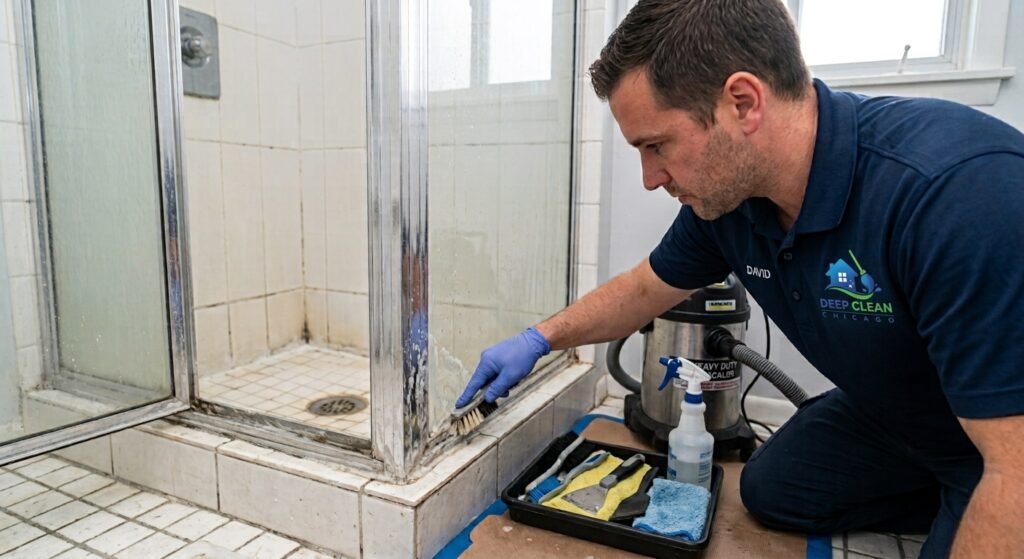
Dirty shower tracks are one of the easiest bathroom areas to overlook. In Chicago homes and apartments, the narrow channels around sliding shower doors can collect hair, soap scum, dust, moisture, and mineral residue until the track becomes dark, sticky, or difficult to move. Whether you live in a Chicago apartment, condo, bungalow, townhouse, or home in a nearby suburb, cleaning the shower track properly requires more than wiping the visible surface. The goal is to remove the buildup from the narrow channels, corners, and accessible hardware while using a cleaning method that is appropriate for the material. Why Shower Tracks Get So Dirty in Chicago Bathrooms Shower tracks are naturally difficult to clean because they combine narrow spaces with frequent exposure to water and bathroom residue. Chicago-area bathrooms can also experience seasonal humidity and ventilation challenges that make moisture management an important part of bathroom maintenance. Hair and loose debris Hair, dust, lint, and other debris can collect in the corners and channels of the track, particularly in frequently used bathrooms. Soap scum Soap, shampoo, body oils, and other residue can create a sticky film that holds additional dirt inside the track. Mineral residue Water can leave mineral residue on shower surfaces and hardware. The exact buildup and appropriate treatment depend on the water, surface, and material involved. Trapped moisture Water that remains inside the track can keep residue damp and make the area harder to maintain between deeper cleanings. A Chicago Bathroom Cleaning Detail Worth Checking When cleaning a Chicago-area bathroom, do not stop at the shower glass or tub. Shower-door tracks, corners, grout lines, and floor edges can collect buildup even when the more visible surfaces look clean. This is especially worth checking in bathrooms that have gone through a long period without detailed cleaning or bathrooms where moisture and residue repeatedly collect around the shower enclosure. The hardest part of cleaning a shower track is often not the visible surface. It is the narrow channel where hair, residue, and water collect together. What You Need to Clean a Shower Track The exact cleaning product should depend on the shower-track material and the type of buildup present. Avoid using a harsh product simply because the buildup looks difficult. Vacuum or soft brush for loose hair and debris Microfiber cloths Small cleaning brush or old soft toothbrush Warm water A suitable bathroom or soap-scum cleaner A suitable mineral-deposit cleaner when appropriate for the surface Clean water for rinsing Dry microfiber towel How to Clean Dirty Shower Tracks Step by Step Chicago Bathroom Shower-Track Cleaning Sequence Inspect → Remove debris → Loosen buildup → Scrub → Rinse → Dry → Inspect again 1. Open the Shower Door and Inspect the Track Start by opening the sliding shower door so you can see the entire track. Look closely at the corners, channels, door rollers, drain openings, and areas underneath or behind the sliding panels. In older Chicago apartments, condos, and homes, shower enclosures can vary considerably in design and material. Identify what you are working with before applying a cleaner. 2. Remove Hair and Loose Debris First Do not begin by soaking a track that is full of hair and loose dirt. Removing dry debris first makes the remaining buildup easier to clean. Use a vacuum with an appropriate attachment, a soft brush, or a dry microfiber cloth to collect loose hair and debris. Pay particular attention to the corners where material tends to accumulate. 3. Apply a Suitable Cleaner Apply a cleaning product that is appropriate for the material and the type of buildup. Soap scum and mineral deposits may require different approaches. Allow the cleaner to work according to the product instructions rather than immediately scrubbing as hard as possible. 4. Scrub the Narrow Channels Use a small brush to work along the inside of the track. Move slowly through the corners and narrow channels where a regular bathroom sponge cannot reach effectively. A toothbrush or similarly sized soft cleaning brush can be useful for detailed areas, provided it is suitable for the surface. 5. Pay Attention to the Corners Shower-track corners often contain the most concentrated buildup because hair, soap residue, and water collect there. Work the brush into the corners without using excessive force. If buildup remains firmly attached, allow the appropriate cleaner more time to work rather than immediately increasing pressure. 6. Clean Around the Sliding Door Hardware Inspect the areas around the door rollers and other accessible hardware. Dirt can accumulate around these components and may affect how smoothly the door moves. Clean carefully without forcing tools into areas that could damage the door mechanism. 7. Rinse Away the Loosened Residue Once the buildup has been loosened, remove the residue according to the cleaner’s instructions. Use clean water where appropriate and avoid leaving cleaning-product residue behind. 8. Dry the Entire Track Dry the track thoroughly with a clean microfiber towel. Pay particular attention to the corners and channels where water can remain trapped. Drying is an important part of the process because a wet, dirty track can quickly begin collecting additional residue. 9. Inspect the Track From Different Angles Finally, open and close the shower door and inspect the track from several angles. Look for remaining hair, dark residue, mineral deposits, water spots, and buildup hidden inside the channels. If the track still looks dirty, repeat the appropriate cleaning step rather than automatically switching to a stronger chemical. How to Remove Hair From Shower Tracks Hair is usually easiest to remove before water and cleaning products are introduced. Once hair becomes mixed with soap residue and moisture, it can form a sticky mass that is much harder to remove. Remove visible hair using an appropriate method. Use a vacuum or soft brush for remaining loose debris. Check corners and drain openings carefully. Remove accumulated debris before applying wet cleaners. If hair repeatedly collects in the same location, include that area in your regular bathroom inspection instead of waiting until the buildup becomes difficult