
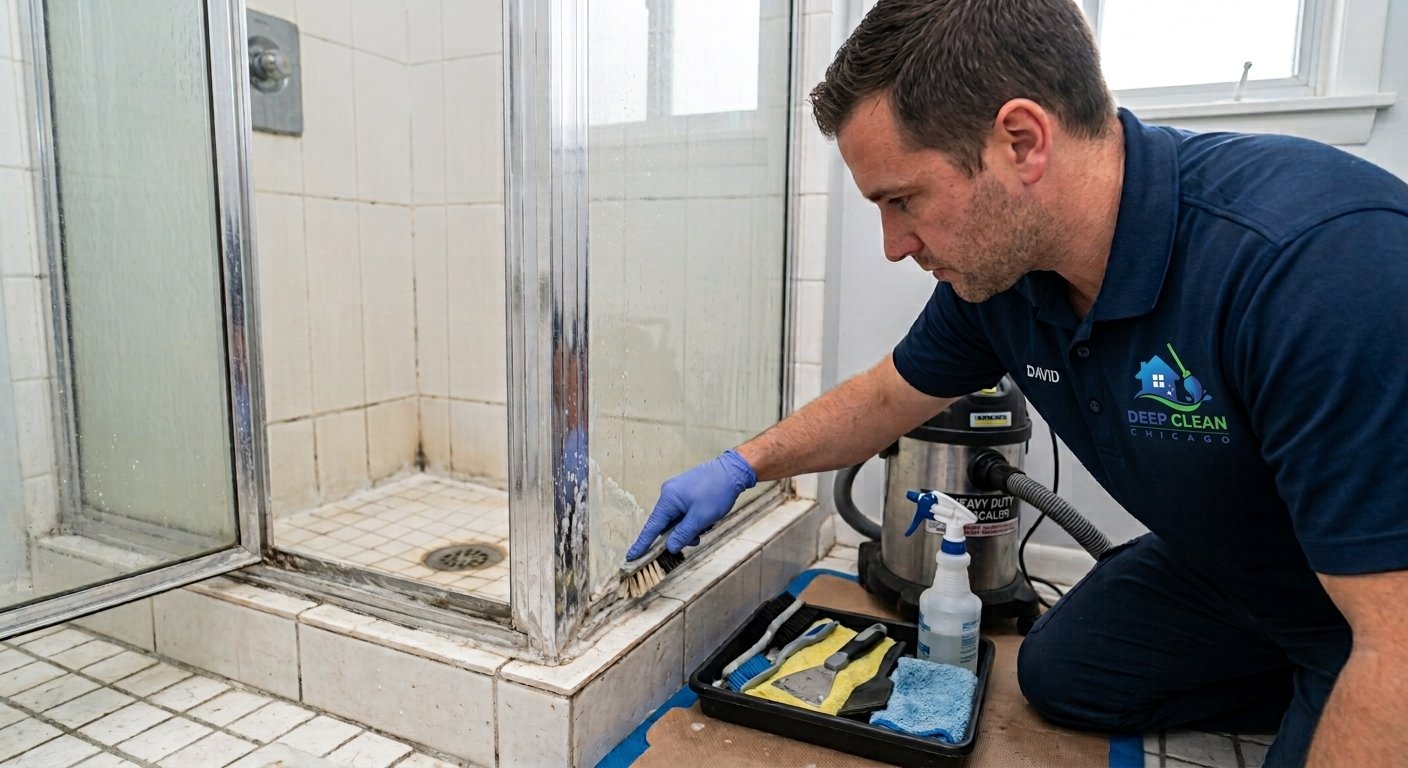
Dirty shower tracks are one of the easiest bathroom areas to overlook. In Chicago homes and apartments, the narrow channels around sliding shower doors can collect hair, soap scum, dust, moisture, and mineral residue until the track becomes dark, sticky, or difficult to move.
Whether you live in a Chicago apartment, condo, bungalow, townhouse, or home in a nearby suburb, cleaning the shower track properly requires more than wiping the visible surface. The goal is to remove the buildup from the narrow channels, corners, and accessible hardware while using a cleaning method that is appropriate for the material.
Why Shower Tracks Get So Dirty in Chicago Bathrooms
Shower tracks are naturally difficult to clean because they combine narrow spaces with frequent exposure to water and bathroom residue. Chicago-area bathrooms can also experience seasonal humidity and ventilation challenges that make moisture management an important part of bathroom maintenance.
Hair and loose debris
Hair, dust, lint, and other debris can collect in the corners and channels of the track, particularly in frequently used bathrooms.
Soap scum
Soap, shampoo, body oils, and other residue can create a sticky film that holds additional dirt inside the track.
Mineral residue
Water can leave mineral residue on shower surfaces and hardware. The exact buildup and appropriate treatment depend on the water, surface, and material involved.
Trapped moisture
Water that remains inside the track can keep residue damp and make the area harder to maintain between deeper cleanings.
A Chicago Bathroom Cleaning Detail Worth Checking
When cleaning a Chicago-area bathroom, do not stop at the shower glass or tub. Shower-door tracks, corners, grout lines, and floor edges can collect buildup even when the more visible surfaces look clean.
This is especially worth checking in bathrooms that have gone through a long period without detailed cleaning or bathrooms where moisture and residue repeatedly collect around the shower enclosure.
The hardest part of cleaning a shower track is often not the visible surface. It is the narrow channel where hair, residue, and water collect together.
What You Need to Clean a Shower Track
The exact cleaning product should depend on the shower-track material and the type of buildup present. Avoid using a harsh product simply because the buildup looks difficult.
- Vacuum or soft brush for loose hair and debris
- Microfiber cloths
- Small cleaning brush or old soft toothbrush
- Warm water
- A suitable bathroom or soap-scum cleaner
- A suitable mineral-deposit cleaner when appropriate for the surface
- Clean water for rinsing
- Dry microfiber towel
How to Clean Dirty Shower Tracks Step by Step

1. Open the Shower Door and Inspect the Track
Start by opening the sliding shower door so you can see the entire track. Look closely at the corners, channels, door rollers, drain openings, and areas underneath or behind the sliding panels.
In older Chicago apartments, condos, and homes, shower enclosures can vary considerably in design and material. Identify what you are working with before applying a cleaner.
2. Remove Hair and Loose Debris First
Do not begin by soaking a track that is full of hair and loose dirt. Removing dry debris first makes the remaining buildup easier to clean.
Use a vacuum with an appropriate attachment, a soft brush, or a dry microfiber cloth to collect loose hair and debris. Pay particular attention to the corners where material tends to accumulate.
3. Apply a Suitable Cleaner
Apply a cleaning product that is appropriate for the material and the type of buildup. Soap scum and mineral deposits may require different approaches.
Allow the cleaner to work according to the product instructions rather than immediately scrubbing as hard as possible.
4. Scrub the Narrow Channels
Use a small brush to work along the inside of the track. Move slowly through the corners and narrow channels where a regular bathroom sponge cannot reach effectively.
A toothbrush or similarly sized soft cleaning brush can be useful for detailed areas, provided it is suitable for the surface.
5. Pay Attention to the Corners
Shower-track corners often contain the most concentrated buildup because hair, soap residue, and water collect there.
Work the brush into the corners without using excessive force. If buildup remains firmly attached, allow the appropriate cleaner more time to work rather than immediately increasing pressure.
6. Clean Around the Sliding Door Hardware
Inspect the areas around the door rollers and other accessible hardware. Dirt can accumulate around these components and may affect how smoothly the door moves.
Clean carefully without forcing tools into areas that could damage the door mechanism.
7. Rinse Away the Loosened Residue
Once the buildup has been loosened, remove the residue according to the cleaner's instructions. Use clean water where appropriate and avoid leaving cleaning-product residue behind.
8. Dry the Entire Track
Dry the track thoroughly with a clean microfiber towel. Pay particular attention to the corners and channels where water can remain trapped.
Drying is an important part of the process because a wet, dirty track can quickly begin collecting additional residue.
9. Inspect the Track From Different Angles
Finally, open and close the shower door and inspect the track from several angles. Look for remaining hair, dark residue, mineral deposits, water spots, and buildup hidden inside the channels.
If the track still looks dirty, repeat the appropriate cleaning step rather than automatically switching to a stronger chemical.
How to Remove Hair From Shower Tracks
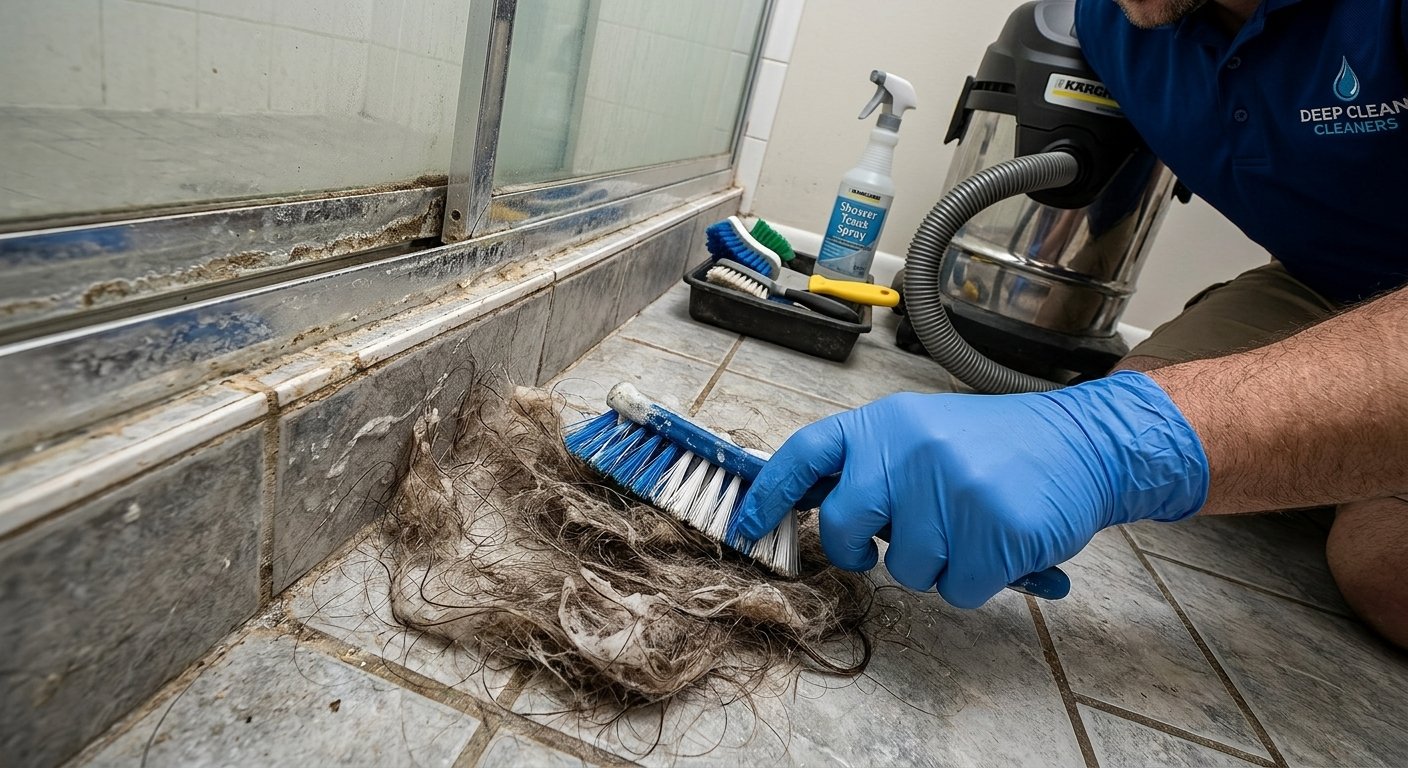
Hair is usually easiest to remove before water and cleaning products are introduced. Once hair becomes mixed with soap residue and moisture, it can form a sticky mass that is much harder to remove.
- Remove visible hair using an appropriate method.
- Use a vacuum or soft brush for remaining loose debris.
- Check corners and drain openings carefully.
- Remove accumulated debris before applying wet cleaners.
If hair repeatedly collects in the same location, include that area in your regular bathroom inspection instead of waiting until the buildup becomes difficult to remove.
How to Remove Soap Scum From Shower Tracks
Soap scum can create a stubborn film inside the track. It may appear as a dull, sticky, or cloudy residue and can trap hair and additional dirt.
Use a cleaner designed for the type of surface you are cleaning and follow its directions. Allowing an appropriate product enough time to loosen residue can reduce the need for aggressive scrubbing.
When soap scum is thick, more force is not always the answer. Giving a suitable cleaner time to loosen the residue can make the mechanical cleaning step more effective.
How to Remove Mineral Buildup From Shower Tracks
Mineral deposits may appear white, cloudy, chalky, or crusty. They are often most noticeable around areas that remain wet after showering.
The appropriate treatment depends on the material. Some mineral-deposit cleaners can damage sensitive surfaces, finishes, or natural stone, so check the manufacturer's guidance before applying an acidic or descaling product.
Be Careful With Natural Stone
If the shower area contains marble, limestone, travertine, or another acid-sensitive natural stone, do not assume that a general mineral-deposit cleaner is safe.
When you are uncertain about the material or the appropriate cleaning method, check the surface manufacturer's guidance or consult a qualified professional.
What If the Shower Track Is Black or Has a Musty Smell?
Dark buildup inside a shower track can have several possible causes, including accumulated dirt, soap residue, moisture, mildew, or other organic material.
A musty smell or recurring dark growth deserves additional attention. Cleaning the visible area may improve its appearance, but persistent moisture can cause the problem to return.
- Check whether water remains trapped inside the track.
- Make sure the bathroom has adequate ventilation.
- Inspect accessible caulk and seals for deterioration.
- Look for plumbing or water-intrusion problems.
- Pay attention to recurring moisture around the shower door.
Chicago-Area Bathroom Conditions to Keep in Mind
Chicago and the surrounding suburbs include a wide range of homes, apartments, condos, and older properties. Bathroom layouts and shower materials can therefore vary significantly from one property to another.
Local cleaning providers commonly identify shower glass, grout, fixtures, hard-water buildup, and other detailed bathroom surfaces as areas that require more than a quick routine wipe-down. r1
Seasonal moisture and ventilation can also affect how quickly bathroom residue returns. That makes drying, ventilation, and regular attention to hidden areas such as shower tracks useful parts of ongoing bathroom maintenance. r2
For Chicago and Nearby Suburbs
The same shower-track problem can show up in a downtown Chicago apartment, a North Side condo, a bungalow, or a suburban home. The cleaning method should be based on the actual buildup and surface material rather than simply where the property is located.
What You Should Not Do When Cleaning Shower Tracks
- Do not mix household cleaning chemicals unless the product instructions specifically say the combination is safe.
- Do not use abrasive tools that can scratch the finish.
- Do not assume every shower-track material can tolerate the same cleaner.
- Do not force brushes or tools into sensitive door hardware.
- Do not keep applying stronger chemicals when the real problem may be damaged material or persistent moisture.
How Often Should You Clean Shower Tracks?
The ideal frequency depends on how often the shower is used, how much residue accumulates, the amount of ventilation, and the condition of the shower door and track.
After showering
Keep excess water from sitting in the track and remove visible hair or debris when you notice it.
During routine cleaning
Inspect the track and wipe away developing soap residue before it becomes heavy buildup.
During deep cleaning
Detail the channels, corners, hardware, and other areas that are commonly missed during routine bathroom cleaning.
When buildup returns
Look for the reason it is returning, particularly persistent moisture, poor ventilation, or damaged seals.
How to Keep Shower Tracks Cleaner for Longer
Once the shower track has been thoroughly cleaned, simple maintenance can make the next deep clean considerably easier.
- Remove visible hair before it accumulates.
- Keep the track as dry as practical after showering.
- Ventilate the bathroom to reduce persistent moisture.
- Wipe developing soap residue before it hardens.
- Inspect corners and door channels during routine bathroom cleaning.
- Address damaged seals or persistent water problems when they are identified.
When a Dirty Shower Track Needs More Than Routine Cleaning
Some shower tracks become difficult to clean because buildup has accumulated for a long time or because the track has not been included in regular bathroom maintenance.
A detailed bathroom cleaning can be useful when soap scum, mineral deposits, hair, grime, and neglected areas have accumulated throughout the bathroom rather than only inside the shower track.
If the shower track is part of a larger bathroom buildup problem, Deep Cleaning Chicago can be considered for broader cleaning needs.
If you are preparing a property for a move, you can explore move-in and move-out cleaning for more extensive cleaning needs.
For apartments or condos that need cleaning beyond the bathroom, apartment and condo cleaning may be a more appropriate service option.
A Simple Shower-Track Cleaning Checklist
- Open the shower door and inspect the entire track.
- Remove hair and loose debris.
- Identify whether the buildup is mainly soap scum, mineral deposits, dirt, or moisture-related residue.
- Choose a cleaner appropriate for the surface.
- Allow the product to work according to its instructions.
- Scrub narrow channels and corners carefully.
- Clean accessible areas around the door hardware.
- Rinse away loosened residue where appropriate.
- Dry the track thoroughly.
- Inspect the finished track and shower-door movement.
Frequently Asked Questions
What is the easiest way to clean dirty shower tracks?
Start by removing hair and loose debris, then use an appropriate cleaner to loosen soap scum or mineral buildup. Scrub the narrow channels with a suitable small brush, rinse where appropriate, and dry the track thoroughly.
How do I remove hair from a shower door track?
Remove loose hair before wet cleaning begins. A vacuum, soft brush, or suitable manual removal method can help clear the corners and channels before applying a cleaner.
Why does my shower track keep getting dirty?
Shower tracks are exposed to water, soap residue, hair, dust, and mineral deposits. Persistent moisture, limited ventilation, and water remaining inside the track can also contribute to recurring buildup.
Can I use a strong cleaner on a shower track?
Not necessarily. The appropriate cleaner depends on the track material and the type of buildup. Always follow the product and surface manufacturer's guidance, especially around sensitive finishes and natural stone.
How can I stop soap scum from building up in the shower track?
Regularly remove visible residue, prevent water from sitting in the track, ventilate the bathroom, and include the shower track in routine bathroom cleaning instead of waiting for heavy buildup.
Does this apply to bathrooms outside Chicago?
Yes. The cleaning principles apply to bathrooms throughout the Chicago area and nearby suburbs. The specific cleaning method should still be selected according to the type of buildup and the material of the shower track.
Need a Deeper Bathroom Clean in Chicago?
If dirty shower tracks are part of a larger bathroom buildup problem, a detailed cleaning can address the areas that routine cleaning often misses.
Explore Deep Cleaning Chicago