
How to Deep Clean Hardwood Floors in Chicago
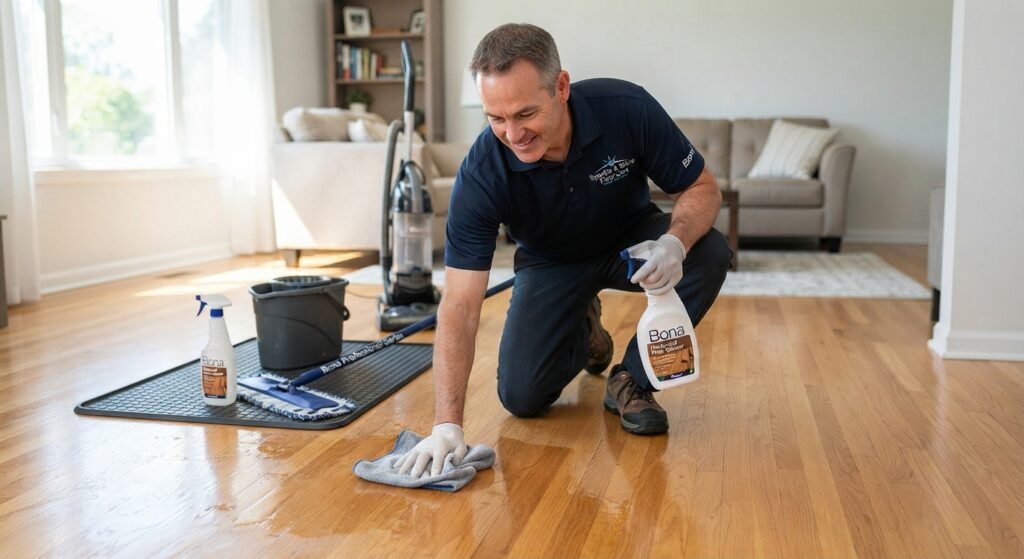
Best Way to Clean Hardwood Floors: A Safe Step-by-Step Guide Hardwood floors are durable, but they are not completely waterproof or maintenance-free. The safest way to clean them is to remove dry dirt first, use a cleaner appropriate for the floor’s finish, control the amount of moisture, and wipe up spills quickly. For most finished hardwood floors, the basic process is: Recommended Process Dry clean → spot clean → use the right hardwood-floor cleaner → damp mop with minimal moisture → remove any excess liquid → let the floor dry quickly. This matters even more in Chicago, where winter can bring snow, slush, road salt, and grit into the house. Those materials can scratch a floor’s finish or introduce moisture that the wood does not tolerate well. The National Wood Flooring Association (NWFA) recommends sweeping, dust mopping, or vacuuming on the bare-floor setting, cleaning spills immediately, avoiding wet and steam mops, and using a cleaner appropriate for the floor’s finish. What Is the Best Way to Clean Hardwood Floors? The best hardwood-floor cleaning method depends partly on the flooring construction and finish, but a safe general approach is: Remove abrasive debris. Spot-clean spills and sticky areas. Apply a compatible hardwood-floor cleaner. Damp mop using minimal liquid. Remove excess moisture and allow the floor to dry. 1. Remove dirt before adding moisture Start with a dry cleaning method. Use a microfiber dust mop, soft broom, or vacuum with the bare-floor setting. Do not drag loose sand, grit, or salt around with a wet mop. This step is particularly important because small particles can act like abrasives when they’re pushed across the finish. NWFA recommends regular sweeping or dust mopping and bare-floor vacuuming to remove dirt before it can contribute to scratching and finish wear. For homes with pets, children, or heavy foot traffic, dry cleaning may need to happen much more frequently than wet cleaning. 2. Treat spills and sticky spots Don’t wait for your scheduled floor-cleaning day to deal with a spill. For water, coffee, food, pet accidents, mud, or other small spills, blot or wipe the area with a dry or slightly damp soft cloth. The important part is to prevent moisture from sitting on the floor. NWFA specifically recommends immediately cleaning spills with a dry or slightly damp cloth. 3. Use a cleaner made for hardwood floors When the floor needs more than dry dust removal, choose a product designed for wood flooring and, when possible, one recommended for your particular finish. Don’t assume that a cleaner designed for tile, stone, or vinyl is automatically safe for hardwood. Your flooring manufacturer’s care instructions should take priority, particularly if you have an unusual finish, an older floor, or a floor that has been waxed or treated with specialty products. Consumer Reports recommends a pH-neutral hardwood-floor cleaner and advises checking the flooring manufacturer’s care instructions before applying a cleaner. 4. Damp mop—not wet mop This is one of the most important distinctions in hardwood-floor care. A damp mop puts a controlled, small amount of moisture onto the floor. A wet mop can leave enough water behind to seep into seams or remain on the surface. Use a microfiber mop or another system that allows you to control how much liquid reaches the floor. Follow the cleaner’s instructions rather than assuming that more solution produces a cleaner floor. NWFA’s current cleaning guidance recommends mopping with minimal liquid and emphasizes avoiding excessive moisture. 5. Let the floor dry After cleaning, the floor should not remain visibly wet. If you’ve used too much liquid, remove the excess rather than allowing it to evaporate slowly from the wood. Hardwood is a natural material that responds to moisture. Excess moisture can contribute to swelling and other flooring problems, while excessively dry conditions can contribute to shrinking, gaps, and splitting. How Often Should You Clean Hardwood Floors? There isn’t one perfect schedule for every home. Cleaning frequency depends on: Foot traffic Pets Children Outdoor dirt Weather Shoes worn indoors Location of entrances Kitchen activity The flooring’s finish and condition A practical routine is: Cleaning task Typical approach Dust mop/sweep Daily or as needed Vacuum with bare-floor setting Weekly or as needed Spill cleanup Immediately Damp cleaning Periodically, based on traffic and manufacturer’s instructions Recoating When the finish shows appropriate signs of wear Refinishing/repair When the floor has deeper damage NWFA notes that maintenance schedules vary according to use, wear, tear, and lifestyle. For a busy Chicago household during winter, you may need to dry-clean and spot-clean the floor much more frequently because snow, salt, and grit can be tracked inside. How to Clean Hardwood Floors in Chicago Chicago homes face a particular combination of hardwood-floor problems during winter: snow + slush + road salt + grit + wet shoes + indoor heating. That means hardwood care isn’t just about cleaning the floor after it gets dirty. Prevention matters. Remove road salt as soon as possible Road salt is especially important because it can arrive inside mixed with water and grit. If you see salt or salty slush on the floor: Remove the solid debris without grinding it into the finish. Blot up moisture. Use a slightly damp cloth or appropriate hardwood-floor cleaner according to the flooring manufacturer’s instructions. Wipe away remaining residue. Dry the area promptly. NWFA specifically warns that salt can scratch the floor’s surface and recommends taking extra precautions when winter salt is tracked inside. Use mats at entrances A good entrance system can prevent a significant amount of winter mess from ever reaching the hardwood. Consider using: An exterior mat for snow and debris An interior absorbent mat A designated place for wet shoes and boots A shoe-removal area Rugs in high-traffic zones NWFA recommends breathable rugs at doorways and in high-traffic areas to reduce tracked-in debris. Clean slush and water immediately A small puddle from a pair of boots may look harmless, but hardwood should not be treated like a waterproof surface. If someone walks through the house with wet boots,