
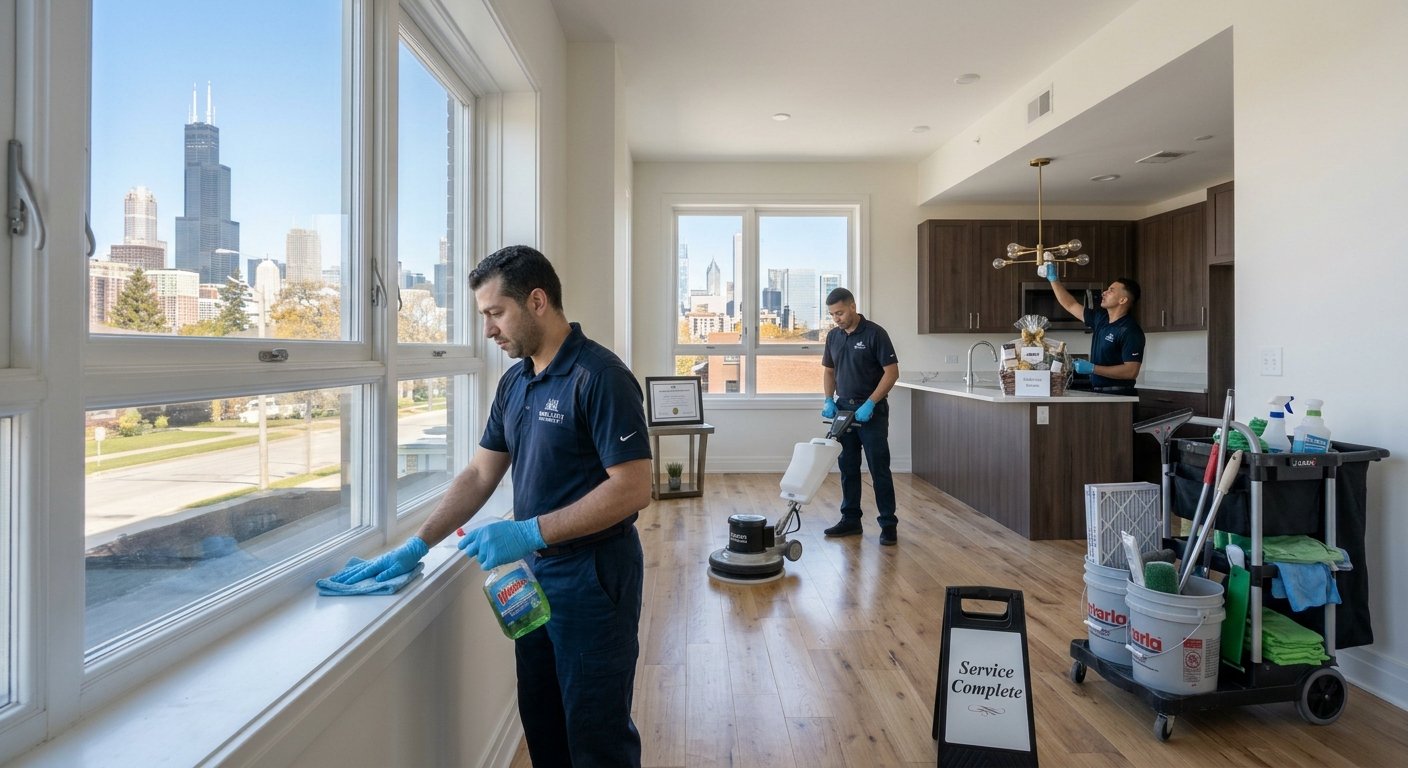
How to Prepare Your Home Before Moving Back In
Renovation work may be finished, but that does not always mean your home is ready for furniture, belongings, and everyday life. Fine construction dust can settle on floors, cabinets, windowsills, bathroom fixtures, and other surfaces long after the main work is complete. Adhesive marks, paint splashes, and leftover debris may also need attention.
Move-in cleaning after renovation in Chicago helps prepare a remodeled house, condo, or apartment for occupancy by removing accessible construction dust and cleaning finished surfaces. The right approach depends on the extent of the renovation, the materials installed, whether contractors have completed dusty work, and which areas need to be ready first.
This guide explains how to prepare your property before moving back in, what a post-renovation clean should cover, how to coordinate cleaning with contractors and movers, and when to consider professional help.
What Is Move-In Cleaning After Renovation?
Move-in cleaning after renovation is a detailed cleaning service performed after construction or remodeling to prepare a property for normal use. It focuses on accessible surfaces that may have accumulated dust, dirt, and appropriate removable residue during the project.
Unlike ordinary move-in cleaning, post-renovation cleaning must account for materials such as drywall dust, sawdust, tile residue, fine debris, paint marks, and dust inside newly installed cabinetry. Cleaning methods should also protect new flooring, countertops, fixtures, glass, and finishes.
Kitchen and Cabinets
Remove accessible construction dust from countertops, cabinet fronts, handles, backsplashes, and agreed-upon cabinet interiors before unpacking kitchen supplies.
Bathrooms
Clean sinks, toilets, compatible tile surfaces, mirrors, fixtures, and accessible shower areas while respecting new grout and sealant curing requirements.
Bedrooms and Living Areas
Address dust on floors, baseboards, ledges, trim, and accessible surfaces so belongings are not placed directly onto dusty areas.
Floors and Entryways
Remove fine particles using a method appropriate for the flooring material, paying attention to corners and areas affected by contractor foot traffic.
If your property is an apartment or condominium, explore apartment and condo cleaning services for help with general property cleaning needs. For renovation-related dust and debris, the scope should specifically account for post-construction conditions.
When Is a Renovated Home Ready for Move-In Cleaning?
The best time to schedule cleaning is after dusty construction tasks have finished and contractors have confirmed that the affected surfaces can safely be cleaned. However, the end of construction and the start of cleaning are not always the same as the date when the property is ready for occupancy.
New paint, grout, caulk, adhesives, flooring finishes, and sealants may have different curing requirements. Some products also require specific ventilation or restrict when surfaces can be exposed to water or cleaning chemicals. Confirm these instructions with the contractor before scheduling a detailed clean.
Signs Your Home May Be Ready
- Major renovation work and dusty cutting or sanding tasks have been completed.
- Contractors have removed tools, packaging, and construction materials included in their cleanup responsibilities.
- New flooring, paint, grout, sealants, and coatings can be cleaned according to their product instructions.
- There are no active leaks, exposed hazards, or unresolved issues that would make cleaning unsafe.
- Water, electricity, lighting, and building access are available as needed for the agreed cleaning tasks.
- The cleaning team has been told about delicate surfaces, newly installed finishes, and areas that should not be touched.
Important: A home can look finished while still having unresolved construction issues. Cleaning removes appropriate dust and residue; it does not replace contractor repairs, building inspections, or required curing time.
What Should Be Cleaned Before You Move Back In?
Prioritize surfaces that will come into contact with food, personal belongings, clothing, children, or pets. Then address the less visible areas where dust can collect and spread after the first round of cleaning.
Kitchen and Dining Area
- Countertops and backsplash
- Cabinet fronts and handles
- Cabinet interiors when included and accessible
- Exterior surfaces of appliances
- Accessible shelves, trim, and flooring
Bathrooms and Laundry
- Sinks, toilets, and accessible fixtures
- Mirrors and compatible glass surfaces
- Vanity fronts and countertops
- Appropriate tile and floor surfaces
- Accessible laundry-area surfaces
Bedrooms and Living Spaces
- Floors and accessible baseboards
- Windowsills and ledges
- Doors, trim, and reachable surfaces
- Closet shelves and interiors when included
- Accessible light-switch and door-handle surfaces
Entryways and Shared Areas
- Entry floors and accessible thresholds
- Dust on reachable ledges
- Hallways used by contractors
- Accessible stair surfaces within the agreed scope
- Common-area responsibilities confirmed with building management
For a kitchen that has recently been remodeled, the kitchen cleaning guide offers additional advice for routine surface care. For a bathroom with new tile or fixtures, review the bathroom cleaning guide.
How to Prepare to Move Back In After Renovation
A smoother move-in starts with separating construction completion, detailed cleaning, and unpacking into distinct stages. Moving furniture into a dusty property too early can create extra work because dust settles on upholstered items, bedding, and newly cleaned surfaces.
Confirm construction is complete.
Verify surface-care requirements.
Clear agreed construction leftovers.
Address dust and accessible surfaces.
Check for missed residue.
Bring belongings into clean areas.
Before the Cleaning Appointment
- Confirm that contractors have finished dusty tasks such as sanding, cutting, and drilling.
- Ask which surfaces are safe to clean and whether new finishes have cured sufficiently.
- Arrange for tools, leftover materials, and contractor equipment to be removed.
- Identify surfaces that need special care, including hardwood, natural stone, new grout, and specialty finishes.
- Decide whether cabinet interiors, closets, appliances, windows, and other detailed areas are included.
- Provide building entry instructions, parking details, elevator reservations, and any required access arrangements.
- Schedule movers after cleaning and inspection whenever practical.
After Cleaning, Before Unpacking
- Walk through the property in good lighting and check for visible dust or residue.
- Confirm that kitchen and bathroom surfaces are ready for their intended use.
- Check whether any new construction dust has settled since cleaning was completed.
- Keep clean bedding, clothing, kitchenware, and other belongings protected during the move.
- Report construction defects, damaged finishes, or persistent residue to the appropriate contractor or specialist.
How to Prevent Construction Dust From Returning
Fine construction dust can remain on upper ledges, cabinet interiors, trim, and nearby rooms even after the most visible surfaces look clean. Air movement, continued contractor activity, and foot traffic can redistribute these particles.
To reduce repeat cleaning, address the source of the dust and work systematically from higher surfaces toward lower ones.
- Finish dusty work first. Avoid scheduling final cleaning while sanding, cutting, or demolition continues.
- Clean from high to low. Address accessible upper ledges and surfaces before completing lower surfaces and floors.
- Use suitable dust collection. Choose equipment and methods appropriate for fine construction particles and the surface being cleaned.
- Protect cleaned rooms. Limit unnecessary traffic through areas that are ready for move-in.
- Coordinate ventilation and HVAC work. Ask the contractor or HVAC professional whether filters or accessible components need attention. Do not disturb ductwork or specialized systems without appropriate expertise.
- Use a final inspection. Check adjacent rooms and entry routes that contractors used, not just the renovated space.
For more information about renovation-related dust, read why drywall dust keeps coming back and how to address it. If cabinet surfaces are a particular concern, see how to clean construction dust from cabinets after a renovation.
Move-In Cleaning vs. Post-Construction Cleaning
These services can overlap, but they describe different priorities. Post-construction cleaning focuses on appropriate cleanup after building or renovation work. Move-in cleaning focuses on preparing a property for occupancy and may be needed after construction, between tenants, or before someone moves into an existing home.
Post-Construction Cleaning
Best when the main challenge is renovation-related dust and accessible construction residue. The scope may include multiple cleaning stages depending on the project and contractor's responsibilities.
Move-In Cleaning
Best when the priority is preparing kitchens, bathrooms, bedrooms, floors, and other agreed areas for everyday use before belongings arrive.
Routine or Deep Cleaning
Best for general dirt and accumulated household grime. It may not cover specialized construction residue or hardened installation materials.
Construction Repair or Restoration
Needed when there are defects, damaged finishes, hardened mortar, paint overspray, or other issues that ordinary cleaning cannot safely resolve.
If your property still has significant construction dust or renovation residue, review post-construction cleaning services in Chicago. If the renovation is complete and you mainly need a clean home before unpacking, explain that move-in readiness is the goal when requesting a quote.
What Affects the Cost of Move-In Cleaning After Renovation?
There is no single price that applies to every post-renovation move-in clean. The cost depends on the size and condition of the property, the amount of dust, the surfaces involved, and the level of detail requested.
Property Size
Larger homes and multi-level properties generally have more surfaces and rooms to address. Layout and accessibility also matter.
Renovation Scope
A bathroom remodel may leave a different cleaning workload from a full kitchen renovation or a whole-house remodel.
Dust and Residue
Light dusting differs from extensive fine dust, paint marks, adhesive residue, or specialized tile-cleaning requirements.
Included Areas
Cabinet interiors, closets, interior windows, appliances, and additional rooms may affect the scope and time required.
Surface Requirements
New hardwood, natural stone, delicate finishes, and curing materials can require specialized care or restrictions on cleaning methods.
Access and Scheduling
Parking, building rules, elevator bookings, property access, and coordination with movers can influence appointment planning.
For a useful estimate, provide the property's approximate size, rooms renovated, current condition, flooring and countertop materials, and desired move-in date. Ask the provider to specify which tasks are included and whether hardened construction residue, exterior windows, debris hauling, or HVAC cleaning are excluded.
Special Considerations for Chicago Apartments, Condos, and Houses
Move-in logistics can be as important as the cleaning itself. In Chicago, the practical details will vary by property and building rather than by neighborhood alone.
Condominiums and High-Rises
Check building access rules, service elevator reservations, loading areas, contractor restrictions, and any required insurance or scheduling arrangements.
Two-Flats and Multi-Unit Buildings
Coordinate access to the correct unit and clarify responsibility for shared stairwells, entrances, and hallways. Dust from one unit's renovation may affect adjacent areas.
Single-Family Homes
Check the full renovation footprint, including connecting hallways, staircases, basement access routes, and rooms that may have collected dust from nearby work.
Occupied or Partially Renovated Properties
Separate work zones from clean areas and agree on priorities if some rooms must be used before the entire project is finished.
If a property has been renovated throughout, consider whether a room-by-room cleaning plan is more practical than treating the newly renovated kitchen or bathroom as an isolated space. Confirm shared-area responsibilities with the owner, property manager, or building association where applicable.
How to Choose a Move-In Cleaning Provider
A suitable provider should understand the difference between routine housekeeping and cleanup after renovation. Before booking, discuss the surfaces, expected residue, access conditions, and move-in schedule.
- Ask whether the team handles post-renovation dust and detailed move-in cleaning.
- Describe the renovation work and identify areas with visible construction residue.
- Confirm how new flooring, natural stone, glass, cabinetry, and recently grouted surfaces will be protected.
- Request a clear list of included and excluded tasks.
- Confirm whether cabinet interiors, closets, appliances, and windows are part of the quote.
- Discuss access instructions, parking, elevator arrangements, and any building restrictions.
- Schedule the service after dusty work and before movers arrive, where practical.
- Ask how concerns about persistent residue or possible installation defects should be reported.
A clear scope helps everyone understand what move-in readiness means for the property. It also avoids confusing ordinary cleaning with repairs, debris hauling, specialized restoration, or work that must be performed by a licensed trade.
Frequently Asked Questions
What is move-in cleaning after renovation?
It is a detailed cleaning performed after remodeling to prepare a home, condo, or apartment for occupancy. Depending on the agreed scope, it can include construction dust removal, cleaning accessible floors and surfaces, and preparing kitchens and bathrooms for everyday use.
When should I schedule move-in cleaning after a renovation?
Schedule it after dusty construction tasks have finished and the contractor confirms that new surfaces can safely be cleaned. Allow for the required curing time of paint, grout, caulk, adhesives, and flooring finishes before applying water or cleaning products.
Should I clean before or after moving furniture in?
When practical, complete detailed cleaning before moving furniture and boxes into the property. This provides better access to floors and surfaces and reduces the chance of dust settling on belongings during the cleanup.
Does move-in cleaning remove all construction residue?
Not necessarily. General cleaning can remove accessible dust and suitable surface residue, but hardened mortar, certain adhesives, paint overspray, and other stubborn materials may need specialized treatment. Confirm the scope before booking.
Is move-in cleaning the same as post-construction cleaning?
No. Post-construction cleaning focuses on cleanup after building or remodeling, while move-in cleaning focuses on preparing a property for occupancy. The services can overlap when a renovation is completed just before someone moves back in.
How do I stop renovation dust from returning?
Complete dusty work before the final clean, address accessible upper surfaces before floors, use suitable dust-collection methods, and minimize traffic through cleaned areas. Dust can return if work continues nearby or particles remain in adjacent spaces.
Should cabinets be cleaned before unpacking?
Yes, if cabinet interiors are included in the cleaning scope and are ready for cleaning. Remove loose construction dust using a method appropriate for the cabinet finish, and follow the manufacturer's care instructions before storing dishes, food, or other belongings.
Can I move back in while some renovation work continues?
That depends on the safety of the work area, ventilation, curing requirements, and any restrictions from your contractor or building management. Keep unfinished work zones separated from clean areas and do not occupy spaces that remain unsafe or unsuitable for use.
What should I tell a cleaning company when requesting a quote?
Share the property size, rooms renovated, types of surfaces, amount of visible dust, any stubborn residue, the requested cleaning scope, and your planned move-in date. Also mention access restrictions and whether cabinets, closets, appliances, and windows need attention.
Does move-in cleaning include construction debris removal?
Not automatically. Cleaning may include collecting small amounts of agreed, accessible debris, but hauling construction waste, removing bulky materials, or disposing of renovation debris may require a separate service. Confirm this before the appointment.
Getting Ready to Move Back Into Your Renovated Chicago Home?
Make the transition easier by arranging cleaning after the renovation work is complete and before furniture and belongings arrive. Deep Clean Chicago offers post-construction cleaning services for properties that need attention after remodeling.
Share your renovation details, property type, surfaces, and move-in timeline to discuss a cleaning plan that fits the work required.
Request a Cleaning QuoteYou can also explore move-in and move-out cleaning or visit the Deep Clean Chicago homepage to learn more about available services.