
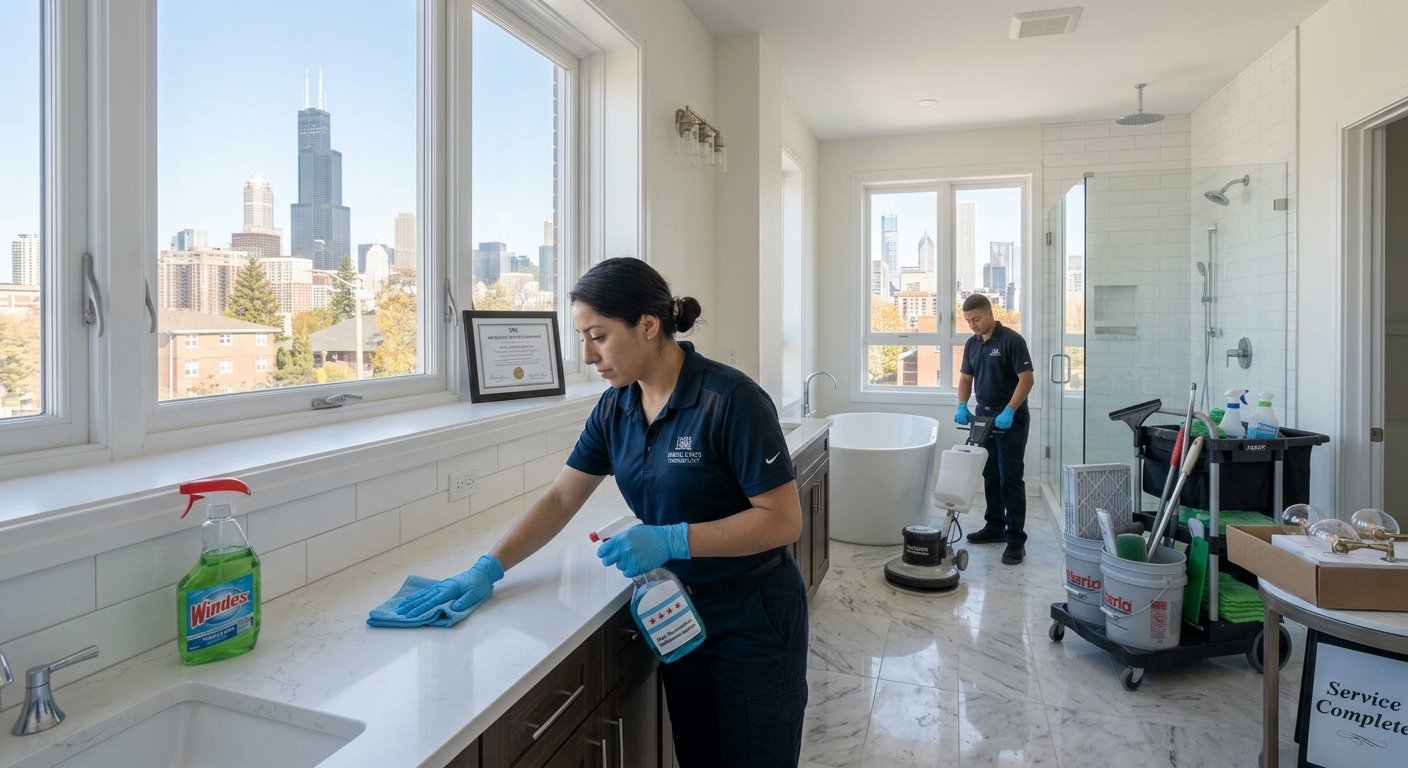
How to Remove Grout Haze, Tile Residue and Construction Dust
A newly remodeled bathroom can look finished while still carrying grout haze, tile adhesive residue, drywall dust, paint specks, and debris around fixtures. Cleaning these materials requires more care than ordinary bathroom maintenance because new tile, grout, glass, metal finishes, and stone surfaces can be damaged by the wrong products or tools.
Bathroom renovation cleaning in Chicago focuses on removing construction-related residue from completed bathroom surfaces so the space is ready for normal use. The best approach depends on which materials were installed, whether grout and sealants have cured, and what residue remains after the contractor's work.
This guide explains how post-remodel bathroom cleaning works, how to distinguish grout haze from other residue, which areas are commonly missed, and when professional cleaning is the safer option.
What Is Post-Remodel Bathroom Cleaning?
Post-remodel bathroom cleaning is the detailed cleaning performed after bathroom construction or renovation work has been completed. It removes ordinary construction dust and appropriate surface residue from tile, grout, vanities, mirrors, shower glass, fixtures, flooring, and other accessible areas.
It differs from routine bathroom cleaning because renovation residue can include fine mineral dust, dried grout film, adhesive marks, paint splashes, and packaging debris. Some materials can be removed with gentle cleaning, while others need a product specifically approved for the surface and residue.
Tile and Grout
Remove loose dust and assess any cloudy film or residue without prematurely scrubbing fresh grout or damaging the tile finish.
Shower Enclosures
Clean accessible glass, frames, tracks, and compatible hardware while avoiding abrasive tools that may scratch glass or protective coatings.
Vanities and Cabinets
Remove dust from cabinet fronts, counters, drawer exteriors, and accessible interiors when included in the scope and safe to clean.
Fixtures and Fittings
Clean sinks, faucets, toilets, handles, and other installed fixtures with products compatible with their finishes.
For general bathroom maintenance after the renovation residue has been addressed, see this bathroom cleaning guide.
Why Bathrooms Need Careful Cleaning After a Remodel
Bathrooms combine several materials in a compact area. Porcelain tile, ceramic tile, natural stone, cement-based grout, glass, chrome, brushed metal, painted drywall, and laminate or wood-based cabinetry may all require different cleaning methods.
Construction dust can settle on horizontal surfaces and collect in corners, tracks, joints, and around fixtures. Meanwhile, grout haze or adhesive residue may remain bonded to the surface. Treating all of these materials as ordinary dirt can lead to unnecessary scrubbing or chemical damage.
Important: Identify the residue and the surface before choosing a cleaner. Do not use acidic grout-haze removers on natural stone or other acid-sensitive materials unless the product and surface manufacturer explicitly approve the application.
Common Residue After Bathroom Renovation
Fine Construction Dust
Powdery particles from drywall work, cutting, sanding, and general construction can settle on tile, counters, mirrors, and trim.
Grout Haze
A thin, cloudy film that can remain on tile after grouting. It is different from loose dust and may require a compatible haze-removal method after the grout has cured sufficiently.
Tile Adhesive Residue
Mortar or adhesive marks can be difficult to remove once hardened. The appropriate treatment depends on the product, tile material, and stage of curing.
Paint and Sealant Marks
Small splashes or smears may appear around trim, hardware, edges, and fixtures. Avoid scraping or applying solvents without confirming surface compatibility.
How to Remove Grout Haze and Tile Residue Safely
Grout haze is the thin film left behind when grout residue remains on tile after installation. It may look like a white or gray cloudiness, particularly when light reflects off the surface. However, mineral deposits, dust, dried cleaner, and damage to the finish can look similar, so confirm the cause before applying a chemical treatment.
Step 1: Check the Tile and Grout Type
Determine whether the tile is ceramic, porcelain, natural stone, or another material. Also identify the grout type and, if possible, the grout manufacturer's curing and cleaning instructions. Natural stone such as marble and limestone is particularly vulnerable to many acidic cleaners.
Step 2: Remove Loose Dust First
Collect loose construction dust using suitable dust-capturing equipment or a soft, clean cloth. Avoid dry scrubbing gritty particles across polished tile, glass, or metal because they can scratch the surface.
Step 3: Start With the Least Aggressive Method
If the grout has cured sufficiently and the manufacturer permits it, try a small amount of clean water or a pH-neutral cleaner suitable for the tile. Use a soft sponge or microfiber cloth, and test an inconspicuous area first. Follow the product's dilution, dwell-time, and rinsing directions.
Step 4: Use a Specialized Haze Remover Only When Appropriate
If a cloudy film remains, choose a grout-haze remover that is specifically compatible with the tile and grout. Do not assume a product suitable for ceramic tile is safe for marble, limestone, metallic finishes, or every grout formulation. Follow the label and the installation manufacturer's guidance.
Step 5: Rinse and Inspect
Remove cleaner residue as directed and allow the surface to dry. Inspect the tile under normal lighting. If the film persists, avoid repeated aggressive scrubbing; hardened mortar, incompatible residue, or surface etching may require a tile professional to assess the problem.
Confirm the surface and residue.
Collect loose particles first.
Check a hidden area.
Follow product instructions.
Reassess once dry.
For related bathroom surface problems, see the guides on why grout becomes discolored and cleaning soap scum from glass shower doors. These issues may resemble renovation residue but can require different treatments.
Bathroom Renovation Cleaning Checklist: What Needs Attention?
A useful post-remodel cleaning plan covers more than the most visible tile and fixtures. Check the following areas and confirm which tasks are included in the cleaning agreement.
Shower and Tub
- Tile surfaces and grout joints
- Shower glass and accessible tracks
- Accessible shower fixtures
- Tub edges and compatible surrounding surfaces
- Visible residue around installed hardware
Vanity and Sink
- Countertops and backsplash
- Sink basin and faucet
- Cabinet fronts and handles
- Accessible drawer or cabinet interiors, if included
- Dust along edges and trim
Toilet and Fixtures
- Toilet exterior and surrounding floor
- Flush controls and handles
- Accessible plumbing fixture surfaces
- Dust around the toilet base
- New hardware cleaned according to its finish requirements
Floor and Room Details
- Floor tile and compatible grout
- Baseboards and door trim
- Accessible ledges and shelves
- Mirror and light-fixture exteriors, where safe
- Dust around vents and accessible corners
For a final pass, use this practical checklist:
- Confirm that dusty construction and installation work has finished.
- Identify tile, grout, stone, glass, and metal finishes before selecting products.
- Remove loose dust before wet wiping or scrubbing.
- Check for grout haze and other residue under normal lighting.
- Clean compatible vanity, cabinet, and countertop surfaces.
- Inspect shower glass, frames, tracks, and accessible fixtures.
- Clean floors using a method suitable for the installed material.
- Keep newly applied grout, sealants, and coatings within their specified curing requirements.
- Document stubborn residue or possible surface damage instead of using increasingly aggressive chemicals.
- Confirm that the bathroom is ready for use according to the contractor's instructions.
What Should You Avoid When Cleaning a Newly Remodeled Bathroom?
Some of the most common cleaning mistakes occur when someone tries to remove residue quickly without confirming whether the material can tolerate the method.
- Using vinegar on acid-sensitive stone. Acidic products can etch marble, limestone, and other vulnerable surfaces.
- Mixing cleaning chemicals. Never mix bleach with ammonia, acids, or other cleaning products. Dangerous fumes or reactions can result.
- Scrubbing fresh grout too early. Premature cleaning can interfere with the installation's curing requirements or damage the joints.
- Using metal scrapers on delicate finishes. Unapproved blades and abrasive pads can scratch tile, glass, metal, and coatings.
- Applying an untested solvent. Solvents can damage sealants, plastics, painted finishes, and cabinetry.
- Flooding joints or newly installed areas. Follow the installer's guidance for moisture exposure and curing.
- Assuming every white mark is grout haze. Dust, efflorescence, mineral deposits, and surface etching can appear similar but require different responses.
- Ignoring ventilation and product labels. Use cleaning products according to their directions and maintain appropriate ventilation.
When in doubt, stop. If the residue is hardened, the surface becomes dull after cleaning, or the material is unknown, consult the tile installer or an appropriate surface-care specialist before continuing.
When Should You Schedule Post-Remodel Bathroom Cleaning?
Book detailed cleaning after the contractors have completed dusty work and the bathroom can be safely accessed. However, the right time for cleaning tile and grout depends on the products installed and their required curing periods.
There is no universal waiting period for every renovation. Cement-based grout, epoxy grout, caulk, sealants, adhesives, and specialty coatings have different instructions. Ask the installer when the surfaces can be cleaned, exposed to moisture, or treated with any specialized residue remover.
Consider the sequence below when coordinating the project:
- Finish installation work. Confirm that tile setting, grouting, caulking, painting, and fixture installation have reached the appropriate stage.
- Confirm curing requirements. Check with the contractor or product manufacturer before using water or cleaning chemicals on new materials.
- Remove construction dust. Collect loose dust and debris from accessible surfaces.
- Clean finished surfaces. Address tile, grout, glass, fixtures, vanity surfaces, and floors using compatible methods.
- Inspect and touch up. Check for missed dust and remaining residue, and refer persistent installation defects to the responsible trade.
If other rooms were renovated at the same time, construction dust may have spread beyond the bathroom. In that case, the overall cleanup plan may need to cover nearby hallways, bedrooms, kitchens, or living spaces as well.
What Affects the Cost of Bathroom Renovation Cleaning in Chicago?
Pricing depends on the actual cleaning workload rather than the bathroom's square footage alone. A small bathroom with light dust may require a different level of effort from a large primary bathroom with multiple tiled walls, a glass shower enclosure, detailed cabinetry, and stubborn grout residue.
Bathroom Size and Layout
The number of surfaces, shower enclosures, vanities, niches, and fixtures affects the time needed to complete the work.
Type of Residue
Loose dust is generally different from hardened grout, mortar, adhesive, or paint residue that may require specialized treatment.
Surface Materials
Natural stone, specialty tile, coated glass, and delicate hardware can require extra care and manufacturer-approved cleaning products.
Condition of Grout
Fresh, curing, or damaged grout changes what cleaning methods are appropriate. Cleaning should not compromise the installation.
Scope of Work
Cleaning a bathroom alone differs from cleaning multiple rooms after a whole-home renovation. Specify whether adjacent areas are included.
Access and Scheduling
Building access, parking, scheduling restrictions, and coordination with contractors can affect how the appointment is planned.
For an accurate quote, describe the bathroom's size, tile and grout type if known, current residue, fixture count, and whether the work involves dust removal alone or specialized grout-haze treatment. Ask the provider to list any exclusions, particularly hardened residue and restoration work.
DIY Cleaning vs. Hiring a Professional
DIY cleaning may be suitable when the renovation has left only light dust and ordinary surface marks. Professional help becomes more useful when the bathroom has multiple material types, extensive residue, or surfaces that need careful product selection.
When DIY May Be Enough
- Loose dust is the main problem.
- Surfaces are fully ready for routine cleaning.
- You know the tile and fixture materials.
- Residue comes away with an approved gentle cleaning method.
- No specialist treatment or difficult access is required.
When Professional Cleaning May Help
- Dust has spread throughout multiple renovated rooms.
- There is extensive grout haze or mixed construction residue.
- Natural stone or delicate finishes require careful handling.
- The bathroom contains multiple glass, tile, and metal surfaces.
- You need a defined cleanup scope before using the space.
Before hiring a provider, ask whether grout-haze removal is included in standard post-construction cleaning or quoted separately. Routine dust removal and specialized tile restoration are not the same service, and persistent installation defects may need to be addressed by the contractor rather than a cleaner.
To understand the broader benefits of specialist cleaning, read why homeowners hire professional deep cleaning services in Chicago.
How to Choose a Bathroom Renovation Cleaning Service in Chicago
Look for a provider that asks about the renovation and the materials involved instead of treating every bathroom as a standard maintenance job. A clear discussion before the appointment can prevent damage, misunderstandings, and unnecessary repeat work.
- Explain whether the project involved new tile, grout, natural stone, glass, cabinetry, or fixtures.
- Ask how the provider handles fine construction dust and protects delicate finishes.
- Clarify whether grout-haze removal and hardened residue are included.
- Confirm that the cleaning method will respect curing and sealing instructions.
- Request written details about included surfaces, exclusions, and any additional charges.
- Share photographs of stubborn residue when requesting an estimate, if possible.
- Ask how persistent marks or suspected surface damage will be handled.
For bathroom renovation cleanup in Chicago, a clearly defined scope is especially helpful when the cleaning appointment must be coordinated with contractors, deliveries, or a planned move back into the property.
Frequently Asked Questions
What does bathroom renovation cleaning include?
Depending on the agreed scope, it can include removing construction dust, cleaning tile and accessible grout surfaces, wiping vanity and cabinet exteriors, cleaning fixtures and shower glass, and cleaning the floor. Specialized grout-haze removal and hardened residue may require separate treatment.
How do I remove grout haze after a bathroom remodel?
Identify the tile and grout, confirm curing requirements, remove loose dust, and begin with a compatible gentle cleaning method. If haze remains, use only a remover approved for the specific surface. Acidic products can damage natural stone and other sensitive materials.
Can I use vinegar to clean grout haze?
Do not use vinegar indiscriminately. Its acidity can etch marble, limestone, and other acid-sensitive materials, and it may be unsuitable for some grout or finishes. Check the tile and grout manufacturer's instructions before selecting a cleaner.
When can I clean newly installed tile and grout?
Follow the curing and cleaning instructions for the specific grout, adhesive, sealant, and tile installation. There is no single waiting period suitable for every product or project. Ask the installer before using water or chemical residue removers.
Is grout haze the same as efflorescence?
No. Grout haze is a film of grout residue left on the tile surface. Efflorescence is a deposit of soluble salts that can migrate to the surface as moisture moves through a cement-based material. They may look similar but have different causes and may require different solutions.
Does post-remodel bathroom cleaning remove hardened mortar?
Not always. Hardened mortar may require specialized treatment or a tile professional's assessment. Avoid aggressive scraping or unapproved chemicals that could scratch the tile or damage grout and surrounding finishes.
How long does bathroom renovation cleaning take?
Timing depends on the bathroom's size, number of fixtures, amount of dust, type of residue, and condition of the surfaces. Extensive tile residue or specialized cleaning requirements can add time. A provider will need project details to estimate the work.
Will construction dust return after the bathroom has been cleaned?
It can if nearby construction is continuing or dust remains on upper surfaces, adjacent rooms, or accessible ventilation grilles. Complete dusty work first when possible, clean from high to low, and address the source rather than repeatedly wiping the same surfaces.
Does bathroom renovation cleaning include shower glass and tracks?
It can, but confirm that shower glass, frames, and tracks are included. Construction residue, ordinary mineral deposits, and soap scum are different problems, so the appropriate cleaning method depends on the type of mark and the glass or hardware finish.
Should I hire a professional for grout and tile residue removal?
Consider professional help when residue is extensive, the surface material is delicate or unknown, or gentle cleaning does not work. Ask whether the provider handles specialized residue removal and whether the issue might instead require the tile installer or a restoration specialist.
Need Bathroom Renovation Cleaning in Chicago?
Once the installation work and required curing periods are complete, a carefully planned post-remodel clean can help remove ordinary construction dust and prepare accessible surfaces for use. Deep Clean Chicago offers post-construction cleaning services for renovation cleanup needs.
When requesting a quote, describe the bathroom materials, the type of residue, and whether you need general construction dust removal or specialized grout and tile residue treatment.
Request a Cleaning QuoteLearn more about post-construction cleaning in Chicago or explore the Deep Clean Chicago website.