
Moving out sounds simple until you reach the final stage.
The boxes are packed. The furniture is gone. The keys are almost ready to be handed over.
Then someone looks around the apartment and asks the question that can start an argument almost instantly:
“Who is actually going to clean all of this?”
For couples and roommates, move-out cleaning can become an unexpected source of tension. One person thinks the apartment is already clean. The other notices the dust behind the furniture, the buildup in the bathroom, the kitchen grease, and everything that suddenly becomes visible once the apartment is empty.
And then there is the bigger question: who should actually be responsible for getting the apartment ready before moving out?
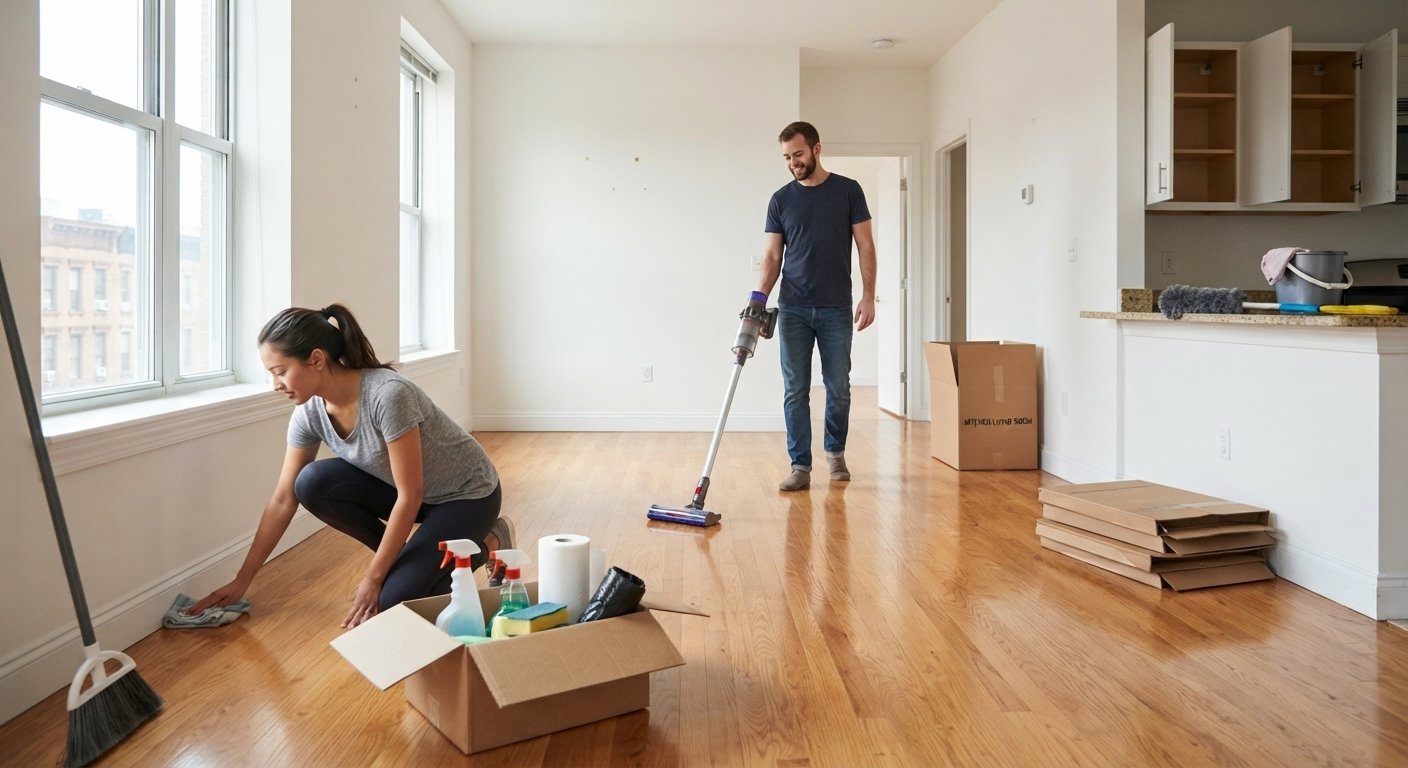
The Move-Out Cleaning Argument Every Couple Has: “I Cleaned It!” vs. “No, You Didn't.”
It usually starts with a difference in definition.
One person looks at the apartment and sees a clean home.
The other sees everything that still needs attention.
Both people may genuinely believe they are right.
That is because “clean” can mean very different things depending on how closely someone is looking.
“It Looks Clean”
The apartment appears tidy, the belongings are gone, and the obvious surfaces have been cleaned.
“It's Actually Clean”
The overlooked areas have also been checked, including corners, edges, floors, cabinets, kitchens, and bathrooms.
The disagreement often isn't really about whether someone cleaned.
It's about whether both people have the same standard for what “finished” means.
Who Should Clean Before Moving Out—the Tenant, the Landlord, or the Next Person?
This is where the debate gets more complicated.
A tenant may expect the apartment to be cleaned as part of the handover process. A landlord may expect the tenant to leave the apartment in an appropriate condition. The next person moving in simply expects to receive a clean space.
The exact responsibilities can depend on the lease, the condition of the property, and applicable rules.
That is why it is important not to assume that everyone has the same expectations.
For Chicago renters, reviewing the terms that apply to your tenancy can be especially important when questions about the security deposit or move-out condition arise.
“It Looked Clean to Me” — Until We Checked These 7 Places
This is where many move-out arguments begin.
The apartment can look perfectly acceptable from the middle of the room while still having plenty of overlooked areas.
- Behind and underneath furniture
- Baseboards
- Corners and edges of floors
- Inside cabinets and drawers
- Around appliances
- Bathroom corners and fixtures
- Kitchen areas affected by grease and buildup
These areas are easy to overlook during everyday cleaning because furniture, belongings, and regular routines can keep them out of sight.
Once everything has been removed, however, the apartment becomes much easier to inspect.
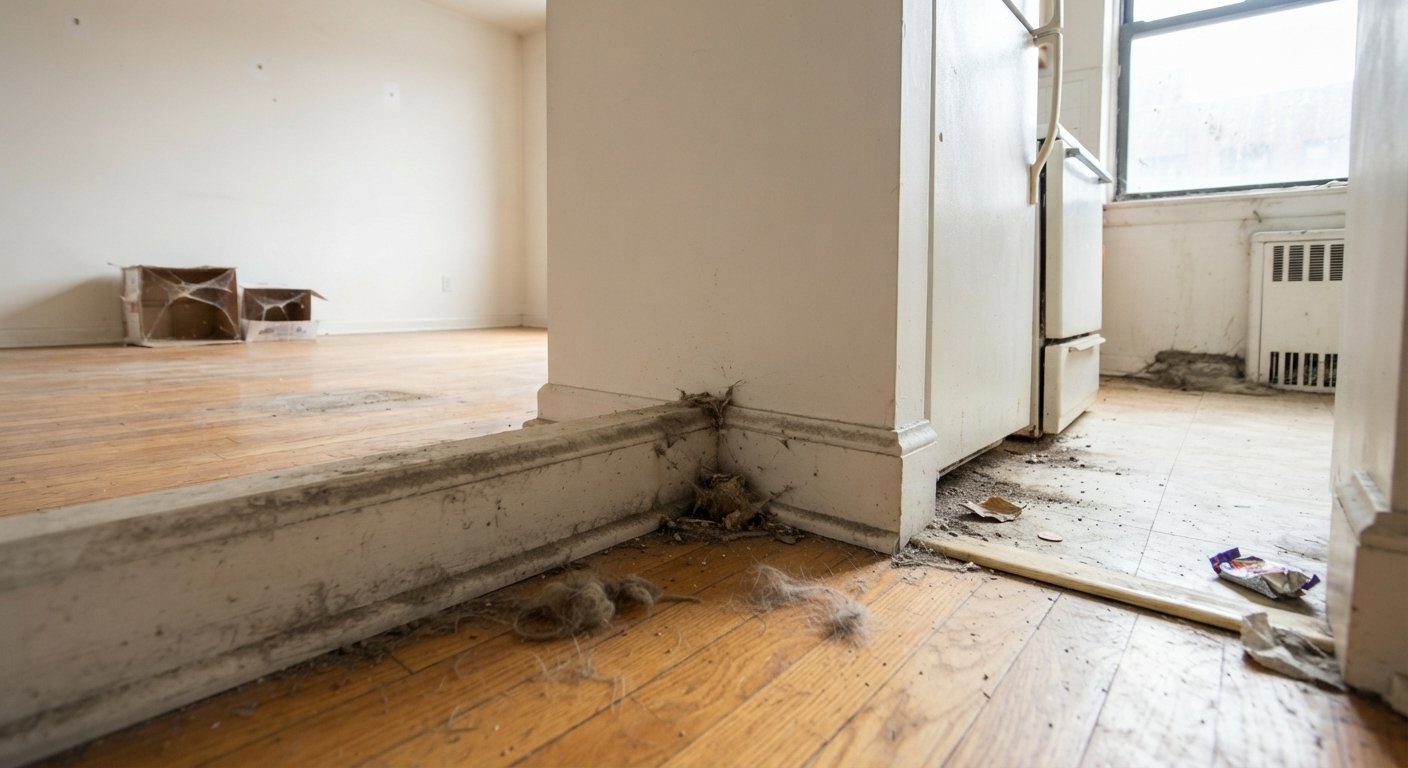
The Difference Between Cleaning Regularly and Cleaning to Move Out
Regular cleaning is about maintaining the home you are living in.
Move-out cleaning is about leaving the home behind in an appropriate condition.
That difference changes what people notice.
During Everyday Living
Furniture stays in place, belongings remain in rooms, and cleaning usually focuses on the areas you use most.
During Move-Out
Furniture and belongings are removed, exposing areas that may not have been visible or accessible during everyday cleaning.
That is why an apartment that felt clean while you lived there can suddenly feel like it needs much more attention after everything has been moved out.
Who Gets Stuck Doing the Dirty Work?
In a shared apartment, the answer is often whoever notices the mess first.
That might be one roommate who starts cleaning while everyone else is still packing. It might be the person who cares more about the final condition of the apartment. Or it might become a last-minute negotiation when everyone realizes the keys need to be returned soon.
The problem is rarely solved by arguing about who cares more.
A much easier approach is to make the responsibilities visible before the final day.
- Agree on what “clean” means
- List the areas that need attention
- Divide rooms or tasks between people
- Set a deadline before the final handover
- Walk through the apartment together
- Address anything that was missed
That turns an emotional argument into a practical checklist.
Would You Rather Spend Your Last Day Cleaning or Actually Enjoying Your Final Day in the Home?
Your final day in an apartment can already be emotional.
You may be saying goodbye to a neighborhood, a routine, roommates, neighbors, or a home where you spent an important part of your life.
Spending those final hours arguing about who should scrub the bathroom or clean the kitchen is probably not how anyone wants to remember the move.
Would you rather spend your last day cleaning or actually enjoying your final day in the home?
Planning the cleaning before the final day can remove much of that pressure.
How Couples and Roommates Can Avoid the Move-Out Cleaning Fight
The easiest way to prevent conflict is to decide the responsibilities before everyone is exhausted.
Start With the Whole Apartment
Walk through every room together and identify what needs to be done.
Divide the Work Clearly
Instead of saying “we'll clean the apartment,” decide who is responsible for which rooms or tasks.
Agree on the Standard
Make sure everyone understands what the finished apartment should look like before the work begins.
Leave Time for a Final Walkthrough
Don't assume that finishing your assigned task means the entire apartment is finished. Walk through the apartment together before handing over the keys.
When Nobody Wants to Be the One Left Scrubbing
Sometimes the problem isn't disagreement.
Everyone simply has too much to do.
Moving requires packing, transporting belongings, organizing the new place, handling the final details of the old place, and managing a deadline.
By the end, even people who intended to clean everything themselves may realize they do not have the time or energy to complete a detailed move-out clean.
That is when professional help can make sense.
If you're moving in Chicago and want to take the cleaning responsibility off the moving-day workload, you can explore move-in and move-out cleaning services.
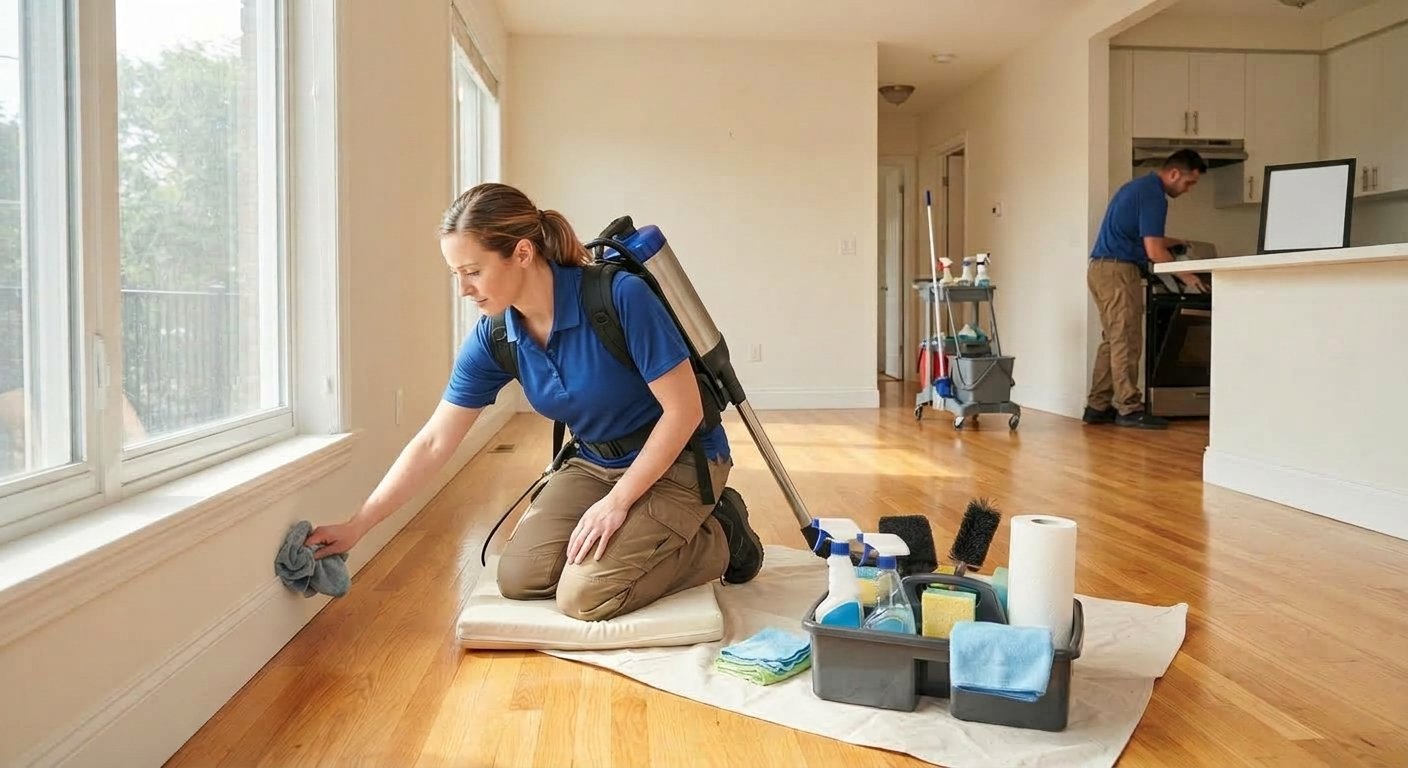
What Actually Counts as “Clean” When You're Moving Out?
There is no single universal definition that applies to every apartment, lease, or situation.
But one useful way to think about move-out cleaning is to look beyond what is immediately visible.
- Visible surfaces have been cleaned
- Floors have been addressed
- Kitchen areas have been cleaned
- Bathroom areas have been cleaned
- Accessible cabinets and drawers have been checked
- Corners and edges have been inspected
- Areas previously hidden by furniture have been checked
The goal is not simply to make the apartment look tidy from the doorway.
The goal is to look at the apartment the way someone might look at it after everything has been removed.
The Ultimate Move-Out Cleaning Debate Has a Simple Solution
Who should clean?
What counts as clean?
Who gets stuck doing the dirty work?
Those questions can create unnecessary conflict when nobody agrees on the expectations ahead of time.
Whether you're moving out with a partner, roommates, or on your own, the simplest approach is to agree on the standard, divide the work, start before the final deadline, and complete a final walkthrough.
And if everyone is already overwhelmed by the move, professional cleaning can remove one more responsibility from the final stretch.
The biggest move-out cleaning argument isn't really about who should clean. It's about everyone having a different idea of what “clean” means.
Frequently Asked Questions
Who should clean an apartment before moving out?
Responsibilities can depend on the lease, the condition of the property, and applicable rules. Tenants should review their move-out requirements and understand what is expected before handing over the keys.
Why do couples and roommates argue about move-out cleaning?
People often have different definitions of what “clean” means. One person may focus on visible surfaces while another notices corners, baseboards, appliances, cabinets, bathrooms, and other overlooked areas.
What areas are commonly missed during move-out cleaning?
Commonly overlooked areas include behind and underneath furniture, baseboards, corners, cabinet interiors, areas around appliances, kitchen buildup, and bathroom corners and fixtures.
How can roommates divide move-out cleaning fairly?
Walk through the apartment together, agree on what needs to be done, divide the rooms or tasks clearly, set a deadline, and complete a final walkthrough together.
Can professional move-out cleaning help reduce moving-day stress?
Professional move-out cleaning can be an option when couples, roommates, or individuals do not have enough time or energy to handle the final cleaning themselves.
Moving Out in Chicago?
Take the cleaning argument off your moving-day list. Explore move-in and move-out cleaning for help preparing your apartment before you hand over the keys.
Explore Move-Out Cleaning