
Bathroom Deep Cleaning in Chicago: A Guide to a Truly Clean Bathroom
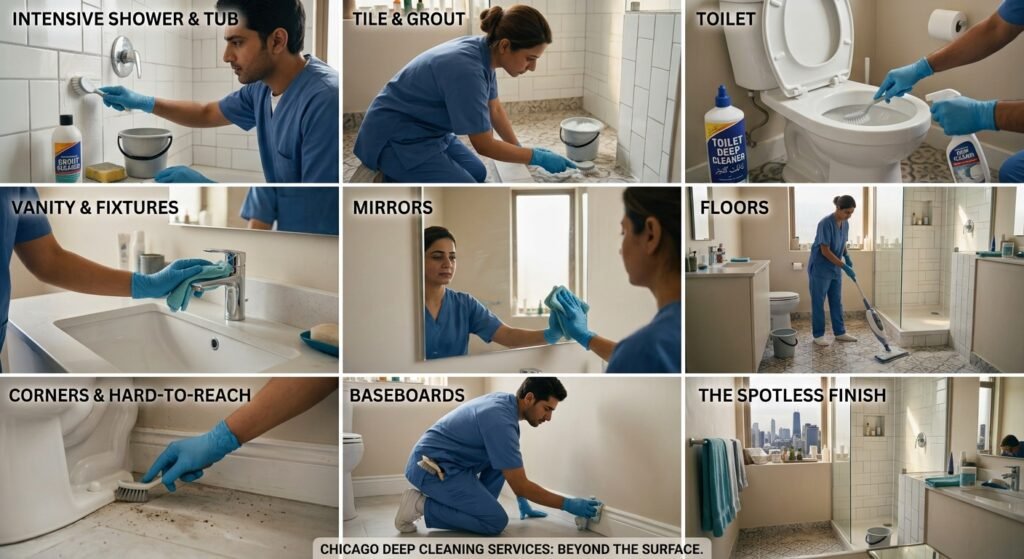
A bathroom can look clean and still have layers of soap scum, mineral deposits, grime, mildew, and buildup hiding in grout lines, around fixtures, behind the toilet, and along floor edges. For Chicago homeowners and renters, bathroom deep cleaning is different from a quick routine clean. The goal is to restore neglected surfaces, remove accumulated buildup, and address the areas that ordinary weekly cleaning tends to miss. What Is Bathroom Deep Cleaning? Bathroom deep cleaning is a detailed cleaning process that goes beyond wiping visible surfaces. It typically includes intensive cleaning of the shower or tub, tile and grout, toilet, vanity, fixtures, mirrors, floors, corners, baseboards, and other hard-to-reach areas. A professional deep-cleaning service may specifically target grout, shower doors, exhaust fans, tile, floor edges, and accumulated mineral deposits. Chicago-area cleaning services commonly distinguish this detailed work from routine bathroom maintenance. House Keep Up+1 Routine cleaning maintains a bathroom. Deep cleaning brings a neglected bathroom back to a clean baseline. Why Bathrooms Need Deep Cleaning Bathrooms combine several conditions that encourage buildup: Frequent moisture Warm temperatures Soap and shampoo residue Mineral deposits from water Dust and dirt Poor ventilation Persistent humidity Organic residue around toilets and drains Grout and other porous surfaces that can hold dirt That is why a bathroom may continue looking dull even after its sink and toilet have been wiped down. Soap scum Soap scum is a mixture of soap residue, minerals, oils, and dirt that can form a stubborn film on shower walls, tubs, glass, and fixtures. A normal wipe may remove the newest layer but leave older buildup behind. Mineral deposits White, cloudy, or crusty deposits around faucets, showerheads, glass doors, and other wet surfaces can be caused by minerals left behind as water evaporates. The appropriate cleaning method depends on the surface. Natural stone, for example, requires different care from ceramic or porcelain tile. Grout discoloration Grout can darken because of embedded dirt, soap residue, moisture, mildew, and staining. Deep cleaning can improve heavily soiled grout, but cleaning cannot always reverse permanent discoloration or repair damaged grout. Mold and mildew Bathrooms provide the moisture that mold needs to grow. Persistent mold problems can also indicate inadequate ventilation or an underlying moisture issue. Cleaning visible growth is not the same thing as solving the moisture problem. What Does a Bathroom Deep Cleaning Include? A thorough bathroom deep clean should have a clearly defined scope rather than simply promising a “deeper” version of regular cleaning. Area Deep-cleaning tasks Shower Remove soap scum, buildup, and surface grime Tub Scrub basin, walls, corners, and fixtures Tile Clean tile surfaces and accumulated residue Grout Detail-clean dirty grout lines Shower glass Remove film and mineral buildup where appropriate Toilet Clean bowl, seat, exterior, base, and surrounding areas Vanity Clean countertop, basin, fixtures, and accessible surfaces Mirrors Clean glass and surrounding frames Faucets Remove residue and polish appropriate surfaces Floors Vacuum/sweep, scrub, and clean edges Baseboards Remove accumulated dust and grime Exhaust fan Remove accessible dust buildup Behind fixtures Clean reachable neglected areas Corners Detail-clean areas commonly missed during routine visits Local Chicago cleaning providers advertise similar detailed scopes, including shower and tub descaling, grout and tile cleaning, toilet cleaning, vanity and fixture polishing, and floor-edge cleaning. Bathroom Deep Cleaning vs. Regular Cleaning The difference is primarily depth and scope. Regular cleaning might involve: Wiping the vanity Cleaning the toilet Cleaning the mirror Quick shower cleaning Sweeping or mopping Deep cleaning adds the detail work that takes more time and attention: Built-up soap scum Grout lines Mineral deposits Shower-door buildup Floor edges Baseboards Corners Behind and around fixtures Exhaust-fan surfaces Other neglected areas A deep clean is particularly useful when a bathroom has gone for a long period without detailed cleaning, before moving into a property, after renovation work, or when routine cleaning is no longer restoring the appearance of the room. How to Deep Clean a Bathroom Step by Step Recommended Process Remove belongings → Improve ventilation → Dust high to low → Apply appropriate products → Clean shower and tub → Detail grout → Clean toilet → Clean vanity → Clean mirrors and glass → Scrub floor → Final inspection 1. Remove everything that does not belong in the bathroom Take out toiletries, towels, trash, bath mats, removable organizers, and other objects. This exposes surfaces that are normally hidden and makes the cleaning process much more efficient. 2. Improve ventilation Turn on the bathroom exhaust fan and, where practical, improve airflow. Ventilation matters because moisture is one of the central factors behind bathroom mold and mildew problems. 3. Dust from high to low Clean higher surfaces first: Exhaust-fan cover Light fixtures Upper walls Shelves Cabinet exteriors Door frames Then move downward. This prevents dust and debris from falling onto surfaces you have already cleaned. 4. Apply appropriate products to buildup Give suitable cleaning products time to work according to their labels. For heavy buildup, allowing the product to dwell before scrubbing can be more effective than immediately attacking the surface with excessive force. Cleaning experts similarly recommend addressing heavily soiled areas early so cleaners have time to work. The Spruce 5. Clean the shower and tub Work systematically across: Walls Tile Grout Tub or shower pan Corners Fixtures Shower door Tracks and edges Use a product appropriate for the material. 6. Detail the grout Grout often requires mechanical agitation with an appropriate brush. However, aggressive scrubbing is not automatically better. Damaged grout, deteriorated caulk, and delicate surfaces may require repair rather than increasingly aggressive cleaning. 7. Clean the toilet completely Do not stop at the inside of the bowl. A detailed clean should address: Bowl Rim Seat Hinges Lid Exterior Base Floor immediately around the toilet The area behind and around the toilet is particularly easy to overlook. 8. Clean the vanity and sink Remove residue from the basin, countertop, faucet, handles, cabinet fronts, and accessible areas. Pay attention to the points where water and product residue accumulate. 9. Clean mirrors and glass Use a suitable glass-cleaning