
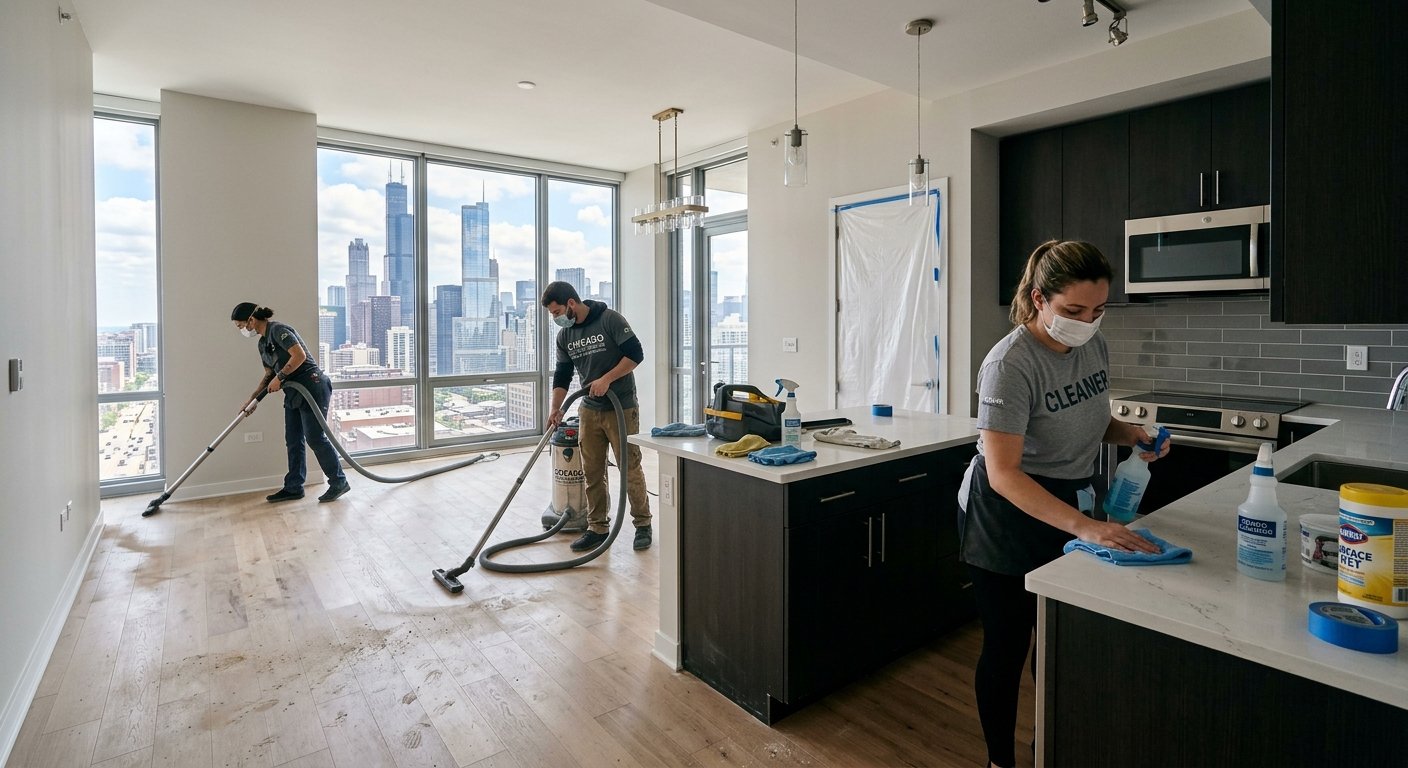
A renovated condo can look finished while construction dust remains on cabinets, flooring, window tracks, bathroom fixtures, and other surfaces. Fine drywall particles can settle in corners and closets, while sawdust, paint splashes, and installation residue may remain around newly installed finishes. Before you move furniture back in, a thorough post-construction clean helps make the space ready for everyday use.
Condo post-construction cleaning in Chicago focuses on removing accessible renovation dust and suitable surface residue while protecting new materials. Unlike ordinary housekeeping, it requires attention to delicate finishes, building access rules, shared hallways, elevator reservations, and the work contractors have completed.
This guide explains what to clean in a renovated condo, how to prepare for the service, which tasks may require a specialist, what affects pricing, and how to coordinate cleaning with your condo association, contractor, or property manager.
What Is Condo Post-Construction Cleaning?
Condo post-construction cleaning is a detailed cleaning process performed after remodeling, installation, or renovation work. It targets accessible construction dust, debris, fingerprints, and compatible surface residue left behind by contractors.
The exact scope depends on the renovation. A condo with a new kitchen may need detailed cabinet and countertop cleaning, while a full-unit remodel may require attention to bedrooms, bathrooms, closets, window tracks, floors, and areas outside the main work zone.
Kitchen and Cabinetry
Clean accessible cabinet fronts, handles, countertops, backsplashes, and agreed-upon cabinet interiors. Use methods compatible with the new finishes.
Bathrooms
Address accessible tile, mirrors, vanity surfaces, sinks, toilets, and fixtures while respecting grout, sealant, and finish curing instructions.
Living Areas and Bedrooms
Remove accessible dust from flooring, baseboards, trim, ledges, closet shelves, and other surfaces affected by renovation activity.
Windows and Entryways
Clean agreed glass, frames, sills, and accessible tracks, along with the interior entry route where construction traffic has deposited dust.
For ongoing cleaning needs after renovation, explore apartment and condo cleaning services. If the property still has significant construction dust, explain that you need post-construction cleanup rather than assuming a standard recurring clean covers the same tasks.
Why Renovated Condos Need a Different Cleaning Approach
Condominiums often combine compact layouts, shared building infrastructure, and finishes that need careful handling. Renovation dust can move from the kitchen or bathroom into adjoining rooms, and workers may carry particles into hallways or elevators.
Fine Dust in Small Spaces
Dust can collect on closet shelving, cabinet interiors, baseboards, and narrow gaps. A room may look clean while less visible surfaces still need attention.
New and Delicate Finishes
Fresh hardwood, natural stone, specialty glass, painted cabinetry, and new fixtures may have specific cleaning restrictions.
Shared Building Areas
Contractor traffic can affect common corridors, service elevators, and entryways. Building rules determine who is responsible for cleaning those spaces.
Limited Access and Scheduling
Elevator bookings, loading procedures, parking restrictions, and approved work hours can affect when a cleaning team can enter and complete the job.
Key distinction: Cleaning the renovated unit does not automatically include common hallways, elevators, exterior windows, construction-waste removal, or repairs. Confirm the service boundary before scheduling.
What Should Be Included in a Renovated Condo Cleaning Checklist?
A useful scope lists specific surfaces instead of simply promising a “deep clean.” Use the following room-by-room guide when discussing your condo with a cleaning provider.
Kitchen
- Accessible cabinet fronts and handles
- Cabinet interiors when included and ready for cleaning
- Countertops and backsplashes
- Appliance exteriors
- Accessible floors, baseboards, and trim
Bathrooms
- Sinks, toilets, and compatible fixtures
- Vanity fronts and countertops
- Mirrors and suitable glass surfaces
- Appropriate tile and flooring
- Accessible corners and ledges
Bedrooms and Living Areas
- Floors and accessible baseboards
- Window sills and ledges
- Doors, trim, and reachable surfaces
- Closet shelves and interiors when included
- Accessible switches and handles
Windows and Entry Areas
- Agreed interior glass surfaces
- Accessible frames, sills, and tracks
- Entry flooring and thresholds
- Accessible ledges affected by construction dust
- Approved interior access routes
Not every item is automatically included in every service. Confirm whether the quote covers cabinet interiors, appliance interiors, window tracks, screens, difficult residue, and any shared areas affected by construction.
For more specific room-by-room guidance, see the kitchen cleaning guide and bathroom cleaning guide.
How to Clean a Renovated Condo After Construction
The best approach is systematic: finish dusty work, remove loose debris, clean from high surfaces toward lower ones, and inspect the unit before furniture returns. The cleaning method must also match the surface and the manufacturer's care instructions.
Check that dusty work has ended.
Verify curing and care instructions.
Clear agreed construction leftovers.
Address ledges, surfaces, and floors.
Check missed areas and residue.
Protect cleaned surfaces during the move.
Step 1: Confirm the Renovation Is Ready for Cleaning
Ask the contractor whether sanding, drilling, cutting, painting, and other dusty tasks are finished. Confirm that new paint, grout, caulk, adhesives, and flooring finishes can safely be exposed to the proposed cleaning methods.
Step 2: Remove Loose Dust Before Wiping
Use suitable dust-collection methods rather than rubbing dry construction particles across finished surfaces. Fine drywall dust can be abrasive, particularly on glass, polished materials, and delicate finishes.
Step 3: Work From High Surfaces to Floors
Address accessible ledges, cabinet exteriors, trim, and other higher surfaces before completing lower surfaces. Finish floors after overhead and surface cleaning to reduce the chance of dust settling on freshly cleaned areas.
Step 4: Use Material-Appropriate Cleaning Methods
New hardwood, natural stone, specialty glass, stainless steel, and painted cabinetry can respond differently to moisture and chemicals. Follow the relevant care instructions and avoid aggressive scrubbing or unapproved solvents.
Step 5: Inspect the Unit in Good Lighting
Check windowsills, cabinet corners, closet shelves, bathroom fixtures, floor edges, and the entry route. If dust continues to appear, consider whether nearby work is still creating particles or whether less accessible areas need further attention.
What Is Usually Excluded From Condo Post-Construction Cleaning?
One of the most important steps when hiring a cleaner is to separate cleaning from construction, restoration, and waste-removal work. Some tasks require specialized equipment, a different contractor, or explicit approval from building management.
Construction Waste Hauling
Large material scraps, discarded cabinets, drywall, flooring, and bulky renovation debris may require a separate disposal service.
Paint and Adhesive Removal
Hardened paint, silicone, mortar, and adhesive may need specialist treatment to avoid damaging new surfaces.
HVAC and Duct Cleaning
Cleaning accessible room surfaces does not mean internal ductwork or mechanical equipment has been cleaned. Consult an appropriate HVAC professional when needed.
Repairs and Restoration
Scratches, damaged finishes, installation defects, and other construction problems need assessment by the responsible contractor or specialist.
Exterior and High-Access Windows
Exterior glass, balcony exteriors, and difficult-to-reach windows may require separate arrangements and suitable access equipment.
Hazardous Materials
Suspected asbestos-containing materials, lead hazards, or other potentially hazardous substances should be assessed by qualified professionals rather than handled as ordinary dust.
Before work begins, ask for a written list of included and excluded tasks. This is particularly important in condominiums where construction debris, shared spaces, and building systems may be governed by separate rules.
How to Prepare Your Condo Before the Cleaning Appointment
A few preparations can make the appointment more efficient and help protect newly installed materials.
- Confirm that contractors have completed dusty work.
- Arrange removal of tools, packaging, and construction materials that are outside the cleaning scope.
- Ask the contractor about curing times and approved cleaning products.
- Identify delicate flooring, countertops, cabinetry, glass, and specialty finishes.
- Decide whether cabinet interiors, closets, appliances, and windows need detailed cleaning.
- Confirm building access, parking, service elevator reservations, and approved working hours.
- Clarify whether hallways, elevators, or other common areas need separate attention.
- Keep personal belongings and furniture out of the work area where possible.
- Arrange a final walkthrough before moving items back into the condo.
If you plan to move back into the unit immediately, schedule cleaning before furniture delivery whenever practical. Empty rooms are easier to access, and belongings are less likely to collect dust while the remaining surfaces are being cleaned.
Chicago Condo Considerations: Access, Elevators, and Shared Areas
Condo cleaning logistics depend on the building's rules and the scope of renovation. A high-rise, a low-rise condominium, and a unit in a converted multi-unit building may each have different access requirements.
Building Management Approval
Check whether contractors and cleaning providers need advance registration, proof of insurance, or authorization to enter the building.
Service Elevators and Loading Areas
Reserve elevators where required and confirm loading procedures, time windows, and restrictions on transporting equipment or materials.
Parking and Equipment Access
Share parking instructions and identify the appropriate entrance so the team can bring cleaning equipment into the unit efficiently.
Common-Area Responsibilities
Confirm whether construction dust in shared hallways or elevators is the contractor's responsibility, the association's responsibility, or part of a separate cleaning arrangement.
These details are practical planning considerations, not universal requirements for every Chicago building. Check the applicable building rules rather than assuming all condo associations follow the same procedures.
What Affects the Cost of Condo Post-Construction Cleaning in Chicago?
There is no single price that applies to every renovated condo. The quote should reflect the property's condition, renovation scope, access, surface materials, and level of detail requested.
Condo Size and Layout
Larger units and multi-level layouts generally involve more surfaces and more time. Tight spaces and complex layouts can also affect access.
Extent of Renovation
A single-room update may leave less dust than a full-unit remodel involving flooring, cabinetry, bathrooms, and drywall.
Dust and Residue Levels
Light dusting differs from widespread fine construction dust or stubborn residue that requires additional assessment.
Detailed Cleaning Tasks
Cabinet interiors, appliances, window tracks, screens, and other detailed areas may affect the scope and duration of the appointment.
Surface Sensitivity
New flooring, natural stone, specialty glass, and delicate finishes may require particular tools and compatible products.
Building Logistics
Access procedures, elevator reservations, parking, and restrictions on work hours may influence scheduling and planning.
To request an accurate quote, provide the approximate square footage, rooms renovated, visible dust conditions, surface materials, and desired completion date. Ask whether the price includes tracks, cabinet interiors, appliance interiors, common areas, or construction debris removal.
How to Choose a Condo Post-Construction Cleaning Service
The right provider should understand construction dust, the care requirements of newly finished surfaces, and the logistics of working in a managed building. Before booking, discuss the actual condition of the condo instead of relying on a generic deep-cleaning description.
- Ask whether the service specifically handles post-renovation or post-construction cleanup.
- Describe the renovation and identify the rooms with the heaviest dust.
- Confirm how new flooring, stone, cabinetry, glass, and fixtures will be protected.
- Request a clear list of included and excluded tasks.
- Clarify how difficult residue, debris hauling, and high-access windows are handled.
- Discuss building access, parking, service elevators, and any time restrictions.
- Confirm the expected timing and whether a final walkthrough is available.
- Ask how to report missed areas or surface concerns after the appointment.
A clearly defined scope reduces misunderstandings and makes it easier to coordinate the cleaning with contractors, property managers, and movers.
Condo Post-Construction Cleaning vs. Regular Condo Cleaning
These services solve different problems. Regular condo cleaning maintains a property during normal occupancy, while post-construction cleaning addresses the dust and suitable residue left by renovation work.
Post-Construction Cleaning
Best after remodeling or installation work. The scope may include detailed dust removal from accessible surfaces, frames, ledges, and other areas affected by construction.
Regular Condo Cleaning
Best for ongoing maintenance, such as routine dusting, bathroom cleaning, kitchen surface care, and floor cleaning during normal use.
Move-In Cleaning
Best for preparing a property for occupancy. It can overlap with post-construction cleaning when renovation work is completed just before a resident moves in.
Specialist Restoration
Needed when hardened residue, damaged finishes, hazardous materials, or construction defects require work beyond ordinary cleaning.
If the condo has been renovated and is not yet occupied, post-construction cleaning is usually the more relevant starting point. Once construction dust has been addressed, regular condo cleaning can help maintain the finished space.
Final Condo Cleaning Checklist Before Moving Back In
Use this final inspection to check whether the agreed cleaning work has been completed before furniture and personal belongings return.
- Accessible floors, baseboards, and trim have been cleaned.
- Kitchen counters, cabinet fronts, and agreed interiors are free of visible construction dust.
- Bathroom fixtures, mirrors, and compatible tile surfaces have been addressed.
- Closets, ledges, and window sills have been checked.
- Accessible window tracks have been cleared of loose debris where included.
- Dust has been removed from agreed accessible surfaces throughout the unit.
- Any remaining paint, adhesive, or hardened residue has been documented for appropriate follow-up.
- Building common areas have been handled according to the agreed responsibilities.
- New finishes have been cleaned according to applicable care instructions.
- The property has been inspected in good lighting before unpacking.
If dust returns after cleaning, check whether contractors are still working, adjacent rooms remain dusty, or air movement is redistributing particles. Persistent residue or suspected damage should be assessed separately rather than treated with increasingly aggressive cleaning methods.
Frequently Asked Questions
What is condo post-construction cleaning?
It is a detailed cleaning service performed after renovation or building work to remove accessible construction dust and suitable surface residue. Depending on the agreed scope, it may cover floors, cabinetry, bathrooms, window sills, frames, and other affected areas.
How do I clean a renovated condo before moving in?
First confirm that dusty construction work has finished and new finishes can safely be cleaned. Remove loose debris, work from higher surfaces toward floors, use material-appropriate methods, and inspect the unit before moving furniture and belongings back in.
When should I schedule post-construction condo cleaning?
Schedule it after sanding, cutting, and other dusty tasks are complete, and after contractors confirm that surfaces are ready for cleaning. If more work is planned, ask whether a staged cleanup or a later final clean would be more practical.
Does condo post-construction cleaning include cabinet interiors?
Not automatically. Cabinet interiors should be listed in the service scope, and they should only be cleaned when the materials and finishes are ready. Confirm this task before booking if you plan to store dishes, food, or belongings immediately afterward.
Does the service include hallways and elevators?
Not necessarily. Common areas are often governed by building rules and separate maintenance arrangements. Confirm whether the contractor, condo association, property manager, or cleaning provider is responsible for affected shared spaces.
How much does post-construction condo cleaning cost in Chicago?
Pricing depends on the condo's size, renovation scope, dust levels, surface materials, detailed cleaning requirements, and building access. A useful quote should specify which rooms and tasks are included and identify potential additional charges.
Will post-construction cleaning remove paint and adhesive?
Some compatible surface residue may be removable, but hardened paint, silicone, mortar, and adhesives can require specialized treatment. Confirm the material and an approved removal method before using solvents or scraping tools.
Why does construction dust return after the condo is cleaned?
Dust may return when construction continues nearby, particles remain on less accessible surfaces, or foot traffic and airflow redistribute them. Completing dusty work and cleaning systematically from high surfaces to low surfaces can reduce repeat cleaning.
Is post-construction cleaning the same as move-in cleaning?
No. Post-construction cleaning focuses on renovation-related dust and residue, while move-in cleaning focuses on preparing a property for occupancy. They can overlap when a condo is cleaned immediately after remodeling and before a resident returns.
How should I prepare my condo for a cleaning appointment?
Remove tools and materials outside the agreed scope, confirm curing requirements, identify delicate finishes, and arrange building access. Decide whether cabinet interiors, appliances, windows, and common areas need attention before the cleaning team arrives.
Need Condo Post-Construction Cleaning in Chicago?
A renovated condo needs more than a quick surface wipe before it is ready for everyday use. A clear cleaning plan helps address accessible construction dust, protect new finishes, and prepare the unit for move-in or final presentation.
Explore post-construction cleaning services or learn more about apartment and condo cleaning. Share the size of your unit, renovation details, surface types, and building access requirements to discuss the right scope for your property.
Request a Cleaning QuoteFor additional renovation-cleaning advice, visit the Deep Clean Chicago blog.